
New Delhi, November 28, 2026: The Central Government has amended India’s citizenship regulations to introduce digital certificates for individuals acquiring Indian citizenship through registration or naturalisation, replacing the routine issuance of physical documents with a digital-first system.
The Ministry of Home Affairs (MHA) introduced the Citizenship (Fourth Amendment) Rules, 2026, through a gazette notification dated November 26 and published on November 27.
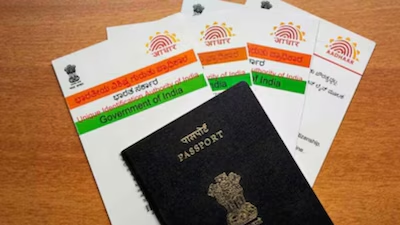
Under the revised rules, eligible applicants who are granted Indian citizenship will receive digitally issued certificates of registration or naturalisation. Physical copies will be made available when applicants specifically request them.
The amendments modify provisions of the Citizenship Rules, 2009, which govern procedures under the Citizenship Act, 1955.
The change affects several categories of applicants, including eligible Persons of Indian Origin, spouses of Indian citizens, minor children of Indian citizens and certain Overseas Citizen of India (OCI) cardholders.
The government has retained the existing legal distinctions between citizenship by registration and citizenship by naturalisation.
The notification changes how citizenship certificates are issued. It does not automatically grant citizenship or remove the statutory eligibility requirements for applicants.
Government Amends Citizenship Rules, 2009
The Ministry of Home Affairs introduced the revised provisions using its powers under Section 18 of the Citizenship Act, 1955.
The amendments are formally titled the Citizenship (Fourth Amendment) Rules, 2026.
They modify Rules 14 and 15 of the Citizenship Rules, 2009.
These rules deal with certificates issued after citizenship has been granted through registration or naturalisation.
The amended provisions establish digital certificates as the standard format.
The rules came into force upon publication in the Official Gazette.
Applicants who require a physical certificate can request one under the revised framework.
Digital Certificates Become the Default
Previously, physical certificates formed an important part of the citizenship documentation process.
Under the new provisions, individuals granted citizenship through the specified routes will receive certificates in digital form.
The documents must carry an authorised signature or digital signature in accordance with the amended rules.
The change is intended to move citizenship documentation towards an electronic system.
Digital certificates can potentially simplify record management and reduce reliance on routine paper issuance.
However, the notification does not specify a new nationwide processing deadline or guarantee faster approval of citizenship applications.
The time required for a citizenship decision will continue to depend on the applicable legal and administrative procedures.
What Changes for Citizenship Applicants?
The principal change concerns the format in which proof of newly granted citizenship is issued.
Eligible applicants will now receive their citizenship certificates digitally instead of being automatically provided with a paper certificate.
The new system does not prevent applicants from obtaining a physical copy.
A hard copy can still be issued when requested.
Applicants must continue to meet the eligibility requirements under the Citizenship Act.
The authorities must also complete the necessary scrutiny before citizenship is granted.
The amendment therefore concerns certification rather than the automatic approval of pending applications.
Who Is Covered Under the Revised Rules?
The updated notification covers several categories of individuals eligible for citizenship by registration under Section 5 of the Citizenship Act, 1955.
These include eligible Persons of Indian Origin who have ordinarily resided in India for the required period.
The provisions also cover spouses of Indian citizens who meet the statutory residence conditions.
Minor children of Indian citizens are included.
Other categories include adults whose parents are registered Indian citizens and certain individuals who, or whose parents, were previously citizens of independent India.
Eligible OCI cardholders are also covered under the specified provisions.
Each category has separate legal requirements that must be satisfied before citizenship can be granted.
Persons of Indian Origin Eligible for Registration
One category covered by the amendment consists of Persons of Indian Origin applying for citizenship through registration.
Under Section 5(1)(a), eligible applicants must ordinarily reside in India for seven years before applying, subject to the statutory definition of the residence period.
Such applicants must demonstrate that they meet the relevant eligibility conditions.
They must also provide the required documents and complete the official application process.
Once citizenship is approved, the revised rules provide for a digital registration certificate.
The amendment does not reduce the qualifying residence period or introduce an automatic entitlement to citizenship.
Spouses of Indian Citizens Covered
Foreign nationals married to Indian citizens may qualify to apply for citizenship through registration under Section 5(1)(c).
The law generally requires the applicant to have been ordinarily resident in India for seven years before submitting the application.
Marriage to an Indian citizen does not itself automatically confer Indian citizenship.
The applicant must fulfil the relevant legal conditions and receive approval from the competent authority.
Under the revised rules, successful applicants in this category will receive digital certificates of registration.
Physical copies will remain available upon request.
Minor Children of Indian Citizens Included
The notification also covers minor children of Indian citizens who acquire citizenship through registration under Section 5(1)(d).
Such applications are governed by specific statutory provisions.
Parents or guardians may need to provide relevant documents and complete the prescribed procedures.
When citizenship is granted, the certificate will be issued digitally under the amended rules.
This change concerns the documentation of citizenship granted through the specified registration process.
It does not mean that all children of Indian citizens must apply for citizenship through registration, because citizenship may also arise through other legal provisions.
Changes for OCI Cardholders
Certain Overseas Citizen of India cardholders are eligible to apply for citizenship by registration.
Under Section 5(1)(g), an eligible OCI cardholder must have held OCI registration for five years and ordinarily resided in India for 12 months before applying.
The revised rules provide for digital registration certificates for successful applicants in this category.
However, OCI status and Indian citizenship are legally different.
An OCI cardholder is not an Indian citizen merely because they possess an OCI card.
The applicant must satisfy the statutory conditions and obtain approval before acquiring citizenship.
The amendment changes the format of the resulting certificate, not the distinction between these two statuses.
Government Specifies Certificate Forms
The amended citizenship rules prescribe particular certificate forms for different categories.
| Citizenship route | Digital certificate |
|---|---|
| Registration under Section 5(1)(a), (c), (d), (e) or (f) | Form X |
| Registration under Section 5(1)(g) | Form XI |
| Naturalisation under Section 6(1) | Form XII |
These forms are used to document citizenship granted under the corresponding legal provisions.
The specified form depends on the applicant’s route to citizenship.
The amendment does not create a single certificate form for every citizenship category.
Digital Certificates Must Carry Authorised Signatures
The rules specify who can sign certificates issued under the revised system.
For the relevant registration and naturalisation certificates, the document must be digitally signed or signed by an officer not below the rank of Under Secretary to the Government of India, or by another officer authorised by the Central Government.
This requirement maintains an official authentication process for the documents.
A digital certificate is therefore not simply an informal electronic acknowledgement.
It is an official certificate issued under the relevant citizenship rules.
Applicants should rely on certificates obtained through the government’s authorised process.
Physical Citizenship Certificates Remain Available
A significant feature of the amendment is that it does not eliminate paper certificates.
The government has retained the option of obtaining a physical document.
Applicants who need a hard copy can request one.
This may be relevant when dealing with institutions that require physical documentation or where the applicant has limited access to digital services.
However, the notification does not provide detailed information about delivery timelines, possible fees or all practical arrangements for requesting hard copies.
Applicants should consult the latest official guidance rather than assume a particular delivery method.
What Is Citizenship by Registration?
Citizenship by registration is a legal route available to specified categories of applicants under Section 5 of the Citizenship Act, 1955.
It generally applies to individuals who have a qualifying connection with India through ancestry, marriage, parentage, OCI status or another provision recognised by law.
Applicants must meet the requirements relevant to their category.
The government examines their application and supporting documentation.
If the application is approved, citizenship is granted through registration.
The revised 2026 rules affect the certificate issued after this approval.
What Is Citizenship by Naturalisation?
Naturalisation is another method by which an eligible foreign national may acquire Indian citizenship.
It is governed principally by Section 6 of the Citizenship Act, 1955, and the applicable statutory conditions.
Applicants generally need to satisfy residence requirements and other eligibility criteria.
These can include conditions relating to character, language knowledge and the intention to reside in India.
The Central Government considers the application under the prescribed procedure.
After citizenship is granted through naturalisation, the applicant receives a certificate documenting that grant.
Under the new rules, the relevant certificate will be issued digitally in Form XII.
What Is the Difference Between Registration and Naturalisation?
Registration and naturalisation are separate legal routes to Indian citizenship.
Registration is available to specific categories identified in Section 5 of the Citizenship Act.
Naturalisation is generally available to eligible foreign nationals under Section 6.
The qualifying requirements and application procedures differ.
The 2026 amendment applies digital certification to both routes.
However, it does not merge them into a single citizenship process.
Applicants must continue using the legal route corresponding to their circumstances.
Does the New Rule Change Citizenship Eligibility?
The revised rules do not introduce a general change to the eligibility requirements for citizenship by registration or naturalisation.
The amendment primarily concerns the issuance of certificates after an application is approved.
Applicants must still meet the relevant conditions under the Citizenship Act, 1955.
Residence requirements, supporting documents and other statutory conditions continue to apply.
The government has not announced that all pending citizenship applications will receive automatic approval.
Therefore, the new digital system should not be interpreted as a relaxation of citizenship eligibility.
Is This the Same as the Citizenship Amendment Act?
The Citizenship (Fourth Amendment) Rules, 2026, should not be confused with the Citizenship (Amendment) Act, 2019.
The Citizenship Amendment Act, commonly called the CAA, introduced a specific citizenship framework for certain eligible migrants from Afghanistan, Bangladesh and Pakistan.
The latest amendment concerns digital certificates under the broader Citizenship Rules, 2009.
Some citizenship certification processes under the CAA already had provisions for digitally issued certificates.
The November 2026 changes update additional registration and naturalisation certificate procedures.
The two developments are related to citizenship administration but are not identical legal changes.
Does This Mean Every Indian Will Receive a Digital Citizenship Certificate?
No.
The notification concerns people acquiring citizenship through specified registration and naturalisation routes.
It does not announce the automatic issuance of new citizenship certificates to every existing Indian citizen.
It also does not establish a mandatory nationwide citizenship card for all residents.
People who already hold Indian citizenship through birth, descent or other legal provisions are not automatically required to obtain a new certificate under this particular amendment.
The scope of the change is limited to the categories and certificate procedures specified in the amended rules.
How Can Applicants Access Official Citizenship Services?
The Ministry of Home Affairs operates an official citizenship services portal.
Applicants can use the portal to access information about different citizenship routes, application procedures and relevant government notifications.
The official website is:
Applicants should check the applicable eligibility requirements and documentation instructions before submitting an application.
The portal also provides guidance on procedures for registration and naturalisation.
However, the November notification itself does not establish that every certificate will be delivered through a newly created downloadable dashboard.
Applicants should follow the actual instructions issued by the competent authority.
What Are the Potential Benefits of Digital Certificates?
Digital certificates may reduce routine reliance on paper documents.
They could also make it easier for authorities to manage records electronically.
Applicants may benefit from receiving official documents without waiting for routine physical issuance, depending on how the system is implemented.
Digital authentication may support document verification when compatible verification arrangements are available.
The change also aligns with broader efforts to modernise government administration.
However, these are potential administrative benefits.
The government has not published evidence establishing specific reductions in processing time or administrative costs from this particular amendment.
What Challenges Could Applicants Face?
A digital-first system may create difficulties for people who have limited internet access or are unfamiliar with electronic documents.
Some applicants may also encounter institutions that continue to request paper records.
The availability of physical certificates on request may help address such situations.
Clear instructions on accessing, storing and verifying digital certificates will be important.
Applicants should also be cautious about unofficial websites or individuals claiming to provide citizenship certificates in exchange for payments.
Only authorised government procedures can establish the grant of Indian citizenship.
Why This Change Matters for India’s Citizenship System
Citizenship certificates are important legal records for individuals who acquire Indian nationality through registration or naturalisation.
Moving these documents to digital format changes an administrative stage that follows the government’s decision to grant citizenship.
The revised rules establish a digital-first approach while maintaining the option of paper documentation.
The reform may support a more electronic system for issuing and maintaining citizenship records.
Its practical impact will depend on implementation, accessibility and official instructions provided to applicants.
The government has not announced changes to every aspect of citizenship administration through this notification.
Digital Citizenship Certificates: Key Highlights
The Ministry of Home Affairs has introduced the Citizenship (Fourth Amendment) Rules, 2026.
The notification was published in the Official Gazette on November 27, 2026.
The revised provisions amend Rules 14 and 15 of the Citizenship Rules, 2009.
Digital certificates will become the standard format for specified citizenship registrations and naturalisations.
Eligible applicants under Section 5(1)(a), (c), (d), (e) and (f) will receive Form X certificates.
Eligible OCI cardholders registered under Section 5(1)(g) will receive Form XI certificates.
Individuals granted citizenship through naturalisation under Section 6(1) will receive Form XII certificates.
The documents must carry signatures from appropriately authorised government officers.
Physical certificates will remain available upon request.
The new rules change the format of citizenship certificates, not the underlying legal requirements for acquiring Indian citizenship.
Source – Ministry of Home Affairs, Gazette of India, The Indian Express, The Times of India, Press Trust of India
Supreme News Network