
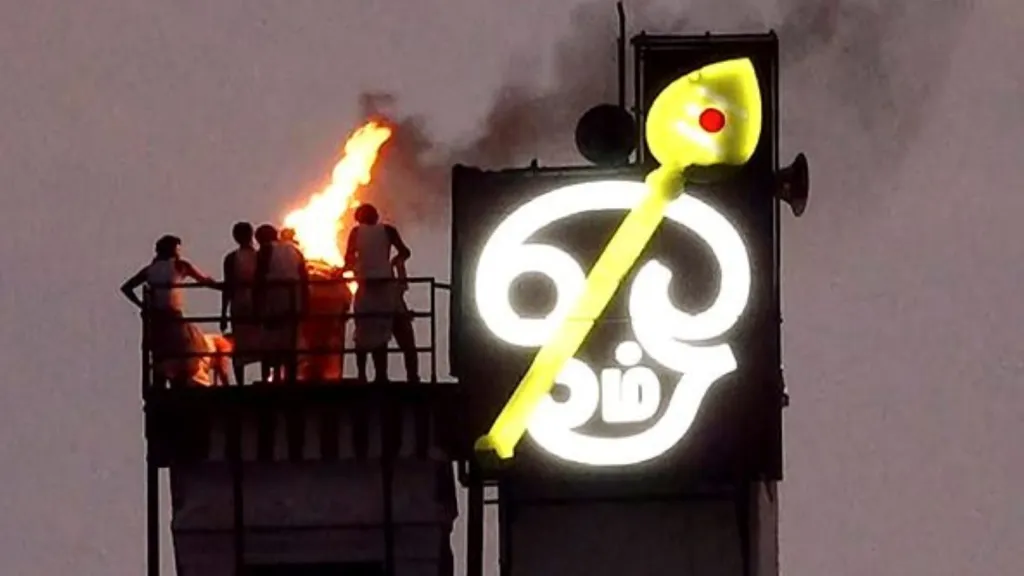
New Delhi, November 28, 2026: The Supreme Court of India has suspended the Board of Trustees of the Arulmigu Subramaniya Swamy Temple in Tamil Nadu’s Madurai district and directed that the Karthigai Deepam lamp be lit at the disputed Deepathoon stone pillar atop Thiruparankundram hill on Saturday, November 28.
The decision followed the failure of temple authorities and the Tamil Nadu administration to implement an earlier Supreme Court order allowing the ceremonial lamp to be lit at the location on November 24.
A bench comprising Justices Aravind Kumar and Vipul M. Pancholi expressed serious concern over the non-compliance and appointed two retired High Court judges to take charge of the temple’s administration.
The court also directed the Central Reserve Police Force (CRPF) to provide security at the hill and ensure that worshippers at the temple and nearby dargah can perform their religious activities peacefully.
The development has brought renewed attention to the longstanding dispute concerning the location of the ceremonial lamp.
Supreme Court Orders Karthigai Deepam Lighting on November 28
The Supreme Court directed authorities to ensure the lighting of the Karthigai Deepam lamp at the Deepathoon stone pillar on November 28.
The direction came during a hearing on November 27 concerning alleged non-compliance with the court’s earlier order.
On November 20, the court had permitted a small team authorised by the temple administration to light the ceremonial lamp at the pillar on November 24 as a temporary arrangement.
However, the lamp was instead lit at the customary Deepa Mandapam near the Uchi Pillayar Temple.
The contested Deepathoon pillar remained unlit.
Following complaints about the failure to implement its directions, the Supreme Court issued fresh orders requiring the ceremony to take place.
Temple Board Suspended Over Non-Compliance
The Supreme Court suspended the Board of Trustees of the Arulmigu Subramaniya Swamy Temple.
The bench criticised the trustees for passing a resolution to continue the customary practice of lighting the lamp at the Deepa Mandapam rather than the disputed hilltop pillar.
The trustees had maintained that the traditional location was consistent with the temple’s established religious customs.
However, the Supreme Court observed that its November 20 order was binding on the administration.
The bench found a prima facie case of wilful disobedience of its directions.
The suspension is an interim administrative measure arising from the court proceedings, not a final resolution of the underlying religious and historical dispute.
Two Retired Judges Appointed to Manage Temple
Following the suspension of the trustees, the Supreme Court appointed two former judges as receivers to oversee the temple’s administration.
The appointed officials are:
- Justice S. Vaidyanathan, former Chief Justice of the Meghalaya High Court.
- Justice V. Parthiban, former judge of the Madras High Court.
The receivers have been instructed to take immediate charge of the temple’s administration.
They are also responsible for ensuring implementation of the court’s lamp-lighting directions.
The decision temporarily places the institution’s administration under court-appointed supervision.
CRPF Directed to Provide Security at Thiruparankundram Hill
The Supreme Court ordered the CRPF to take responsibility for security at the temple and the hill.
The direction followed concerns about the failure of the existing arrangements to implement the earlier order.
The court instructed the central security force to maintain peace during the ceremony.
It also emphasised that devotees visiting both the temple and the nearby Sikandar Badusha Dargah must be able to worship without obstruction.
The security directions recognise the sensitivity of the location, which contains places of religious significance to different communities.
The court’s order seeks to prevent confrontation while allowing the ceremonial activities to proceed.
Devotees Allowed to Light Lamps at Deepathoon
In a change from its November 20 directions, the Supreme Court permitted individual devotees to light lamps at the Deepathoon.
The earlier order had limited participation to a small authorised team.
The revised directions provide wider access while maintaining security safeguards.
The court specified that arrangements must protect the nearby dargah, including a separation of at least 50 metres from the disputed lighting location where applicable.
The CRPF has been tasked with ensuring that religious activities can take place peacefully.
The final arrangements for participation are subject to the court-appointed receivers and security authorities.
What Is the Thiruparankundram Deepathoon Dispute?
The controversy concerns a stone pillar located on Thiruparankundram hill in Madurai.
Some Hindu devotees maintain that the pillar is associated with the traditional lighting of Karthigai Deepam.
However, the Tamil Nadu government and temple administration have disputed that interpretation.
They have argued that the structure is a historical survey marker rather than a traditional temple lamp pillar.
The hill is also home to the Sikandar Badusha Dargah, a Muslim place of worship.
The disagreement has therefore involved questions about religious customs, historical evidence, access to the site and administrative responsibilities.
The Supreme Court’s immediate directions concern the lamp-lighting ceremony and implementation of judicial orders.
They do not constitute a final determination of every disputed historical or religious claim.
Why Was the Lamp Not Lit on November 24?
The Supreme Court had previously permitted the ceremonial lamp to be lit at the Deepathoon during the November 24 festival.
However, the temple’s Board of Trustees resolved to follow the customary practice of lighting the lamp near the Uchi Pillayar Temple.
The administration argued that its decision reflected established temple traditions.
Madurai District Collector Nishant Krishna subsequently informed the court that arrangements had been made to implement the order.
He stated that the ceremony could not proceed at the disputed location because the trustees had not authorised the required team.
The Supreme Court was dissatisfied with that explanation.
The judges questioned why public authorities had failed to ensure compliance with the earlier directions.
Supreme Court Issues Contempt Notices to Senior Officials
The bench issued notices to several senior Tamil Nadu officials, asking them to explain why contempt proceedings should not be initiated.
Those named in the proceedings include the state’s Chief Secretary, Director General of Police, Madurai District Collector and officials associated with the Hindu Religious and Charitable Endowments Department.
The court also sought explanations from police and temple authorities.
The judges expressed concern that the earlier directions had not been implemented despite the responsibilities assigned to the administration.
However, the issuance of contempt notices does not mean that every official has already been finally found guilty of contempt.
The proceedings will allow the authorities to present their responses.
Chief Secretary Asked to Submit Detailed Affidavit
The Supreme Court directed Tamil Nadu’s Chief Secretary to submit a detailed affidavit explaining communications between officials concerning the lamp-lighting arrangements.
The court asked for relevant information about emails, telephone calls, messages and other exchanges.
It also directed the Chief Secretary to appear personally at the next hearing.
The matter is scheduled to be considered again on December 12, 2026.
The court intends to examine how administrative decisions were taken and why the November 20 directions were not carried out.
Further findings will depend on the evidence and explanations submitted.
Tamil Nadu Government Defends Its Position
During the proceedings, lawyers representing Tamil Nadu authorities argued that the failure to light the lamp at the disputed pillar was not the result of a deliberate conspiracy.
Senior advocate Abhishek Manu Singhvi, appearing for the Hindu Religious and Charitable Endowments Department, argued that the administration’s interpretation of the earlier order had contributed to the disagreement.
Lawyers representing the district administration also maintained that officials had attempted to make the necessary arrangements.
The Supreme Court rejected the suggestion that its earlier directions allowed the authorities discretion to disregard them.
The competing submissions remain part of the ongoing judicial proceedings.
Archaeological Survey of India Raises Concerns
Solicitor General Tushar Mehta, representing the Archaeological Survey of India (ASI), raised concerns about the implementation of the earlier order.
He submitted that ASI officials had been prevented from accessing the Deepathoon location during preparations.
The argument formed part of the broader allegations of administrative non-compliance.
The Tamil Nadu administration disputed aspects of the submissions and said consultations had taken place.
The role of the ASI is important because the controversy also involves questions about the historical character of the stone pillar and its surroundings.
The court’s proceedings will continue to examine these issues as necessary.
What Is Karthigai Deepam?
Karthigai Deepam is an important Hindu festival celebrated particularly in Tamil Nadu.
The festival involves lighting lamps as symbols of spiritual illumination and devotion.
It has significant associations with Lord Shiva and Lord Murugan.
Temples and homes across Tamil Nadu observe the occasion through special prayers and ceremonial lighting.
At Thiruparankundram, the location of the ceremonial lamp has become the subject of prolonged legal disagreement.
The current court proceedings concern where the lamp should be lit and how the administration should comply with judicial directions.
Supreme Court Emphasises Constitutional Duty
During the hearing, the Supreme Court stressed that its orders must be followed by public authorities.
The bench referred to Article 144 of the Constitution, which requires civil and judicial authorities to act in aid of the Supreme Court.
The judges expressed concern that officials could undermine the administration of justice by refusing to implement binding orders.
The court also emphasised the importance of maintaining public order and protecting access to religious institutions.
Its remarks were directed at the conduct under examination in the contempt proceedings.
The matter remains subject to further judicial consideration.
What Happens Next in the Madurai Temple Case?
The immediate priority is implementing the court’s directions for the November 28 lamp-lighting ceremony.
The two court-appointed receivers are expected to oversee the temple administration.
The CRPF has been directed to provide security and protect access to the temple and nearby dargah.
Meanwhile, the Tamil Nadu government and officials named in the contempt notices must respond to the court.
The Chief Secretary has also been directed to submit a detailed affidavit.
The Supreme Court is expected to review the matter again on December 12.
The broader dispute over the Deepathoon pillar and competing historical claims remains unresolved.
Madurai Karthigai Deepam Row: Key Highlights
The Supreme Court suspended the Arulmigu Subramaniya Swamy Temple’s Board of Trustees on November 27, 2026.
The court directed that the Karthigai Deepam lamp be lit at the Deepathoon stone pillar atop Thiruparankundram hill on November 28.
The decision followed non-compliance with an earlier order concerning the November 24 ceremony.
Justices Aravind Kumar and Vipul M. Pancholi heard the matter.
Retired judges S. Vaidyanathan and V. Parthiban were appointed as receivers.
The CRPF was directed to provide security and protect worshippers at both the temple and nearby dargah.
Contempt notices were issued to senior Tamil Nadu officials.
The Chief Secretary was directed to submit a detailed affidavit and appear before the court at the next hearing.
The lighting ceremony has been ordered for November 28, but its completion requires separate confirmation.
Source – The Indian Express, Bar and Bench, The News Minute, The Tribune, The Economic Times, DD India
Supreme News Network


