

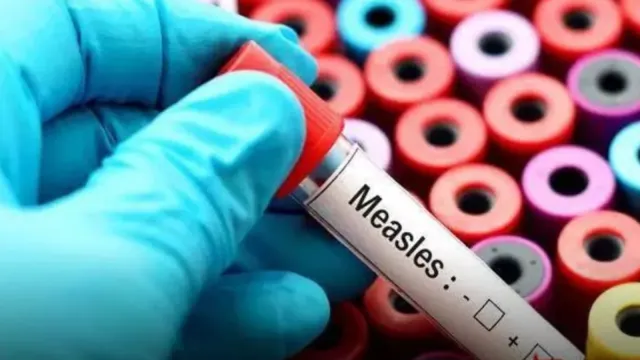
New Delhi, November 28, 2026: India is unlikely to achieve the World Health Organization’s 2026 target for eliminating measles and rubella despite major improvements in childhood vaccination coverage, WHO experts have warned.
The assessment comes as new WHO and UNICEF figures show that India has achieved 98% coverage for the first dose of a measles-containing vaccine and 95% coverage for the second dose.
Although these figures represent substantial progress, continued transmission in certain regions remains a significant challenge.
According to The Indian Express, WHO officials said India has made extraordinary gains in immunisation but still needs to reach children living in communities where vaccination coverage is inadequate.
The country recorded 17,995 measles cases in 2025, compared with 65,150 in 2023.
WHO experts now believe interruption of indigenous measles and rubella transmission could be possible by 2029, followed by verification around 2032, provided vaccination coverage and disease surveillance continue improving.
The findings underline an important public health challenge: high national vaccination coverage does not automatically mean every community is protected from outbreaks.
WHO Says India May Miss 2026 Elimination Target
The World Health Organization’s South-East Asia Region has been working towards eliminating measles and rubella by the end of 2026.
However, WHO specialists say the target is unlikely to be achieved in India within the planned timeframe.
Dr Santosh Gurung, Technical Officer for Measles and Rubella Control at WHO, explained that reported measles cases remain substantial in certain parts of the country.
He indicated that interruption of local transmission could become achievable by 2029.
Formal verification may follow around 2032 if the country demonstrates sustained interruption of transmission.
The assessment reflects continuing concern about outbreaks despite improvements in vaccination coverage.
India Achieves 98% First-Dose Vaccination Coverage
WHO and UNICEF estimates show that India has reached 98% coverage for the first dose of the measles-containing vaccine.
Second-dose coverage has increased to 95%.
Both figures are considerably higher than current global averages.
| Vaccination indicator | India | Global average |
|---|---|---|
| First dose of measles-containing vaccine | 98% | 84% |
| Second dose of measles-containing vaccine | 95% | 77% |
These numbers demonstrate India’s progress in expanding childhood immunisation.
However, they represent national estimates.
Coverage can differ significantly between districts, cities and population groups.
Why Is India Still Reporting Measles Cases?
Measles is one of the most contagious viral infections affecting humans.
Even small gaps in population immunity can allow the disease to spread.
A national vaccination rate of 98% does not mean every district has achieved the same level of protection.
Some communities may have substantially lower coverage.
Children who miss one or both vaccine doses remain vulnerable.
When infected individuals enter areas with inadequate vaccination coverage, outbreaks can occur.
WHO experts have therefore emphasised the importance of identifying communities where children remain unvaccinated or partially vaccinated.
Nearly 18,000 Measles Cases Reported in 2025
India reported 17,995 measles cases during 2025.
The figure represents a significant decline from 65,150 cases reported in 2023.
This is a reduction of approximately 72%.
However, the remaining number of infections demonstrates that transmission has not been eliminated.
Measles outbreaks can continue even when most children nationally are vaccinated.
WHO officials have expressed concern about infections concentrated in particular communities.
Reducing these localised outbreaks will be essential to achieving elimination.
India Exits Global Top 10 for Unvaccinated Children
One of the most important improvements is India’s removal from the list of the world’s ten countries with the largest numbers of unvaccinated children.
According to WHO and UNICEF estimates, this is the first time India has moved out of the group since the estimates began in 2001.
The achievement is notable because approximately 23 million children are born in India each year.
Maintaining high immunisation coverage across such a large population requires sustained investment in healthcare delivery.
However, being outside the top ten does not mean all children have received their vaccines.
India must continue identifying and supporting those who remain unprotected.
WHO Praises India’s Immunisation Progress
Dr Kate O’Brien, Director of WHO’s Department of Immunization, Vaccines and Biologicals, praised India’s progress in childhood vaccination.
She described the improvement as the result of long-term investment and sustained work.
However, she warned against reducing immunisation efforts.
WHO officials have emphasised that countries with high coverage must continue maintaining vaccination services and strengthening surveillance.
Even a modest decline in coverage could leave additional children vulnerable.
The organisation has called for targeted action in areas where vaccination rates remain below the level required to prevent sustained transmission.
What Is Measles?
Measles is a highly contagious viral disease that primarily affects children but can also infect unprotected adults.
The infection spreads through the air when an infected person breathes, coughs or sneezes.
Common symptoms include fever, cough, runny nose, red eyes and a widespread skin rash.
Symptoms typically appear several days after exposure.
The disease can cause serious complications, including pneumonia, dehydration and inflammation of the brain.
In severe cases, measles can be fatal.
Vaccination is the most effective way to prevent the infection and its complications.
What Is Rubella?
Rubella is a viral infection sometimes called German measles.
It usually causes a mild illness involving fever, rash and swollen lymph nodes.
However, rubella can be especially dangerous during pregnancy.
Infection during early pregnancy can lead to miscarriage, stillbirth or congenital rubella syndrome.
Babies affected by congenital rubella syndrome may develop hearing difficulties, heart defects, vision problems and other disabilities.
This is why public health programmes aim to eliminate both measles and rubella.
Vaccination provides protection against these preventable infections.
Why Are Two Vaccine Doses Important?
India’s routine immunisation programme provides measles-rubella vaccination in two doses.
The first dose is generally scheduled at 9–12 months of age.
The second dose is scheduled at 16–24 months.
Two doses are important because some children may not develop sufficient protection after receiving only the first dose.
Completing the recommended schedule increases the likelihood of effective immunity.
Parents should consult their child’s immunisation record and a healthcare professional to ensure that no doses have been missed.
Children who are behind schedule may need catch-up vaccination according to official medical guidance.
WHO Recommends High Coverage in Every District
WHO’s regional experts have recommended maintaining at least 95% coverage with two doses of measles-containing vaccine in every district and community.
This is more demanding than achieving a high national average.
Some areas may face challenges due to geography, population movement or difficulty accessing healthcare services.
Urban settlements with limited health facilities can also experience vaccination gaps.
WHO has highlighted the importance of reaching migrant populations, remote communities and other underserved groups.
The objective is to ensure that high national coverage translates into widespread protection at the local level.
What Does Measles Elimination Mean?
Elimination means that continuous local transmission of a disease has been interrupted within a defined geographical area.
It does not mean the virus has disappeared everywhere in the world.
Even after a country achieves elimination, imported infections can still occur.
Countries must maintain vaccination and surveillance systems to prevent those infections from causing sustained outbreaks.
Under the WHO regional verification framework, countries need evidence of sustained interruption of indigenous transmission before elimination can be formally verified.
This explains why achieving elimination takes longer than simply recording a decline in cases.
India Could Interrupt Transmission by 2029
WHO experts have identified 2029 as a possible timeframe for interrupting local measles and rubella transmission in India.
However, this is a projection rather than a formally confirmed replacement deadline.
Achieving the milestone will depend on maintaining vaccination coverage and reducing immunity gaps.
Effective disease surveillance will also be essential.
Health authorities need to identify suspected infections, confirm cases through laboratory testing and respond quickly to outbreaks.
If sustained interruption is demonstrated, formal verification could potentially follow around 2032.
The timeline remains dependent on future public health results.
Global Measles Deaths Reach Historic Low
WHO’s latest global report highlights significant progress against measles.
An estimated 72,000 people died from measles worldwide in 2025.
That represents a 91% reduction in annual measles deaths since 2000.
The report estimates that vaccination prevented more than 60 million deaths globally between 2000 and 2025.
However, nearly 10 million people were still infected with measles in 2025.
The figures demonstrate the major benefits of vaccination while showing that the disease remains a serious threat.
Millions of Children Remain Vulnerable Worldwide
Despite progress, more than 29 million children worldwide were unvaccinated or insufficiently vaccinated against measles in 2025.
WHO reported large or disruptive outbreaks in 59 countries.
These included low-income, middle-income and high-income nations.
The organisation warned that improvements in one country can be undermined if vaccination coverage falls.
Some countries that previously achieved measles elimination have experienced renewed transmission.
WHO officials have stressed that immunisation programmes require continuous support, even after major milestones are reached.
Vaccine Misinformation Adds to Public Health Challenges
WHO experts have also raised concerns about false and misleading information concerning vaccination.
Misleading claims can create uncertainty among parents and discourage timely immunisation.
The organisation has emphasised that measles vaccines are effective at preventing disease and reducing serious complications.
Vaccination decisions should be based on reliable medical guidance rather than unverified social media claims.
Healthcare professionals and public health authorities can help families understand vaccine benefits, recommended schedules and potential side effects.
Maintaining public confidence is an important part of preventing future outbreaks.
Why Measles Remains Dangerous Even After Recovery
Some children recover from measles without immediately apparent complications.
However, the infection can weaken immune defences and increase vulnerability to other illnesses.
WHO experts have warned that measles may affect the immune system for an extended period.
This can raise the risk of infections such as pneumonia and diarrhoea.
Severe measles can also cause neurological complications.
Preventing infection is therefore important even when most patients are expected to recover.
Vaccination protects children from both the immediate illness and associated complications.
What Should Parents Do?
Parents should ensure that children receive both recommended measles-rubella vaccine doses.
Vaccination records should be reviewed regularly.
If a child has missed a dose, parents can consult a nearby government health facility or qualified healthcare professional about catch-up vaccination.
Children showing symptoms consistent with measles should receive medical evaluation.
Families should contact a healthcare facility before visiting when measles is suspected, allowing staff to advise on precautions that reduce exposure to others.
Medical attention is especially important if a child experiences breathing difficulties, dehydration, seizures or other severe symptoms.
What India Needs to Achieve Elimination
WHO experts have identified several priorities for further progress.
These include maintaining high two-dose vaccination coverage, identifying children who remain unvaccinated, improving local surveillance and responding quickly to outbreaks.
The health system must also maintain reliable vaccine availability and accessible immunisation services.
District-level monitoring can help identify areas where national averages conceal lower coverage.
Continued coordination between central and state health authorities will be important.
Sustained progress will depend on protecting children in every community rather than focusing only on overall national vaccination percentages.
India Measles-Rubella Elimination: Key Highlights
India is unlikely to meet the WHO South-East Asia Region’s 2026 measles-rubella elimination target.
WHO and UNICEF estimate 98% first-dose measles vaccination coverage and 95% second-dose coverage in India.
The global averages stand at 84% and 77%, respectively.
India reported 17,995 measles cases in 2025, compared with 65,150 in 2023.
The country has exited the global top ten for the number of unvaccinated children for the first time since 2001.
WHO experts say local transmission could potentially be interrupted by 2029.
Formal verification may follow around 2032 if the necessary conditions are met.
Globally, measles caused an estimated 72,000 deaths in 2025.
WHO estimates that measles vaccination has saved more than 60 million lives since 2000.
India’s high vaccination coverage represents major progress, but continued outbreaks show that reaching every unprotected child remains essential to elimination.
Source – World Health Organization, UNICEF, The Indian Express, Ministry of Health and Family Welfare
Supreme News Network
I’d have to examine with you here. Which is not one thing I usually do! I take pleasure in reading a post that may make folks think. Additionally, thanks for permitting me to comment!
It’s really a great and helpful piece of information. I’m satisfied
that you just shared this useful information with us. Please keep us up to
date like this. Thank you for sharing.