New Delhi, November 27, 2026: The Congress Parliamentary Strategy Group is scheduled to meet in New Delhi at 4:30 PM on Friday to discuss its approach to an upcoming special sitting of Parliament, amid renewed political disagreement over the government’s proposed delimitation-linked women’s reservation legislation.
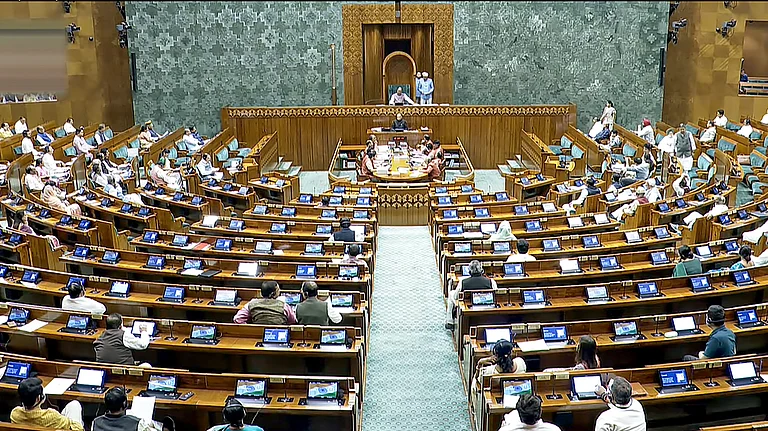
The meeting is expected to be chaired by Congress Parliamentary Party chairperson Sonia Gandhi. It follows the Union government’s announcement that the Lok Sabha will reconvene on November 30 and the Rajya Sabha on December 2 to conduct essential government business.
The parliamentary sitting is expected to continue until December 3. Although the government has not publicly confirmed the complete legislative agenda, political attention has centred on proposals to increase parliamentary seats and implement 33% reservation for women in the Lok Sabha and state legislative assemblies.
Congress leaders have criticised the government’s decision to reconvene Parliament at short notice and have questioned why the legislation cannot be discussed during the regular Winter Session.
The party maintains that it supports women’s reservation but opposes linking its implementation to the government’s current delimitation proposal.
As of Friday morning, the Congress strategy meeting and Union Cabinet meeting were still scheduled events. Their outcomes had not been announced.
Congress Parliamentary Strategy Group to Meet at 4:30 PM
The Congress Parliamentary Strategy Group will meet in Delhi on November 27 to finalise the party’s position ahead of the parliamentary sitting beginning November 30.
Sonia Gandhi is expected to chair the meeting.
Senior Congress leaders are likely to discuss the proposed legislation, parliamentary procedures and coordination with other opposition parties.
The party is also expected to examine the government’s decision to reconvene Parliament before the regular Winter Session.
The meeting comes at a politically significant moment because the government is preparing to revisit legislation that previously failed to secure the necessary parliamentary support.
No final Congress strategy resolution had been announced at the time of writing.
Government Announces Special Parliamentary Sitting From November 30
Union Parliamentary Affairs Minister Kiren Rijiju announced on November 26 that the government had requested the presiding officers of both Houses to reconvene Parliament.
According to the announcement, the Lok Sabha is scheduled to meet on November 30, while the Rajya Sabha will reconvene on December 2.
The sittings are expected to continue until December 3, subject to parliamentary requirements.
Rijiju described the purpose as conducting essential government business.
However, the government has not formally identified every bill that will be considered during the sitting.
Reports suggest that the delimitation-linked women’s reservation legislation is likely to be a major focus.
Why Is Delimitation at the Centre of the Debate?
Delimitation is the process of determining the boundaries and allocation of electoral constituencies.
It can involve changes to the number of seats assigned to different states and regions.
In India, delimitation has particular political significance because the distribution of Lok Sabha seats affects representation in Parliament.
The government’s proposed legislation seeks to revise the existing framework and expand the number of parliamentary constituencies.
The proposals have generated debate about regional representation, the appropriate population data to use and the implementation of women’s reservation.
Opposition parties have demanded further consultation before significant changes are made.
What Is the Proposed Women’s Reservation Plan?
The government’s legislative proposal is intended to support the implementation of 33% reservation for women in the Lok Sabha and state legislative assemblies.
The Constitution (106th Amendment) Act, 2023, established the framework for women’s reservation.
However, its implementation is linked to a delimitation exercise conducted after the relevant census.
The government has sought legislative changes that could make implementation possible ahead of the 2029 general election.
The proposal has been associated with increasing the maximum permissible Lok Sabha strength to 850 seats.
This would represent a substantial expansion of the House.
The final provisions will depend on the legislation introduced or reconsidered and whether Parliament approves it.
Congress Supports Reservation but Questions Delimitation Link
Congress has reiterated its support for reserving one-third of legislative seats for women.
However, the party argues that the reservation provisions should be implemented without being tied to the government’s proposed expansion of constituencies.
Congress leaders have expressed concerns about whether the delimitation process could alter the relative representation of different regions.
They have also called for discussions involving opposition parties and state governments.
The disagreement therefore concerns the mechanism and timing of implementation rather than whether women should receive legislative reservation.
The government, meanwhile, maintains that changes to the delimitation framework are important for implementing the reservation policy.
Congress Criticises Decision to Reconvene Parliament
Congress leaders have criticised the decision to call a special parliamentary sitting.
The party has argued that legislation involving major constitutional changes should receive adequate parliamentary scrutiny.
Congress MP Manish Tewari questioned why the government was not introducing the proposed measures during the regular Winter Session.
Party representatives have also raised concerns about the short period available for consultation.
Congress has characterised the government’s approach in strongly critical terms.
These objections represent the opposition party’s position and do not establish that the proposed parliamentary sitting violates constitutional procedures.
Union Cabinet Meeting Scheduled for November 27
The Union Cabinet is also scheduled to meet on Friday, November 27.
Reports indicate that the meeting is expected to begin at approximately 1 PM.
Government sources have suggested that the Cabinet may examine revised legislation concerning delimitation and women’s reservation.
The proposed changes could receive Cabinet approval before Parliament reconvenes.
However, the agenda and outcome of the meeting were not officially confirmed at the time of writing.
Any approval would still be separate from parliamentary passage.
Constitutional amendments must satisfy the voting requirements prescribed under Article 368 of the Constitution.
What Happened to the Earlier Delimitation Bills?
The government previously introduced a legislative package in April 2026 that linked women’s reservation with changes to the delimitation framework.
It included the Constitution (131st Amendment) Bill, 2026, the Delimitation Bill, 2026, and proposed changes concerning Union Territories.
The constitutional amendment proposal failed to secure the required majority in the Lok Sabha in April.
According to parliamentary reporting, 298 members supported the constitutional amendment while 230 opposed it, falling short of the special majority required for passage.
The government is now expected to reconsider the issue through revised legislation.
However, the details of any new draft will need to be examined once officially released.
Why Does a Constitutional Amendment Require a Special Majority?
Most ordinary legislation can be passed through a simple majority of members present and voting, subject to applicable parliamentary procedures.
Constitutional amendments follow stricter requirements.
Under Article 368, a constitutional amendment bill generally requires the support of a majority of the total membership of each House and at least two-thirds of members present and voting.
Certain amendments also require ratification by at least half of the state legislatures.
These requirements mean that the government may need support beyond its own parliamentary members.
The political composition of Parliament is therefore important when considering the proposed changes.
Nevertheless, parliamentary support cannot be established conclusively until voting takes place.
Why Are Some Opposition Parties Concerned?
One major concern involves how delimitation may affect representation among India’s states.
States have experienced different population growth rates over recent decades.
A redistribution based on newer population figures could therefore alter their relative share of parliamentary seats.
Some parties have argued that states with lower population growth should not be disadvantaged because of successful population-control efforts.
Others maintain that representation should more closely reflect population changes.
These are longstanding constitutional and federal policy questions.
A final assessment of the government’s proposal will require examination of the legislation’s specific provisions.
INDIA Bloc Coordination Could Be Discussed
Congress is expected to consider coordination with other opposition parties during its strategy meeting.
The INDIA alliance includes several parties with differing regional interests and political priorities.
Issues involving delimitation may affect these parties differently depending on the states they represent.
Congress leaders are likely to explore whether the opposition can develop a shared parliamentary position.
However, there is no confirmed agreement among all INDIA bloc parties regarding the legislation.
Any joint strategy would require consultation and agreement among participating parties.
What Could Change in the Lok Sabha?
The proposed legislation has been associated with increasing the Lok Sabha’s maximum strength to 850 seats.
The current Lok Sabha has 543 elected constituencies.
An expansion would require decisions about the allocation of seats among states and the boundaries of individual constituencies.
If women’s reservation were implemented through the proposed framework, approximately one-third of the applicable seats would be reserved for women.
However, the exact number of reserved seats would depend on the final parliamentary strength and the legal provisions adopted.
No new allocation of constituencies has been implemented through the proposed legislation as of November 27.
Women’s Political Representation Remains a Major Issue
Women remain underrepresented in India’s legislative institutions relative to their share of the population.
Supporters of women’s reservation argue that the policy could increase participation in legislative decision-making.
The 2023 constitutional amendment reflected parliamentary recognition of the need for greater representation.
However, disagreements have continued over its implementation.
The present debate involves whether the government should proceed with the existing legal framework or amend it to enable implementation through a revised delimitation process.
The question is expected to feature prominently in the upcoming parliamentary sitting.
What Happens Next?
The immediate focus is on the Union Cabinet meeting and the Congress Parliamentary Strategy Group meeting scheduled for November 27.
The government may provide further details about its proposed legislation after Cabinet deliberations.
Congress is expected to announce or communicate its parliamentary position following internal discussions.
The Lok Sabha is scheduled to reconvene on November 30, followed by the Rajya Sabha on December 2.
Members will then have an opportunity to consider legislation formally placed before the Houses.
The outcome will depend on the contents of the proposed bills, parliamentary debate and voting.
Until those processes take place, the future of the delimitation-linked women’s reservation legislation remains unresolved.
Congress Strategy Meeting and Parliament Session: Key Highlights
Congress has scheduled a Parliamentary Strategy Group meeting in New Delhi for November 27, 2026, at 4:30 PM.
Sonia Gandhi is expected to chair the meeting.
The meeting will focus on the government’s decision to reconvene Parliament and the proposed delimitation-linked women’s reservation legislation.
The Lok Sabha is scheduled to meet on November 30, while the Rajya Sabha will reconvene on December 2.
The Union Cabinet is also expected to discuss related legislation on November 27.
The government is considering changes that could increase the Lok Sabha’s maximum strength to 850 and facilitate 33% reservation for women.
Congress supports women’s reservation but opposes linking its implementation to the current delimitation proposal.
The earlier constitutional amendment legislation failed to secure the required majority in April 2026.
No revised constitutional amendment has been passed, and the outcome of the scheduled meetings remains pending.
Source – The Indian Express, Press Trust of India, The Times of India, Hindustan Times, India Today, The Tribune, The Economic Times
Supreme News Network