
New Delhi, November 6, 2026: The Election Commission of India (ECI) has announced a Special Summary Revision (SSR) of electoral rolls in four states and two Union Territories, with the updated voter lists scheduled for final publication on January 21, 2027.
The revision will cover Arunachal Pradesh, Mizoram, Odisha and Sikkim, along with Chandigarh and Dadra and Nagar Haveli and Daman and Diu.
The Election Commission’s instructions, dated November 4 and reported on November 5–6, aim to ensure that eligible citizens are included in electoral rolls while addressing duplicate entries, corrections and other voter registration issues.
Four States and Two Union Territories Included
The Special Summary Revision will be conducted in the following regions:
- States: Arunachal Pradesh, Mizoram, Odisha and Sikkim.
- Union Territories: Chandigarh and Dadra and Nagar Haveli and Daman and Diu.
The exercise follows the completion of the Special Intensive Revision (SIR) in these regions.
Electoral officials will update existing voter lists rather than prepare entirely new registers.
The Commission has instructed the respective Chief Electoral Officers to ensure that adequate personnel and resources are available.
Draft Electoral Rolls to Be Published on November 30
The Election Commission has released a detailed schedule for the revision.
| Activity | Date |
|---|---|
| Polling station rationalisation completed | November 20, 2026 |
| Draft electoral rolls published | November 30, 2026 |
| Claims and objections period | November 30 – December 30, 2026 |
| Disposal of claims and objections | By January 18, 2027 |
| Final electoral rolls published | January 21, 2027 |
Citizens will have one month to review the draft electoral rolls and submit applications for additions, corrections or deletions.
January 1, 2027, Set as Qualifying Date
The Commission has fixed January 1, 2027, as the principal qualifying date for voter registration.
Indian citizens who turn 18 on or before this date and meet other eligibility requirements can apply for inclusion in the electoral rolls.
The Commission will also accept advance applications from individuals who will become eligible on April 1, July 1 or October 1, 2027.
This arrangement is intended to simplify registration for first-time voters and reduce delays in updating electoral records.
Special Summary Revision vs Special Intensive Revision
The Election Commission has clarified the difference between the Special Summary Revision and the Special Intensive Revision.
Under the Special Summary Revision (SSR), electoral authorities use existing voter lists as the starting point.
Eligible voters are generally carried forward, while new registrations, corrections and verified deletions are incorporated.
The Special Intensive Revision (SIR) involves a more extensive verification process and preparation of voter lists afresh using enumeration and eligibility information.
The latest announcement concerns an SSR, not a new round of SIR in the six regions.
Election Commission Introduces Safeguards Against Wrongful Deletions
The Election Commission has outlined additional safeguards to prevent improper removal of voters from electoral rolls.
Electoral Registration Officers (EROs) have been directed to personally verify cases where proposed deletions exceed 2% of the electors at a polling station.
Additional scrutiny will also apply when the same individual submits objections against more than five voters.
The Commission has placed limits on the number of Form 7 applications an individual can submit during the revision period.
These measures are intended to protect legitimate voters while allowing electoral authorities to identify duplicate or ineligible entries.
Aadhaar Details Remain Voluntary
The Election Commission has reaffirmed that furnishing Aadhaar details in voter registration and correction forms remains voluntary.
Applicants using Form 6 for new registration or Form 8 for corrections and shifting of residence cannot be rejected solely because they do not provide an Aadhaar number.
Similarly, an existing voter cannot be removed from the electoral roll merely for failing to provide Aadhaar details.
The clarification is important because voter identification and documentation requirements have been subjects of public discussion during electoral roll revision exercises.
Special Focus on Young and First-Time Voters
The Commission has directed electoral authorities to prioritise the enrolment of eligible citizens who are not yet registered.
Special attention will be given to young voters, including those turning 18 during the designated qualifying periods.
Booth-Level Officers and other election officials will assist applicants with registration procedures.
The initiative also aims to improve participation among communities that face difficulties accessing voter registration services.
Help Desks Planned for Migrants and Vulnerable Groups
Election officials have been instructed to provide additional assistance to migrants, homeless individuals and marginalised communities.
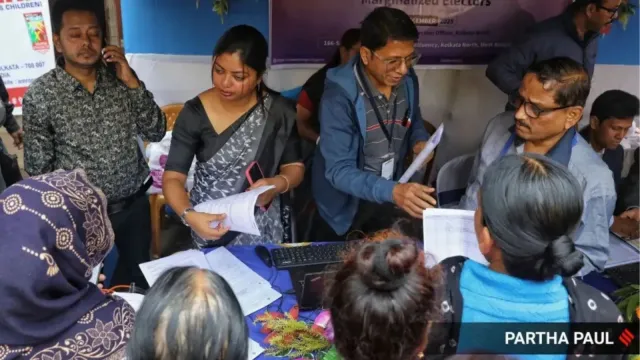
Special enrolment camps and help desks will be organised to make registration more accessible.
The Commission has also recommended focused outreach to women, transgender persons, senior citizens, Scheduled Tribe communities and persons with disabilities.
The objective is to ensure that eligible citizens are not excluded because of administrative or logistical difficulties.
Political Parties to Receive Electoral Roll Information
Recognised political parties will receive copies of draft and final electoral rolls.
They will also be provided with regular information about applications seeking additions, deletions and modifications.
Booth-Level Agents appointed by political parties can assist in identifying registration issues and submitting applications within the prescribed limits.
The Commission says these arrangements are intended to improve transparency during the revision process.
Revision Schedule for Other States to Be Announced Later
The Election Commission has also addressed the status of electoral roll revisions in other parts of India.
Separate schedules will be announced for Andhra Pradesh, Haryana, Jharkhand, Karnataka, Maharashtra, Meghalaya, Nagaland, Delhi, Tripura and Telangana, where SIR activities are underway or have recently been completed.
The Commission will also announce schedules for Himachal Pradesh, Jammu and Kashmir and Ladakh later, taking weather conditions into account.
Earlier, on October 15, the poll body had announced summary revisions covering 17 other states and Union Territories.
How Citizens Can Check Their Voter Registration
Eligible citizens in the six regions can check their names in the electoral rolls through the Election Commission’s official voter services platform.
Those whose names are missing can submit a new registration application using Form 6.
Existing voters seeking corrections or changes in their residential details can use Form 8.
Citizens can also approach their local Booth-Level Officer or Electoral Registration Officer for assistance.
The draft lists published on November 30 will provide an opportunity to identify and report errors before the final publication.
Final Voter Lists Scheduled for January 21, 2027
The Election Commission’s latest decision represents another stage in its nationwide electoral roll revision programme.
The exercise is intended to improve the accuracy of voter lists, encourage first-time voter participation and establish clearer procedures for electoral registration.
With the draft rolls scheduled for November 30, citizens in the affected regions will have an opportunity to verify their registration details and submit corrections.
The final electoral rolls are scheduled for publication on January 21, 2027, after the completion of claims, objections and verification procedures.
Source: The Indian Express, Hindustan Times, Akashvani News, Election Commission of India — November 5–6, 2026
Supreme News Network