

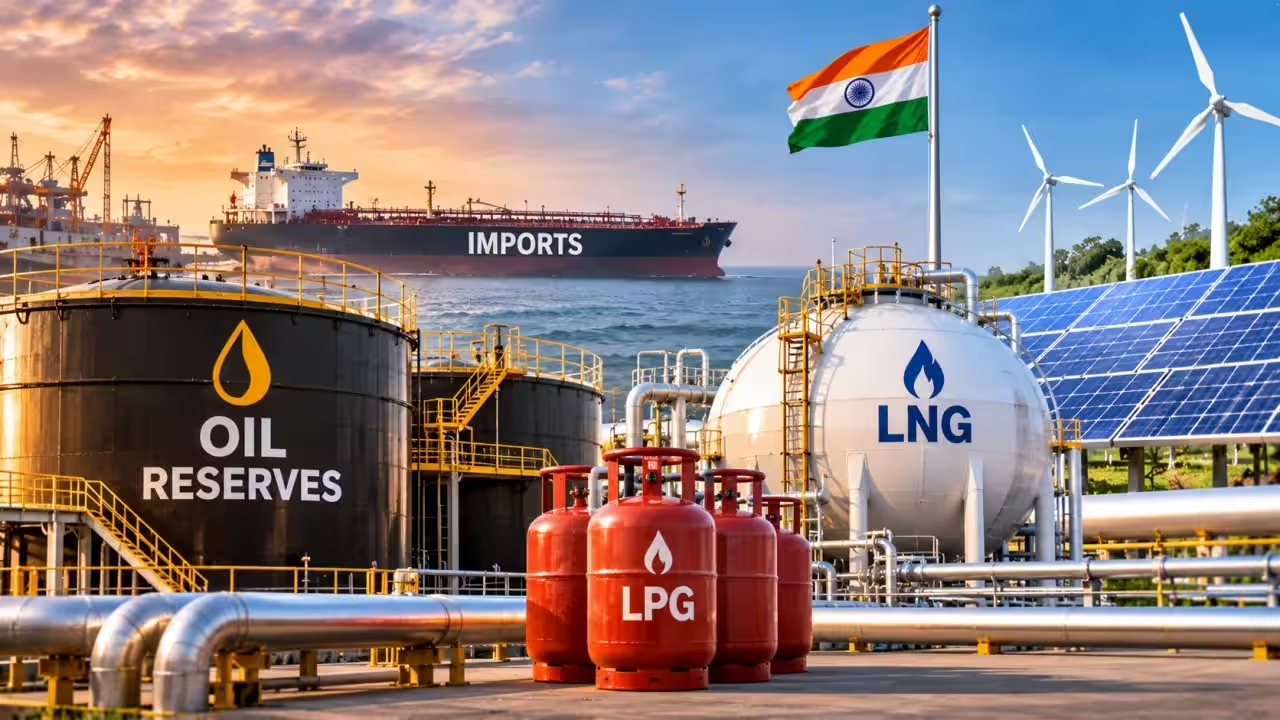
New Delhi, November 28, 2026: India’s imports of liquefied natural gas (LNG) are expected to fall to their lowest level in eight months during November 2026 as rising international prices, stronger European competition and reduced demand from domestic power producers discourage purchases from the global spot market.
According to vessel-tracking data from commodity analytics firm Kpler, India imported approximately 1.73 million tonnes of LNG between November 1 and November 27.
The full-month figure is projected to reach approximately 1.8–1.9 million tonnes, compared with 2.85 million tonnes in October.
If the estimate is realised, November will record India’s lowest monthly LNG imports since March 2026, when shipments fell sharply following disruptions to energy supplies through the Strait of Hormuz.
Energy analysts say the latest decline reflects a combination of higher import costs, seasonal changes in electricity demand and growing competition for available cargoes from European countries preparing for winter.
The expected fall does not necessarily indicate a permanent reduction in India’s natural gas requirements, but it highlights the challenges faced by price-sensitive energy importers during periods of global supply uncertainty.
India’s LNG Imports Expected to Fall Below 2 Million Tonnes
India’s LNG import volumes are on course for a substantial monthly decline.
Kpler data shows that approximately 1.73 million tonnes arrived during the first 27 days of November.
That represents average daily imports of roughly 64,000 tonnes.
By comparison, India imported about 92,000 tonnes per day during October.
The full-month November estimate of 1.8–1.9 million tonnes would represent a decline of approximately 33–37% from October’s 2.85 million tonnes.
The final figure will depend on shipments arriving during the remaining days of November and subsequent revisions to tracking data.
November Could Mark Lowest LNG Imports Since March
The projected November decline is significant when compared with India’s recent import history.
LNG imports dropped to approximately 1.67 million tonnes in March after the conflict in West Asia disrupted maritime energy transportation.
April imports remained relatively low at approximately 1.94 million tonnes.
However, shipments recovered during subsequent months as India increased purchases from alternative suppliers.
During April–October, monthly imports averaged approximately 2.38 million tonnes.
October’s imports reached 2.85 million tonnes, supported by stronger domestic demand and improved supplies from certain Gulf producers.
November’s projected decline would interrupt that recovery.
India LNG Imports: Key Figures
| Indicator | LNG Imports |
|---|---|
| March 2026 | 1.67 million tonnes |
| April 2026 | 1.94 million tonnes |
| October 2026 | 2.85 million tonnes |
| November 1–27 | 1.73 million tonnes |
| November 2026 projected | 1.8–1.9 million tonnes |
| November 2025 | 2.20 million tonnes |
The comparison indicates that November imports could decline both month-on-month and year-on-year.
However, the November 2026 total remains provisional.
Rising LNG Prices Discourage Spot Purchases
One of the principal reasons for the decline is the high cost of imported LNG.
Spot LNG prices increased sharply during October as buyers competed for limited supplies.
According to energy analyst Natalia Katona, Asian spot prices reached approximately $35 per million British thermal units (MMBtu) during mid-to-late October.
That was nearly $10 higher than the levels seen around mid-September.
The increase made short-term purchases less attractive for Indian companies.
Businesses that can reduce consumption, delay purchases or temporarily switch to alternative fuels may choose to do so when imported gas becomes particularly expensive.
The impact is especially important for industrial consumers operating with limited pricing flexibility.
Why European Buyers Are Competing for LNG
Europe is preparing for winter with relatively low natural gas inventories.
As temperatures fall, demand for gas used in heating and electricity generation generally increases.
European companies have consequently been seeking additional LNG shipments.
Some buyers have been willing to offer prices that attract cargoes away from Asian destinations.
This competition can reduce the availability of spot LNG for countries such as India.
Reuters reported earlier in November that Europe’s LNG imports were expected to rise substantially as buyers attempted to rebuild supplies.
However, higher European demand does not mean all LNG cargoes are being redirected from India.
The effect depends on prices, shipping costs, contractual commitments and available supply.
India’s Power Sector Requires Less Gas as Weather Cools
Seasonal changes in electricity consumption have also reduced India’s demand for LNG.
During warmer periods, electricity consumption can increase because of cooling requirements.
As temperatures decline, air-conditioning demand may ease in several regions.
This can reduce the need for electricity generation from gas-fired power stations.
Kpler analyst Sonal Ranjan also identified improved coal availability and fewer coal-fired power plant outages as contributing factors.
When coal-powered electricity generation becomes more reliable, the power sector may require less gas to meet demand.
The combined effect has reduced pressure on Indian buyers to secure additional LNG cargoes.
Gas-Based Electricity Generation Declines Sharply
Central Electricity Authority figures show a substantial reduction in gas-based electricity generation during November.
Between November 1 and 25, gas-fired power plants generated approximately 980.55 million units of electricity.
That represents a daily average of around 39.22 million units.
In October, gas-fired power generation averaged approximately 96.77 million units per day.
The sharp reduction illustrates how changes in electricity demand and fuel availability can influence LNG consumption.
However, LNG imports serve several sectors besides power generation, so electricity data alone does not explain the complete decline.
October’s High Imports May Have Reduced November Purchases
India received unusually high LNG volumes during October.
These shipments may have allowed buyers to maintain some inventory into November.
Energy analysts say the additional supply could have reduced the urgency of purchasing new cargoes at elevated spot prices.
Gas importers frequently plan deliveries based on expected consumption, contractual supplies and available storage.
When a previous month produces higher-than-expected arrivals, purchases in the following month may decline.
This means lower November imports could partly reflect supply timing rather than a comparable decline in underlying gas consumption.
Strait of Hormuz Security Risks Affect LNG Supplies
Maritime security concerns remain another important factor.
The Strait of Hormuz is a strategically significant shipping route for LNG exports from the Persian Gulf.
Before the West Asia conflict intensified in February 2026, approximately 60% of India’s LNG imports passed through the strait.
Disruptions to maritime traffic forced buyers to search for alternative supply routes and exporters.
Although shipments from Qatar and the UAE recovered during October, security risks have continued.
Energy analysts cited incidents involving LNG carriers struck by drones or naval mines during October and November.
Such threats can discourage shipping movements and increase insurance and transportation costs.
US Remains India’s Largest LNG Supplier in November
The United States remained India’s largest source of LNG during the first 27 days of November.
According to Kpler data, India imported approximately 0.42 million tonnes from American suppliers.
This compares with 0.63 million tonnes during October.
The decline reflects the broader reduction in imports from major suppliers.
US LNG has become increasingly important as India seeks to diversify supply sources beyond the Persian Gulf.
However, American shipments can involve longer transportation distances and different pricing arrangements.
The overall attractiveness of these cargoes depends on international market conditions.
UAE, Oman and Qatar Also Record Lower Deliveries
Several other major suppliers delivered smaller LNG volumes to India during November.
| Supplier | October 2026 | November 1–27 |
|---|---|---|
| United States | 0.63 MT | 0.42 MT |
| UAE | 0.51 MT | 0.32 MT |
| Oman | 0.45 MT | 0.30 MT |
| Qatar | 0.44 MT | 0.20 MT |
| Angola | 0.33 MT | 0.14 MT |
| Nigeria | 0.28 MT | 0.14 MT |
<text></text>
The figures show reduced arrivals from all six suppliers.
However, November’s figures cover only the first 27 days, while October’s figures represent the complete month.
Direct percentage comparisons must therefore account for the different reporting periods.
Qatar’s LNG Recovery Faces New Challenges
Qatar was a major supplier of LNG to India before the West Asia conflict.
The disruptions to shipping through the Strait of Hormuz caused a sharp fall in deliveries earlier in 2026.
Shipments subsequently recovered as exporters adopted alternative shipping arrangements.
October marked a significant improvement in supplies from Qatar.
However, November deliveries declined again, reaching approximately 0.20 million tonnes during the first 27 days.
The reduction highlights the continuing vulnerability of energy shipments passing through the region.
African LNG Cargoes Increasingly Attracted to Europe
LNG imports from Angola and Nigeria have also declined.
Energy analysts say European buyers have become more competitive in securing cargoes from African exporters.
India received five LNG cargoes from Angola during October, compared with two reported during November.
Nigeria was expected to supply two cargoes in November, down from four in October.
The shift reflects how European winter demand can influence cargo destinations across international LNG markets.
It also demonstrates the importance of price competition in the global gas trade.
How Important Is LNG to India’s Energy Supply?
India imports LNG to meet a substantial portion of its natural gas requirements.
According to energy market reporting, imported LNG accounts for approximately half of the country’s natural gas supply.
Natural gas is used in several important industries.
These include fertiliser production, power generation, city gas distribution, ceramics and other manufacturing activities.
Gas is also used as a fuel for compressed natural gas vehicles and piped natural gas connections.
Changes in international LNG prices can therefore affect multiple sectors of the economy.
However, the impact varies depending on whether buyers rely on long-term supply contracts or short-term spot purchases.
What Is the Difference Between LNG and LPG?
Liquefied natural gas and liquefied petroleum gas are different fuels.
LNG consists primarily of methane that is cooled to extremely low temperatures for transportation.
It is transported by specialised vessels and converted back into gas after reaching import terminals.
LPG generally consists of propane, butane or a combination of the two.
In India, LPG is commonly associated with household cooking cylinders.
LNG is an important source of natural gas for industrial users, electricity producers and city gas networks.
Disruptions to the two markets can have different effects on consumers and businesses.
Could Lower LNG Imports Affect Domestic Gas Prices?
Higher international LNG prices can increase costs for businesses purchasing imported gas.
Some industrial consumers may reduce gas use or switch fuels where technically and economically possible.
Others may pass additional costs on to customers.
However, domestic gas pricing in India depends on several factors, including government policies, contracts and the category of consumer.
A decline in LNG imports does not automatically mean that household piped gas or CNG prices will rise.
Actual changes depend on supply arrangements, pricing formulas and decisions by distribution companies.
Why India Is Looking to Diversify LNG Supplies
The West Asia conflict has highlighted the risks of depending heavily on a single shipping route.
India has increasingly purchased LNG from sources outside the Strait of Hormuz.
The United States, Oman and African exporters have become important alternatives.
Diversification can reduce dependence on a particular supplier or route.
However, it may also expose buyers to additional transportation costs and greater competition in international markets.
Energy planners must balance price, reliability, contractual commitments and supply security.
What Happens Next for India’s LNG Imports?
November’s final import figures will become clearer once all cargo arrivals are recorded.
Analysts will also monitor spot LNG prices and the pace of European winter purchases.
A decline in international prices could make additional imports more attractive for Indian buyers.
However, persistent shipping risks in the Strait of Hormuz may continue affecting supplies from the Gulf.
Domestic electricity demand, coal availability and industrial consumption will also influence future LNG requirements.
The outlook therefore depends on both international market developments and conditions within India.
India LNG Imports November 2026: Key Highlights
India’s LNG imports are projected to fall to approximately 1.8–1.9 million tonnes in November 2026.
The country received around 1.73 million tonnes during November 1–27.
Imports stood at 2.85 million tonnes in October.
November could record the lowest monthly shipments since March 2026.
High global LNG prices have discouraged spot purchases.
European buyers are competing for additional cargoes ahead of winter.
Reduced electricity demand, improved coal availability and high October imports have also lowered India’s immediate LNG requirements.
Security concerns in the Strait of Hormuz continue to affect shipments from West Asia.
The United States, UAE and Oman remain India’s three largest LNG suppliers during November’s reporting period.
The figures remain preliminary, and the final November import total has not yet been confirmed.
Source – The Indian Express, Kpler, Reuters, Central Electricity Authority, S&P Global Commodity Insights
Supreme News Network


