Christchurch, November 27, 2026: India have made a strong comeback on the opening day of the second and final Test against New Zealand at Hagley Oval in Christchurch, with the visiting pace attack taking four wickets after a promising start by the hosts.
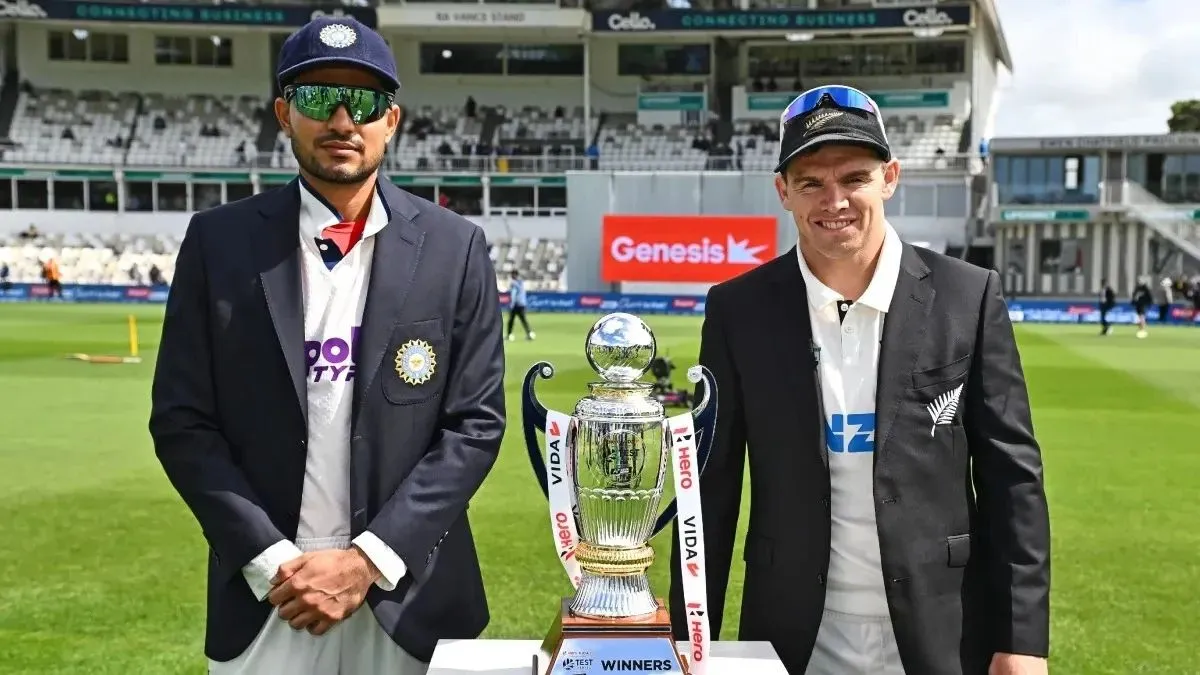
Indian captain Shubman Gill won the toss and elected to field on a green surface offering assistance to fast bowlers.
New Zealand began cautiously, with captain Tom Latham and Devon Conway putting together a 77-run opening partnership.
However, debutant Gurnoor Brar provided India with their first breakthrough before lunch, dismissing Conway for 27.
Akash Deep then claimed two important wickets, while Anshul Kamboj added another, reducing New Zealand to 131/4 at tea.
According to the live score update available at approximately 9:11 AM IST, New Zealand had recovered slightly to reach 146/4 after 59 overs, with Daryl Mitchell and Tom Blundell attempting to rebuild the innings.
The match follows a drawn first Test in Wellington, making the Christchurch encounter decisive for the two-match series.
India vs New Zealand Second Test: Latest Score
<text></text>
| Match Detail | Latest Information |
|---|---|
| Match | New Zealand vs India, 2nd Test |
| Venue | Hagley Oval, Christchurch |
| Date | November 27–December 1, 2026 |
| Toss | India won and chose to bowl |
| New Zealand | 146/4 after 59 overs |
| India | Yet to bat |
| Series | Level 0–0 |
| Match status | Day 1, third session |
The score is a November 27 morning snapshot and will change as the match progresses.
Shubman Gill Wins Toss and Elects to Bowl
India captain Shubman Gill decided to bowl first after winning the toss.
The Christchurch pitch had a noticeable green covering, suggesting that seam movement could assist the fast bowlers.
India entered the match with a pace-heavy bowling attack featuring Jasprit Bumrah, Akash Deep, Anshul Kamboj and debutant Gurnoor Brar.
The visitors made one change to their playing XI, bringing in Brar in place of Prasidh Krishna.
New Zealand retained the same team that played in the opening Test.
The decision to bowl first placed immediate responsibility on India’s fast bowlers to exploit the conditions.
New Zealand Openers Build 77-Run Partnership
Despite the favourable bowling conditions, New Zealand’s opening batters negotiated the early overs effectively.
Tom Latham and Devon Conway adopted a cautious approach against the Indian attack.
Latham survived an LBW decision through a successful review and later benefited from a dropped catch by KL Rahul.
The New Zealand captain gradually settled into his innings and completed a half-century.
Conway also contributed to the opening partnership.
Their 77-run stand provided the hosts with a stable start before India found a breakthrough.
Gurnoor Brar Takes Maiden Test Wicket on Debut
Gurnoor Brar made an immediate contribution on his Test debut.
The fast bowler dismissed Devon Conway for 27 shortly before the lunch interval.
Conway was trapped LBW by a delivery that straightened after pitching.
The dismissal ended New Zealand’s opening partnership and provided India with their first wicket of the match.
Brar had received his Test cap from Jasprit Bumrah before play began.
The wicket marked an important moment for the young Indian pacer and created an opportunity for the visitors to apply further pressure.
Akash Deep Dismisses Tom Latham and Rachin Ravindra
Akash Deep played a major role in India’s recovery during the second session.
After Tom Latham reached his half-century, the Indian fast bowler removed the New Zealand captain.
Latham edged a delivery behind to wicketkeeper Rishabh Pant.
Akash Deep also dismissed Rachin Ravindra, who was caught after the ball moved away from the left-handed batter.
The two wickets significantly changed the direction of the session.
New Zealand, who had appeared comfortable during the opening partnership, suddenly faced renewed pressure from the Indian attack.
Anshul Kamboj Removes Henry Nicholls
Anshul Kamboj added to New Zealand’s difficulties by dismissing Henry Nicholls.
Nicholls had been one of the important performers for the hosts in the first Test.
However, he was unable to produce another substantial innings in Christchurch.
His dismissal followed shortly after Tom Latham’s departure.
The wickets helped India restrict New Zealand to 131/4 at tea.
The hosts were forced to shift their focus from building a commanding first-innings total to stabilising their position.
Daryl Mitchell and Tom Blundell Attempt Recovery
Following the middle-order setbacks, Daryl Mitchell and wicketkeeper Tom Blundell came together to rebuild New Zealand’s innings.
Both batters adopted a cautious approach against India’s fast bowlers.
Mitchell is a key member of New Zealand’s middle order and played an important role in securing the draw during the first Test.
Blundell provides additional experience and batting depth.
Their partnership could influence whether New Zealand produce a competitive first-innings total.
India will be seeking further wickets before the hosts establish another significant stand.
Jasprit Bumrah Creates Pressure Despite Going Wicketless
Jasprit Bumrah has remained an important part of India’s bowling strategy.
Although he had not taken a wicket by the latest verified score update, the experienced fast bowler maintained pressure through disciplined bowling.
Bumrah used movement off the pitch to challenge New Zealand’s batters.
He also contributed to the bowling strategy, including advice that helped Akash Deep adjust his angle of delivery.
India will continue relying on Bumrah’s experience as the match develops.
His influence on the contest cannot be measured solely through the number of wickets taken.
First Test in Wellington Ended in a Draw
The two teams entered the Christchurch Test with the series level at 0–0.
The opening match at Wellington’s Basin Reserve ended in a draw on November 23.
India had posted a formidable first-innings total of 720/9 declared.
New Zealand responded with 368 in their first innings.
The hosts subsequently managed to survive on the final day, preventing India from securing victory.
The result meant both teams travelled to Christchurch with an opportunity to win the series.
The opening Test also had implications for their positions in the ICC World Test Championship standings.
Why the Christchurch Test Is Important
The second Test is the final match of the two-game series.
A victory for either team would secure the series.
Another draw would leave the contest level.
The match also carries importance for the ICC World Test Championship 2025–27 cycle.
According to the ICC, New Zealand were third and India fourth in the championship standings following the Wellington draw.
Both teams are seeking valuable points as they attempt to improve their positions.
However, the final World Test Championship outcome cannot be determined from this match alone.
Mohammed Siraj and Ravindra Jadeja Left Out
India continued with a team combination that excluded Mohammed Siraj and Ravindra Jadeja.
Both experienced players were left out of the playing XI.
The selectors instead retained a pace-oriented bowling attack suited to the Christchurch conditions.
Gurnoor Brar replaced Prasidh Krishna as the only change from the first Test.
The decision attracted attention because Siraj and Jadeja have previously played important roles in India’s Test team.
However, the team management’s selection reflects the combination chosen for this particular match.
India and New Zealand Playing XIs
India: KL Rahul, Yashasvi Jaiswal, Devdutt Padikkal, Shubman Gill (captain), Rishabh Pant (wicketkeeper), Washington Sundar, Dhruv Jurel, Akash Deep, Anshul Kamboj, Gurnoor Brar and Jasprit Bumrah.
New Zealand: Tom Latham (captain), Devon Conway, Henry Nicholls, Rachin Ravindra, Daryl Mitchell, Tom Blundell (wicketkeeper), Glenn Phillips, Nathan Smith, Kyle Jamieson, Matt Henry and Jacob Duffy.
Hagley Oval Pitch Offers Help to Fast Bowlers
The pitch at Hagley Oval has offered movement and bounce to the fast bowlers.
The surface carried a green covering before the start of play.
India attempted to exploit the conditions by choosing to bowl first.
However, New Zealand’s opening partnership demonstrated that patient batting could still produce runs.
The movement available to seamers will remain important during India’s bowling innings.
Both teams will also monitor how the surface changes as the match progresses.
What Happens Next in the Second Test?
India will aim to dismiss the remaining New Zealand batters for a manageable first-innings total.
The hosts will depend on Daryl Mitchell, Tom Blundell and the lower-middle order to add valuable runs.
Once India begin their innings, their batters will need to handle New Zealand’s experienced pace attack.
The match remains evenly contested despite India’s strong second-session recovery.
The balance could change considerably depending on the next partnership or cluster of wickets.
India vs New Zealand 2nd Test: Key Highlights
India and New Zealand are playing the second and final Test at Hagley Oval, Christchurch, from November 27 to December 1.
Shubman Gill won the toss and elected to bowl.
New Zealand openers Tom Latham and Devon Conway added 77 runs for the first wicket.
Gurnoor Brar dismissed Conway to claim his maiden Test wicket.
Akash Deep removed Tom Latham and Rachin Ravindra.
Anshul Kamboj dismissed Henry Nicholls.
New Zealand were 131/4 at tea and had progressed to 146/4 after 59 overs in the latest verified morning update.
The opening Test in Wellington ended in a draw.
Both teams are competing for the series victory and important World Test Championship points.
Source – BCCI, International Cricket Council, Reuters, Hindustan Times, The Indian Express
Supreme News Network