

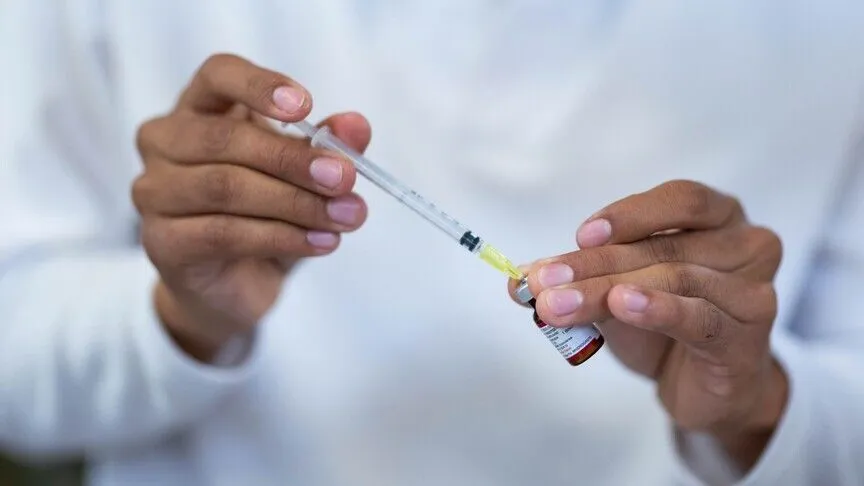
Madrid, October 24, 2026: A personalised mRNA cancer vaccine has reduced the risk of melanoma recurrence or death by 42% when added to standard immunotherapy, according to new Phase 3 clinical trial results presented at the European Society for Medical Oncology (ESMO) Congress.
The experimental vaccine, known as intismeran autogene, is individually designed using genetic information from each patient’s tumour and was tested alongside the immunotherapy drug pembrolizumab, widely sold under the brand name Keytruda.
Phase 3 Trial Shows Significant Benefit
The international trial involved 1,137 patients with high-risk melanoma whose tumours had already been surgically removed.
Participants received pembrolizumab for one year, while a portion of them also received the personalised mRNA vaccine.
Researchers found that the combination reduced the risk of the cancer returning or the patient dying by 42% compared with pembrolizumab alone.
82% Remained Recurrence-Free at Two Years
At the two-year mark, around 82% of patients receiving the vaccine-immunotherapy combination were alive without their cancer returning.
That compared with around 70% among patients who received pembrolizumab alone.
The results represent one of the strongest pieces of evidence so far that personalised cancer vaccines can improve outcomes in a large late-stage clinical trial.
Vaccine Is Custom-Made for Each Patient
Unlike conventional vaccines, intismeran is not manufactured as the same product for everyone.
Doctors analyse genetic mutations in a patient’s tumour and use that information to design an mRNA vaccine targeting specific abnormal proteins, known as neoantigens, produced by that individual cancer.
The aim is to teach the immune system to recognise and attack cancer cells more precisely.
Up to 34 Tumour Mutations Can Be Targeted
The vaccine can encode information relating to multiple tumour-specific mutations.
Earlier research into the platform showed that it can target up to 34 personalised neoantigens, potentially giving the immune system several different ways to identify tumour cells.
This makes the approach very different from traditional cancer therapies that may focus on a single genetic mutation or pathway.
Pembrolizumab Remains Key Part of Treatment
The vaccine was not tested as a replacement for existing treatment.
Instead, it was combined with pembrolizumab, an immune checkpoint inhibitor that helps prevent cancer cells from switching off immune responses.
Researchers believe the two approaches complement each other: pembrolizumab helps activate immune cells, while the vaccine gives those cells more personalised tumour targets.
First Individualised Cancer Vaccine With Positive Phase 3 Results
Researchers described the findings as an important milestone because intismeran is the first personalised cancer vaccine to produce positive results in a large Phase 3 trial.
Professor Georgina Long of Melanoma Institute Australia described the development as a major change in how cancer may eventually be treated by harnessing the immune system in a more individualised way.
Risk of Distant Spread Also Reduced
The trial also met its key endpoint involving distant metastasis-free survival, meaning the combination lowered the likelihood of melanoma spreading to distant parts of the body compared with standard immunotherapy alone.
This is particularly important because metastatic melanoma can become significantly harder to treat once it spreads beyond the original site.
Vaccine Does Not Mean Cancer Is Prevented Completely
The 42% figure represents a relative reduction in the risk of recurrence or death.
It does not mean that 42% of all patients were cured, nor does it mean that melanoma recurrence was eliminated.
Some patients receiving the personalised vaccine still experienced cancer recurrence, and researchers say longer follow-up is needed to determine the durability of the benefit.
Long-Term Survival Benefit Still Unclear
The manufacturers said the available data are not yet mature enough to establish whether the vaccine significantly increases overall survival.
Researchers will continue following participants to determine whether the reduction in recurrence eventually translates into longer life expectancy.
Treatment Still Requires Regulatory Approval
Despite the positive trial findings, intismeran is not yet available as a routine melanoma treatment.
The results will need further scientific review, and drug regulators will have to assess the vaccine’s effectiveness, safety and manufacturing process before it can become widely available.
Personalised Manufacturing Remains a Challenge
Because each vaccine has to be designed for an individual patient, production is significantly more complicated than manufacturing conventional medicines.
Tumour tissue must first be sequenced, relevant genetic mutations identified and the personalised mRNA treatment manufactured specifically for that patient.
This raises questions about cost, turnaround time and the ability of healthcare systems to deliver personalised vaccines at scale.
Could Have Applications Beyond Melanoma
Scientists are also investigating similar personalised cancer vaccines for other tumour types.
The broader concept of using mRNA technology to target unique cancer mutations could eventually be explored in lung cancer, bladder cancer and other malignancies, although effectiveness will need to be demonstrated separately in each disease.
Potential Significance for India
The findings could eventually have implications for cancer treatment in India, but access would depend on several factors.
Advanced tumour sequencing, personalised manufacturing facilities, specialised oncology centres and affordability would all be necessary before this type of therapy could become widely accessible.
Experts caution that the current findings should therefore be viewed as a major research advance rather than an immediately available treatment option.
Major Step Forward for Personalised Cancer Medicine
The Phase 3 results offer some of the clearest evidence yet that a vaccine individually tailored to a patient’s tumour can improve outcomes when combined with existing immunotherapy.
Further follow-up and regulatory review are still required, but the study represents an important milestone in efforts to move cancer treatment toward increasingly personalised immune-based therapies.
Source: Reuters, Associated Press, ESMO, Memorial Sloan Kettering Cancer Center
Supreme News Network