

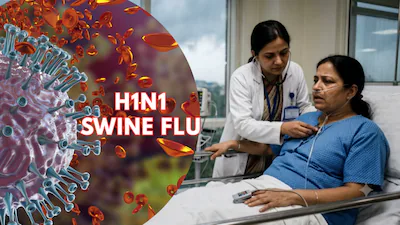
Gurugram: The Haryana government has strengthened its influenza surveillance and hospital preparedness as H1N1 cases rise across Delhi-NCR, ordering health facilities to test every patient suffering from Severe Acute Respiratory Infection (SARI) for influenza.
The state has also directed hospitals to test at least 5% of patients reporting Influenza-Like Illness (ILI) symptoms, while ensuring ventilators, critical-care facilities, medicines and infection-control supplies remain ready.
100% Testing Ordered for Severe Respiratory Cases
Under the new preparedness measures, all SARI patients will undergo influenza testing across Haryana’s healthcare facilities.
SARI generally refers to a respiratory infection severe enough to require medical attention or hospitalisation and can involve symptoms such as fever, cough and breathing difficulty.
For patients with comparatively milder influenza-like symptoms, at least 5% will be tested as part of the state’s surveillance system.
The testing strategy is intended to detect influenza trends early and identify any unusual increase in serious infections.
Haryana Steps Up Vigilance After Delhi H1N1 Surge
The decision comes amid a significant rise in H1N1 infections in neighbouring Delhi.
Officially detailed data through August 20 showed Delhi had recorded 1,777 H1N1 cases in 2026, compared with only 229 during the corresponding period last year.
Of the 2,392 Influenza A cases recorded in Delhi through August 20, 1,777 were identified as H1N1, making it the dominant influenza subtype currently circulating in the capital.
The rise in infections has also led to increased hospital visits for fever, cough, sore throat, cold and other respiratory symptoms across Delhi-NCR.
Hospitals Told to Keep Ventilators and Critical Care Ready
Haryana’s health department has asked hospitals to ensure that adequate critical-care infrastructure remains available if patients develop serious complications.
Facilities have been instructed to keep ventilator support and critical-care resources ready for patients with severe illness.
Government hospitals must also maintain adequate stocks of essential supplies including:
- Oseltamivir
- PPE kits
- N95 masks
- Essential medicines
- Infection-control material
Human resources, testing equipment and other necessary arrangements will also be reviewed regularly to avoid delays in treatment.
Dedicated Flu Corners to Remain Operational
Haryana has directed hospitals and health centres to keep dedicated flu corners operational.
Patients arriving with symptoms such as fever, cough, cold or sore throat can undergo preliminary screening at these facilities.
The system is intended to help identify suspected influenza cases earlier, separate them appropriately and ensure timely testing and treatment where required.
Private Hospitals Brought Into Surveillance Network
The state government is also involving private hospitals and the Indian Medical Association in its influenza-surveillance programme.
Private healthcare institutions have been instructed to update influenza case information on the IDSP-IHIP portal in a timely manner.
This will allow public-health authorities to track infection patterns not only through government hospitals but also across the wider healthcare system.
Healthcare Workers Asked to Follow Infection-Control Measures
Medical staff have been instructed to strictly follow hand-hygiene and infection-control protocols.
Healthcare workers experiencing cold, cough or other influenza-like symptoms have been advised to wear masks to reduce the risk of transmitting respiratory infections to patients and colleagues.
The government also plans public-awareness campaigns to educate residents about influenza symptoms, prevention and the importance of seeking medical advice when needed.
Haryana Health Minister Says Surveillance Strengthened
Haryana Health Minister Arti Singh Rao said the state had strengthened surveillance, testing, treatment and infection-control arrangements ahead of the influenza season.
On her directions, the Director General Health Services issued an advisory to all civil surgeons and directors of medical colleges, asking them to ensure sufficient testing facilities, medicines and critical-care resources.
The measures are precautionary and aimed at preventing Haryana from being caught unprepared if infections increase significantly.
Gurugram Records Rise in H1N1 Cases
Gurugram has also recorded an increase in cases during August.
District health data reported last week showed seven H1N1 infections in August, the highest monthly figure recorded in Gurugram so far in 2026.
A total of 21 cases were recorded between January and August, although doctors cautioned that the numbers were still too small to establish whether the district was experiencing a sustained surge.
The much larger increase in neighbouring Delhi has nevertheless prompted Haryana authorities to strengthen preparedness across the state.
ICMR Says No New H1N1 Strain Detected
Despite the increase in Delhi-NCR cases, the Indian Council of Medical Research (ICMR) has said there is no evidence that a new or more dangerous H1N1 strain has emerged.
The viruses currently circulating have been present since 2025 and are well matched with the influenza strains recommended for the Northern Hemisphere vaccine, according to ICMR scientists.
The Union Health Ministry has also stressed continued vigilance, robust surveillance and timely management rather than panic.
Residents Advised Not to Ignore Severe Symptoms
Haryana authorities have asked residents not to ignore persistent fever, cough, sore throat, breathing difficulties or other flu-like symptoms.
People experiencing worsening symptoms have been advised to seek professional medical attention instead of relying only on self-medication.
The latest measures show that Haryana is adopting a preventive approach as influenza activity rises across the NCR, with 100% testing of severe respiratory cases, expanded surveillance and enhanced hospital preparedness forming the centre of the state’s response.
Source – The Times of India / Ministry of Health and Family Welfare
Supreme News Network


Best app experience I’ve had in a while. Everything is organized and the graphics are top notch. If you are looking for a reliable app, try 77pinasapp.