
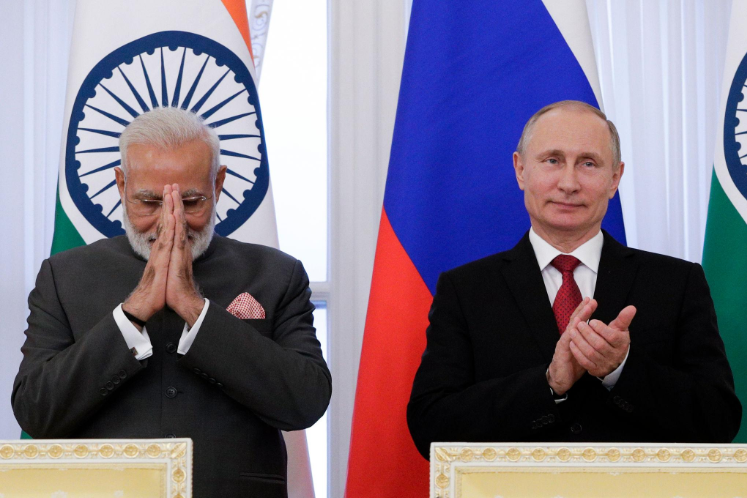
India and Russia have reaffirmed their commitment to strengthening bilateral cooperation across key sectors including energy, technology, science, and education during discussions held at the St. Petersburg International Economic Forum (SPIEF) 2026.
Officials and business leaders from both countries highlighted the importance of expanding strategic partnerships amid evolving global economic conditions. The discussions focused on enhancing collaboration, encouraging investment, and exploring new opportunities for long-term cooperation.
Energy Partnership Remains a Key Pillar
Energy cooperation continued to dominate discussions at SPIEF 2026, with both nations emphasizing the importance of maintaining stable and mutually beneficial energy ties.
India remains one of the major consumers of Russian energy resources, while Russia continues to view India as an important strategic partner in Asia. Officials explored opportunities related to oil, natural gas, renewable energy, and energy infrastructure development.
Experts believe stronger energy cooperation could contribute to long-term energy security and economic stability for both countries.
Focus on Technology and Innovation
Technology emerged as another major area of cooperation during the forum. Representatives discussed opportunities in digital transformation, artificial intelligence, cybersecurity, advanced manufacturing, and information technology.
Both countries expressed interest in promoting innovation-driven growth through joint research initiatives, technology transfers, and partnerships between private-sector companies.
Industry leaders noted that collaboration in emerging technologies could help strengthen economic competitiveness and support future development goals.
Expanding Scientific Collaboration
Scientific cooperation was also high on the agenda, with discussions covering research partnerships, innovation ecosystems, and collaboration between universities and research institutions.
Officials emphasized the value of joint scientific projects in areas such as healthcare, environmental sustainability, advanced materials, and industrial research.
Experts believe increased collaboration could accelerate knowledge sharing and contribute to technological advancements that benefit both nations.
Education and Academic Exchange
Education remains an important component of India-Russia relations. During SPIEF 2026, participants discussed expanding academic exchanges, student mobility programs, and institutional partnerships.
The two countries are exploring opportunities to strengthen cooperation between universities, research centers, and vocational training institutions.
Education experts highlighted the role of international collaboration in developing future talent and promoting cultural understanding.
Economic Significance
The discussions at SPIEF 2026 reflect the broader strategic partnership between India and Russia, which has expanded across multiple sectors over the years.
Economic analysts note that diversified cooperation in energy, technology, science, and education can contribute to stronger trade relations, investment flows, and innovation-driven growth.
The forum also provided opportunities for businesses from both countries to identify potential investment projects and commercial partnerships.

Background
The St. Petersburg International Economic Forum is one of the world’s leading economic events, bringing together government officials, business leaders, investors, and experts from various countries.
India and Russia have maintained longstanding diplomatic and economic relations, with cooperation extending across defense, energy, trade, science, education, and cultural exchanges.
In recent years, both nations have sought to deepen engagement in emerging sectors that support economic modernization and technological advancement.
Looking Ahead
Officials from India and Russia are expected to continue discussions on implementing new initiatives and expanding cooperation frameworks agreed upon during SPIEF 2026.
Observers believe that strengthened collaboration in energy, technology, science, and education could further reinforce the strategic partnership between the two countries while creating new opportunities for economic growth and innovation.
As global economic and technological landscapes continue to evolve, both nations appear committed to building a broader and more resilient partnership for the future.