NEW DELHI, October 1: India’s top defence leadership has called on the Indian Navy to maintain a high level of combat readiness, strengthen maritime surveillance and accelerate the adoption of advanced technologies as security challenges continue to evolve across the Indian Ocean Region and West Asia.
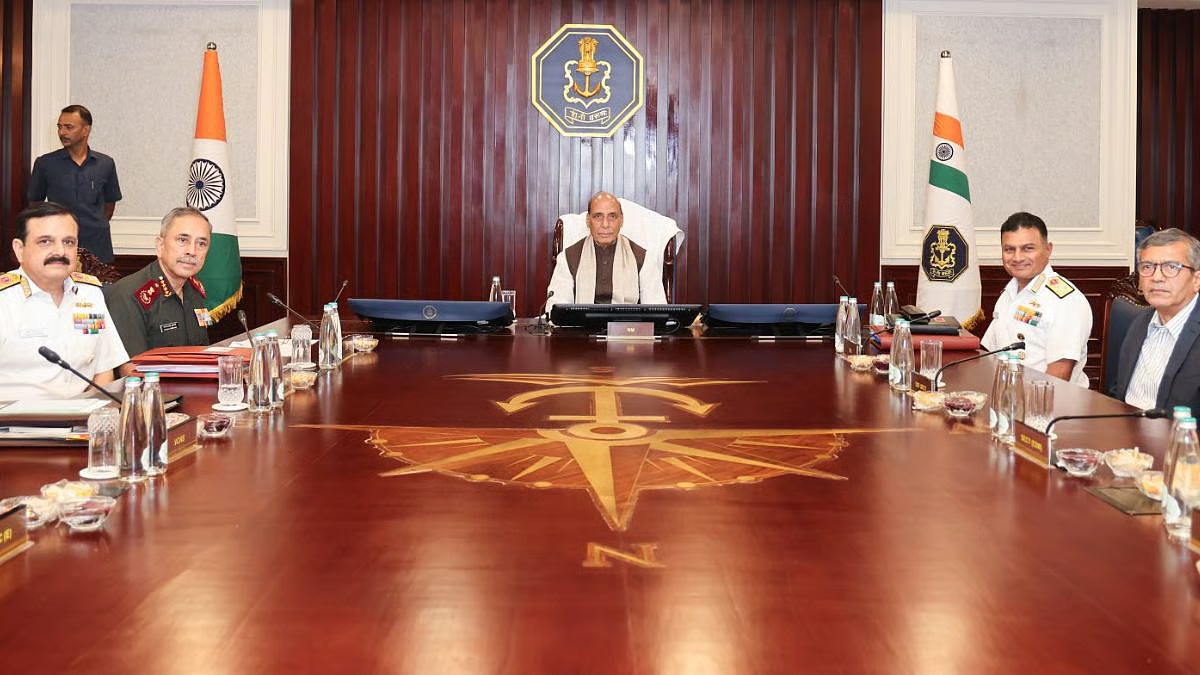
The issues were discussed during the second edition of the Naval Commanders’ Conference 2026 at Nausena Bhawan in New Delhi, where senior military leaders reviewed operational preparedness, maritime security, technology integration and future capability development.
Navy Asked to Remain Combat Ready
Chief of the Naval Staff Admiral Krishna Swaminathan stressed the need for the Navy to maintain a high degree of combat readiness, agility and responsiveness.
The naval leadership reviewed the changing maritime security environment and discussed measures required to respond rapidly to conventional as well as emerging threats.
Operational preparedness remains a key priority as India expands its strategic presence across important maritime regions.
Maritime Surveillance Capabilities to Be Strengthened
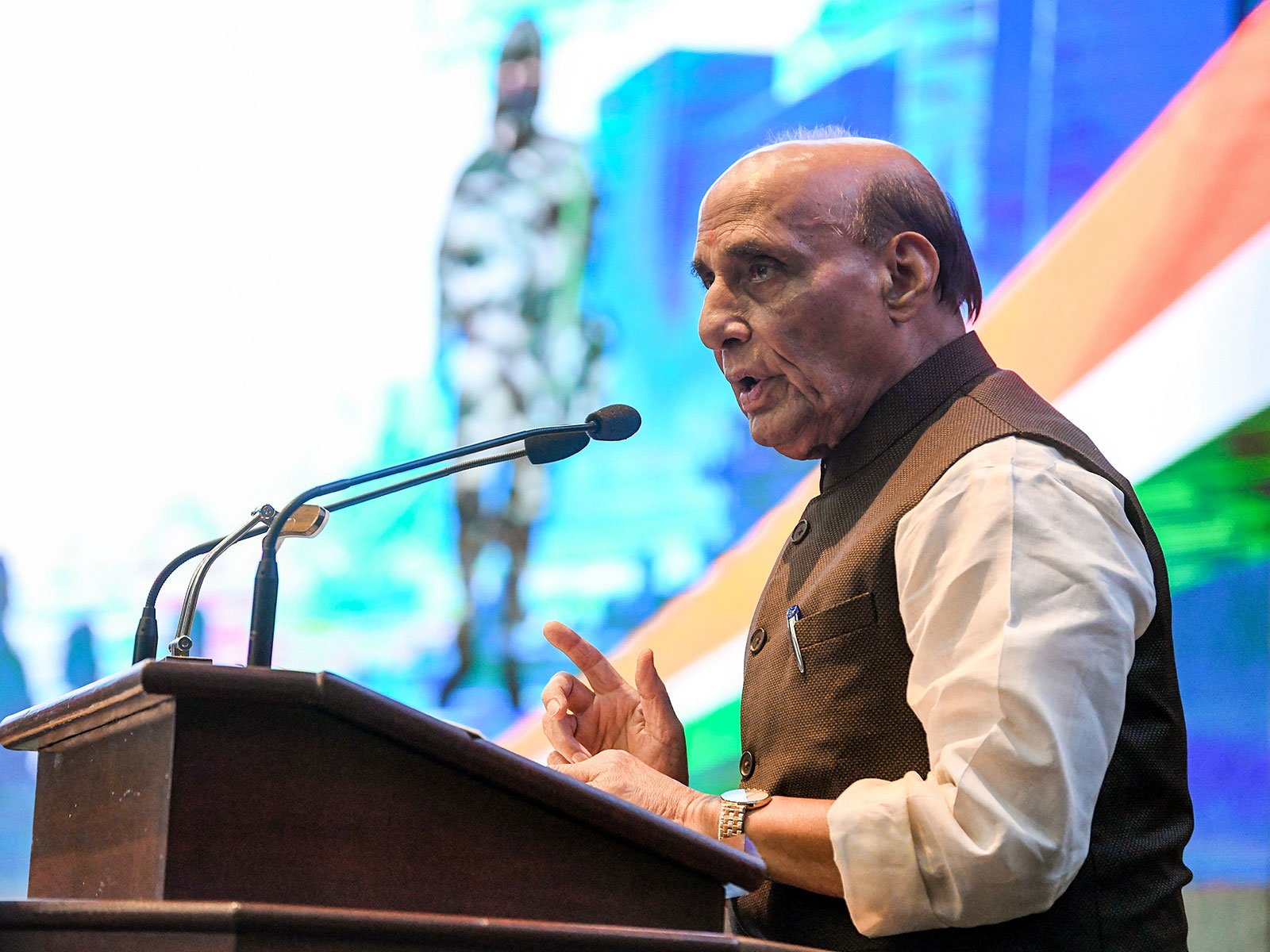
Defence Minister Rajnath Singh called for a significant strengthening of India’s maritime surveillance architecture.
Increasing maritime traffic, deceptive activities and emerging grey-zone challenges have made monitoring the seas more complex.
The Navy has therefore been asked to strengthen its ability to detect, analyse and respond to activities across India’s maritime areas of interest.
West Asia Situation Raises Strategic Concerns
The security situation in West Asia was a major part of the discussions.
India depends heavily on maritime routes for its energy supplies, making the safety of international sea lanes strategically important for the country.
Any prolonged disruption to important shipping routes could affect energy supplies, trade and the wider economy.
Navy’s Role in Protecting Energy Security Highlighted
India imports a large proportion of its crude oil and natural gas through maritime routes.
According to the Defence Ministry, around 85-90% of India’s crude oil and nearly 50% of its natural gas requirements are transported through sea routes.
Protecting commercial shipping and major maritime corridors is therefore directly connected with India’s energy and economic security.
Operation Urja Suraksha Highlighted
The Navy’s ongoing Operation Urja Suraksha was highlighted during discussions on maritime security.
Under the operation, Indian naval forces have been involved in supporting the safe transit of Indian-flagged merchant vessels, including LPG carriers, through strategically sensitive waters such as the Strait of Hormuz.
The mission demonstrates the Navy’s growing responsibility in protecting commercial and energy-related shipping.
CDS Calls Navy a Strategic Force Multiplier
Chief of Defence Staff General N S Raja Subramani described the Indian Navy as an important strategic force multiplier.
He emphasised the changing nature of modern warfare and the need for faster technology transformation, seamless data sharing and greater operational resilience.
Closer integration between the Army, Navy and Air Force was also highlighted as an important requirement for future military operations.
Tri-Service Coordination to Be Increased
Army Chief General Dhiraj Seth also interacted with naval commanders during the conference.
Discussions focused on strengthening tri-service synergy, interoperability and integrated responses to emerging security challenges.
Military planners increasingly view coordination between different services as essential in conflicts involving multiple domains such as land, sea, air, cyber and space.
AI and Autonomous Systems Part of Navy’s Future Plans
The conference is also reviewing the induction of advanced technologies into naval operations.
Key areas include Artificial Intelligence, Big Data Analytics, autonomous and uncrewed systems and cyber operations.
The Navy is examining how such technologies can improve surveillance, decision-making, operational efficiency and battlefield awareness.
Data Sharing Critical for Modern Warfare
Senior military leaders also highlighted the importance of seamless information sharing between different branches of the armed forces.
Modern military operations increasingly depend on real-time intelligence and rapid communication between units operating across different domains.
Improved data sharing could allow commanders to identify threats more quickly and coordinate responses more effectively.
18 Warships Planned for Induction in 2026
The Defence Ministry has described 2026 as an important year for the Indian Navy, with plans for the induction or commissioning of 18 warships.
If completed as planned, this would represent the largest single-year addition of warships in the Navy’s history.
The expansion reflects India’s efforts to strengthen its naval fleet and increase domestic shipbuilding capacity.
Indigenous Content in Warships Crosses 75%
Recently commissioned Indian warships contain more than 75% indigenous content, according to the Defence Ministry.
The government is seeking to further increase domestic production of naval platforms, weapons and supporting systems under its self-reliance programme.
India is also exploring opportunities to eventually export domestically produced warships to friendly countries.
Indian Navy Expands Global Operational Reach
Indian warships are increasingly operating beyond the country’s immediate maritime neighbourhood.
Naval deployments have extended to areas including the South China Sea, Mediterranean and Atlantic Ocean, highlighting India’s growing blue-water capabilities.
The government views these deployments as part of India’s expanding maritime security and diplomatic role.
Navy’s Indian Ocean Role Remains Critical
India considers the Indian Ocean Region central to its security and economic interests.
The Navy carries out missions ranging from maritime surveillance and anti-piracy operations to humanitarian assistance, disaster response and protection of commercial shipping.
The force has also expanded cooperation with partner countries through exercises, training programmes and multinational maritime initiatives.
Navy Commanders Review Future Force Requirements
During the three-day conference, naval commanders are reviewing a wide range of issues including operations, logistics, training, human resources, force development and emerging technologies.
The discussions are expected to help shape priorities for future naval capability development.
Measures to optimise force levels and strengthen operational readiness are also being reviewed.
Focus on Future-Ready Maritime Force
India’s defence leadership has emphasised that the Navy must remain prepared for rapidly changing security challenges.
Greater maritime surveillance, advanced technology, indigenous shipbuilding, stronger tri-service integration and continued combat readiness are expected to remain central to India’s naval strategy.
The Naval Commanders’ Conference concludes on October 1, following three days of high-level discussions on operational preparedness and the future direction of the Indian Navy.
Source – Ministry of Defence / Press Information Bureau / Times of India Press Information Bureau
Supreme News Network