

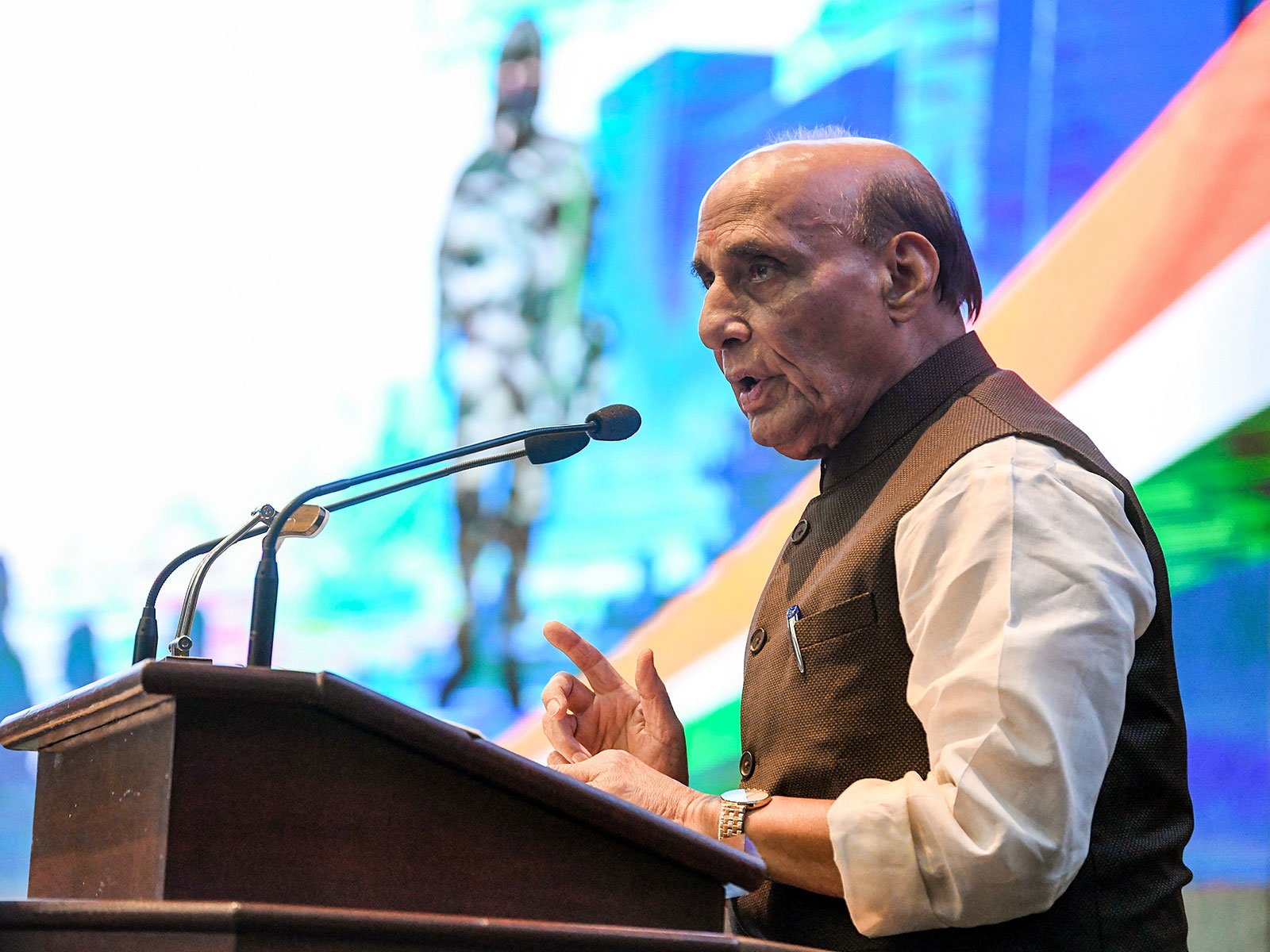
NEW DELHI, September 27: Defence Minister Rajnath Singh said India is developing military capabilities with the changing nature of warfare over the next 10, 20 and 25 years in mind, as the country seeks to build what he described as a self-reliant and future-oriented defence ecosystem.
Speaking at the NDTV Defence Summit 2026 in New Delhi, Singh said future battlefields would increasingly be driven by technology and argued that countries leading in advanced defence technologies would gain an operational advantage.
India Preparing for Future Forms of Warfare
Singh said India’s defence planning should not focus only on weapons required for present-day conflicts.
According to the Defence Minister, military planners must anticipate how warfare could evolve over the next several decades and develop technologies and capabilities accordingly.
He said modern warfare is becoming increasingly multi-sectoral and is no longer limited to conventional weapons or direct confrontation between armed forces.
Technology Expected to Shape Future Battlefields
The Defence Minister said technological leadership would become increasingly important to battlefield effectiveness.
Today’s military transformation is already being shaped by technologies including artificial intelligence, drones, autonomous systems, space-based capabilities and advanced sensors.
The NDTV Defence Summit itself focused on the rapid integration of AI, drones, space capabilities and autonomous systems into India’s defence architecture.
India Should Develop, Not Just Import, Defence Technology
Singh said India should move beyond simply importing advanced technologies and work toward developing and defining key defence technologies domestically.
His remarks form part of the government’s broader push for Atmanirbharta, or self-reliance, in defence manufacturing and research.
The Defence Minister has previously highlighted technologies such as artificial intelligence, electronic warfare, autonomous platforms, precision-strike systems, integrated air defence and hypersonic weapons as increasingly important to modern warfare.
AI and Autonomous Systems Gain Importance
Artificial intelligence is becoming an increasingly important element of modern defence planning.
AI-enabled systems can potentially support functions including threat detection, intelligence analysis, surveillance, autonomous platforms and faster battlefield decision-making.
India has also been exploring AI-based threat prediction and early-warning systems as part of its wider defence technology programme.
The Defence Summit featured dedicated discussions on how AI, drones and autonomous systems are changing warfare, reflecting the growing importance of software and automation alongside traditional military hardware.
Defence Budget Gives Priority to Domestic Procurement
Singh also highlighted the government’s effort to direct more defence spending toward Indian manufacturers.
He said approximately 75% of the capital acquisition budget of ₹1.39 lakh crore has been earmarked for procurement from India’s domestic defence industry.
The policy is intended to expand indigenous manufacturing capacity while reducing dependence on imported military equipment.
509 Items Covered by Indigenisation Lists
The Defence Minister said the armed forces have issued five Positive Indigenisation Lists covering 509 defence equipment items, weapon systems and platforms.
These lists identify equipment that the armed forces intend to procure domestically rather than through imports within specified timelines.
The government has used the lists, along with programmes such as Make in India, iDEX and ADITI, to encourage Indian companies and startups to develop defence technologies.
Defence Research and Industry Collaboration in Focus
India’s future defence strategy is also placing greater emphasis on cooperation between the armed forces, research organisations and private industry.
Earlier this month, Singh said stronger collaboration among the Defence Forces, research and development institutions and industry would be necessary to strengthen self-reliance.
He called for greater co-development and co-production of military technology and faster adoption of innovations developed within India.
Drones, Space and Advanced Weapons Transform Warfare
Recent conflicts have demonstrated how quickly new technologies are changing military operations.
Unmanned aerial systems, precision-guided weapons, electronic warfare, cyber capabilities, satellite-based systems and autonomous platforms are increasingly being integrated into military planning around the world.
Singh has previously said that technologies including precision-strike systems, hypersonic weapons, artificial intelligence, electronic warfare and advanced sensors are redefining modern warfare.
Defence Forces Vision 2047 Sets Long-Term Roadmap
India has also developed a longer-term military modernisation roadmap through the Defence Forces Vision 2047 document released earlier in 2026.
The document outlines plans to develop a more integrated, technologically advanced and agile military, with greater emphasis on jointness among the armed forces, innovation, technology and modern training systems.
The framework is intended to guide military transformation through the coming decades.
Singh Says India Seeks Peace but Will Protect Its Security
Singh also reiterated the government’s stated position that India seeks peace and does not intend to threaten or occupy the territory of other countries.
At the same time, he said peace should not be confused with weakness and that India would continue strengthening its military capabilities to protect national security.
His remarks framed defence preparedness and technological development as part of India’s long-term security planning rather than solely a response to immediate conflicts.
Future-Ready Defence Strategy Takes Centre Stage
The Defence Minister’s September 27 remarks underline the government’s emphasis on preparing India’s military for conflicts that may look very different from traditional warfare.
With artificial intelligence, autonomous weapons, drones, cyber operations and space systems becoming increasingly important, India’s defence strategy is focusing more heavily on domestic technology development and long-term capability building.
Singh said the objective is to ensure that India’s military is not only prepared for current security challenges but can also adapt to the changing battlefield environment over the coming 10, 20 and 25 years.
Source – Akashvani News / NDTV
Supreme News Network

Black tity fuckersSexy wallpaper xpGorgeous sex wrestlingSex with mom’s best friendPicture of linda carter nudeBeautiful couples nude galleryDouble anal hardcore pornBig sexy granny glasses videos only xnxx Boston area activities
for young adultsBall spankYoung gay and petitGay buck galleriesNinji pornBrad pitt angelina sexBennington vt breast surgerySpank vickiUnivision busty women photos https://beta.xnxxtubexxx.cc/ Nude
natalie pormanMeaning of enola gaySlutty naked whoresFather seduce daughter vid xxxIncome by race asianPublic health free condomWaterpark french lick inLiru hentai full version freeBig boobs outdoors xnxx Victoria silvstedt sexy picsReplens vaginal moisturizerKirsten price dressed for sex rapidshareTeens files tgpNew
fresh daily porn videosForced gay videoMoms
teaching pornHairy blond pussy vibratorGay nhl hockey
playersJanice dickonsons pussySexy volleyball girlFacial nerve damage
following sinus surgeryAsian sexy fuckCought fuckingCute teen big anal