New Delhi, October 15, 2026: Senior experts associated with the Defence Research and Development Organisation (DRDO) have warned that India could face serious strategic vulnerability in future conflicts if it remains dependent on foreign suppliers for advanced semiconductors. They argued that modern warfare is increasingly driven by electronics, sensors, communications, artificial intelligence and autonomous systems — all of which rely heavily on secure access to chips.
Semiconductors Now Central to Modern Warfare
DRDO experts said semiconductors are no longer just commercial components used in phones and computers.
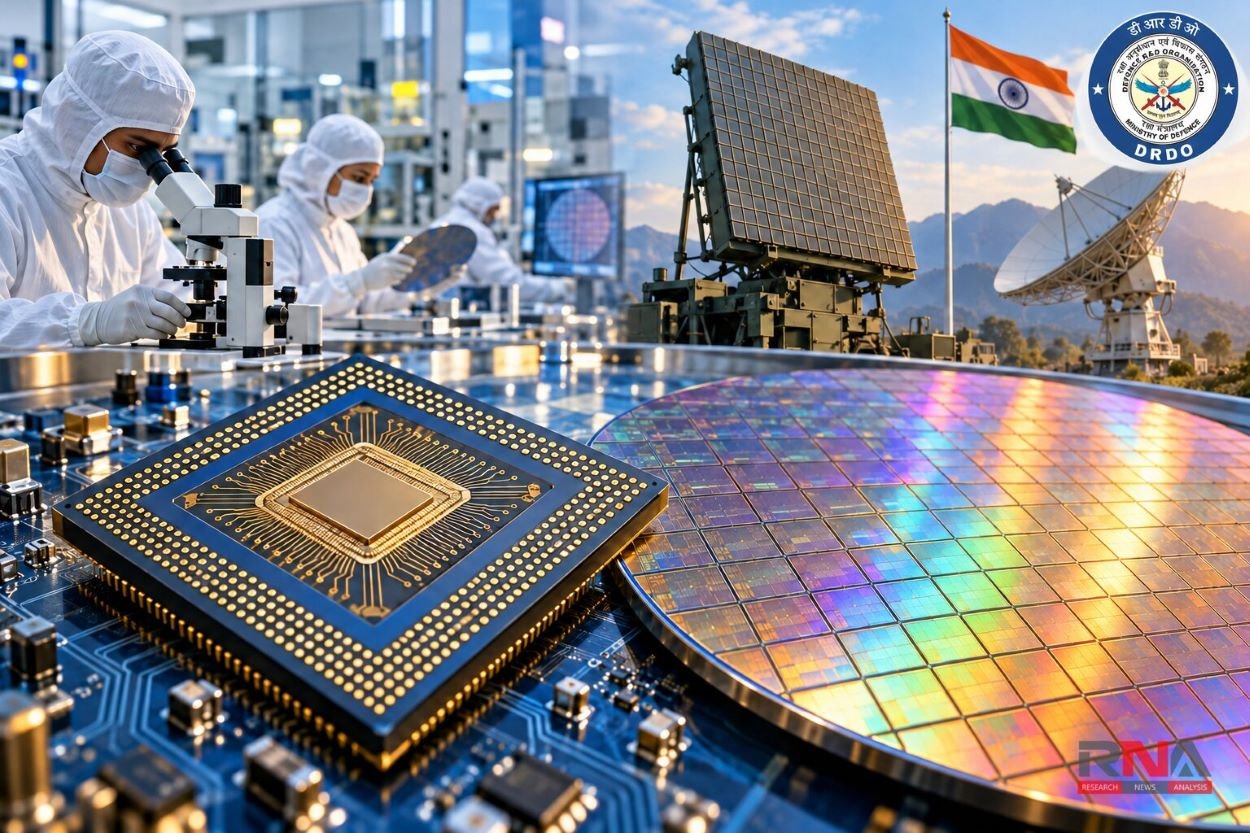
They are critical to missile guidance, radars, drones, electronic warfare, communications, satellites, surveillance platforms and AI-enabled defence systems, making chip access a core national-security issue.
Dependence on Imports Creates Strategic Risk
India still relies significantly on overseas suppliers for several advanced semiconductor categories.
Experts warned that during a conflict, sanctions, export restrictions, disrupted shipping routes or geopolitical pressure could suddenly limit access to crucial electronic components.
Future Conflicts Will Be Technology-Intensive
The warning reflects a broader shift in military strategy.
Future wars are expected to depend more heavily on networked weapons, autonomous platforms, precision targeting, electronic intelligence and real-time data processing, meaning control over semiconductor supply chains could influence battlefield effectiveness.
AI and Autonomous Weapons Raise Stakes
Artificial intelligence is becoming increasingly integrated into defence systems.
AI-enabled drones, battlefield analytics, autonomous navigation and target-recognition systems all require powerful chips, making domestic semiconductor capability important not only for industrial policy but also for defence preparedness.
Indigenous Chip Design Is Not Enough
Experts stressed that having Indian chip designers alone will not solve the problem.
Self-reliance requires a wider ecosystem covering design, fabrication, packaging, testing, materials, equipment and trusted supply chains so critical defence programmes are not dependent on foreign bottlenecks.
Trusted Chips Matter for Security
Defence systems require semiconductors that are not only advanced but also trusted.
Imported chips can create concerns around hidden vulnerabilities, supply-chain tampering and long-term maintenance, particularly in highly sensitive systems.
India Has Already Expanded Semiconductor Push
India has launched multiple semiconductor manufacturing and packaging projects under its broader chip-development strategy.
The government has been trying to attract global companies while also strengthening domestic capabilities in design, electronics manufacturing and advanced packaging.
Defence Sector Could Drive Domestic Demand
Experts believe defence and strategic sectors can provide stable long-term demand for domestically manufactured chips.
Missiles, communications equipment, radars, satellites and military electronics could serve as anchor markets for India’s emerging semiconductor industry.
China’s Chip Push Adds Strategic Pressure
The semiconductor race has become increasingly geopolitical, with the US, China, Taiwan, South Korea, Japan and Europe investing heavily in domestic manufacturing capacity.
For India, the concern is that dependence on external suppliers could become a serious weakness if global technology blocs become more divided.
Mature Nodes Are Also Important
Not every defence application requires the world’s most advanced chips.
Many military systems depend on mature and specialised semiconductor nodes valued for reliability, durability and long production cycles, meaning India can build strategic capability even without immediately competing at the most cutting-edge fabrication levels.
DRDO Calls for Long-Term Planning
The broader message from defence experts is that semiconductor self-reliance cannot be achieved through short-term procurement decisions.
It requires sustained investment in research, manufacturing, workforce training and cooperation between government laboratories, private companies, universities and global technology partners.
Chip Independence Becoming Part of National Security
The warning places semiconductor policy firmly within India’s national-security debate.
As future conflicts become increasingly software- and electronics-driven, the ability to design, manufacture and secure critical chips could become as important as traditional weapons production.
Source – The Indian Express, DRDO experts
Supreme News Network