

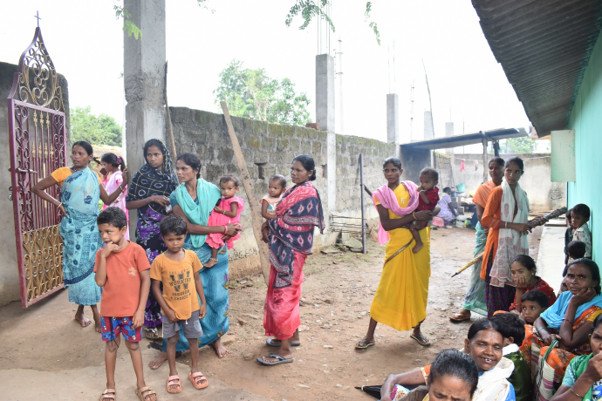
Raipur, November 28, 2026: Disability care homes in Chhattisgarh have come under renewed scrutiny following reports of five deaths at a residential facility in Raipur, including that of a young boy, and allegations of inadequate medical care, unhygienic conditions and the physical restraint of vulnerable residents.
The findings emerged from inspections conducted by commissioners appointed by the Chhattisgarh High Court to examine the conditions at Gharaunda shelter homes across the state.
According to a report published by The Indian Express on November 28, the inspections identified significant gaps in medical supervision, including doctors visiting some facilities only once or twice a month despite guidelines requiring twice-weekly visits.
Inspectors also reported missing medical documentation, inadequate psychiatric support and an incident in which a male resident at a Bilaspur facility was found tied to his bed.
The High Court has expressed concern over the findings and directed authorities to respond.
The developments have raised important questions about the safety, dignity and medical care of people with disabilities living in government-supported residential institutions.
What Are Gharaunda Shelter Homes?
Gharaunda centres are residential facilities intended to provide long-term care and support for persons with disabilities.
The facilities operate under a government-supported initiative designed to provide accommodation, food, medical care, rehabilitation and other essential services.
In Chhattisgarh, the centres receive government funding but are operated by nongovernmental organisations.
The state has 11 such centres, housing approximately 317 residents.
These facilities are intended to provide a safe living environment for people who require sustained assistance.
Some residents have physical disabilities, while others have intellectual disabilities or mental health conditions.
Many depend heavily on caregivers for their daily needs.
High Court-Appointed Commissioners Identify Serious Problems
The Chhattisgarh High Court appointed commissioners to inspect the Gharaunda centres following allegations of mismanagement and irregularities.
The inspection reports identified several areas of concern.
These included inadequate medical supervision, missing records, poor sanitation and questions about residents’ treatment.
At the Raipur centres, inspectors found that regular medical visits were substantially less frequent than required.
At the Bilaspur centres, commissioners reported problems involving food quality, toilet hygiene and the physical restraint of a resident.
The findings prompted the High Court to seek further explanations from the state government.
However, an inspection finding does not automatically establish criminal liability or prove that every reported deficiency caused harm.
Five Deaths Reported at Raipur Women’s Shelter
One of the most serious concerns involves five deaths associated with a women’s Gharaunda facility in Raipur during 2026.
According to the court commissioner’s report, the deceased included four adult women and a young boy.
The deaths occurred between May and September.
Medical records indicated that the residents had experienced serious illnesses.
The inspection raised questions about whether the shelter administration maintained adequate medical records and informed the relevant authorities as required.
Inspectors reported that documents proving mandatory notification of the deaths had not been provided.
The findings prompted scrutiny of how medical emergencies and deaths were documented.
Young Boy’s Death Raises Questions About Medical Care
The death of a young boy, identified in earlier reporting as Kabir, attracted particular attention.
The child was living at the Raipur facility because his mother was a resident.
According to the shelter operator, the boy fell while playing and was taken to hospital.
He later died during treatment on August 10.
Hospital records identified sepsis and refractory shock as the immediate causes of death.
The records also referred to other serious medical conditions, including neurocysticercosis, anaemia and tuberculosis.
Neurocysticercosis is a parasitic infection affecting the nervous system and can cause seizures.
The findings raised questions about the child’s health before the reported fall and the sequence of events leading to his hospitalisation.
Conflicting Information Found in Child’s Medical Records
The court commissioner’s report identified inconsistencies in the information relating to the child’s age and medical history.
Some documents recorded his age as five, while others indicated seven.
The shelter administration reportedly stated that the child had been healthy before falling and developing seizures.
However, the hospital documentation identified several underlying health conditions.
The inspection report said the relationship between the reported fall, subsequent seizures, illness and death remained unclear.
It also raised concerns about missing medical documentation.
An independent medical assessment was recommended to examine the circumstances more closely.
The available evidence does not establish that the child’s death was caused by deliberate abuse or medical negligence.
Four Adult Women Also Died During 2026
The deaths of four adult women were also examined.
According to medical details reported by The Times of India, the women had suffered from serious conditions including pneumonia, septic shock, severe anaemia, seizures, dehydration and tuberculosis-related complications.
The deaths were recorded in May, June and September.
The inspection raised concerns about the shelter’s records of medical attention provided before hospitalisation.
Questions were also raised about compliance with procedures requiring authorities to be informed after a resident’s death.
The commissioners sought better documentation and oversight.
Determining whether any death was preventable would require a separate medical and factual investigation.
Doctors Allegedly Visited Less Frequently Than Required
Medical supervision emerged as a major concern in the inspection reports.
Under the applicable guidelines, qualified doctors are expected to visit the centres twice a week.
However, medical registers at the Raipur facilities reportedly recorded only one or two visits per month during the preceding three months.
Inspectors also found no documentation establishing the continuous presence of nursing or paramedical staff.
Regular psychiatric reviews were not adequately documented.
The gaps are significant because many residents require ongoing treatment, medication monitoring and assistance with daily activities.
The findings have raised questions about whether the facilities were consistently meeting the prescribed standards.
Resident Found Tied to Bed at Bilaspur Centre
Another serious incident was reported at a Gharaunda facility in Bilaspur.
During the inspection, a male resident was found physically restrained to his bed.
According to the commissioner’s account, the resident’s wrists were tied using cloth.
Shelter staff reportedly described him as aggressive and said the restraint had been imposed for approximately half an hour.
However, no medical advice or documented authorisation justifying the restraint was produced during the inspection.
The commissioner intervened, and the resident was released.
The incident raised concerns about the treatment of residents who may have difficulty communicating their needs.
Woman Resident Found Without Clothes
Inspectors also reported that a woman resident at a Bilaspur centre remained without clothes for an extended period.
According to the commissioner’s report, the woman had been in that condition for nearly three hours.
The report indicated that she was not behaving aggressively or abnormally.
The finding raised questions about the dignity, privacy and supervision of residents.
People living in residential care facilities may depend on staff to help them maintain personal hygiene and appropriate clothing.
Care arrangements are expected to respect their dignity and individual needs.
The circumstances surrounding the incident remain part of the broader scrutiny of the facilities.
Complaints About Food and Hygiene
The inspection of Bilaspur centres also identified problems involving food quality and sanitation.
Commissioners reported that meals provided to residents were insufficient and of poor quality.
Toilets were reportedly unhygienic.
These conditions are particularly concerning in facilities housing people who may have limited mobility or require assistance with eating and personal care.
Residents with disabilities can face additional health risks when sanitation and nutrition are inadequate.
The reports have prompted questions about food arrangements, staffing and day-to-day monitoring.
Medical Records Found Incomplete
Another major issue concerned the documentation of medical treatment.
Inspectors found that some facilities did not maintain detailed individual health records for residents.
Instead, medical registers reportedly contained general entries for groups of residents.
These records did not consistently explain individual symptoms, diagnoses, treatment decisions or follow-up care.
Such information is important for monitoring chronic illnesses and responding to medical emergencies.
The absence of complete documentation can make it difficult to reconstruct what happened when a resident becomes seriously ill.
The inspection findings therefore raised concerns about both medical care and administrative accountability.
How Much Government Funding Do the Centres Receive?
Chhattisgarh’s 11 Gharaunda facilities receive financial assistance for supporting residents.
According to The Indian Express, the government allocation is approximately ₹1.02 lakh per resident annually.
Each centre also receives approximately ₹3 lakh per year for non-recurring expenditure.
The funding is intended to support accommodation, food, clothing, medicines, staffing and other essential requirements.
The financial arrangements also cover various care and rehabilitation services.
However, the adequacy of this funding has become part of the debate.
Questions remain about whether the allocations are sufficient and whether expenditure and service delivery are being properly monitored.
Shelter Operator Rejects Allegations of Poor Care
Meena Sharma, who is associated with Samvedhna, the organisation operating the Raipur centres, disputed the inspection report’s portrayal of the facilities.
Speaking to The Indian Express, Sharma said the organisation was doing its best to care for residents.
She described the relationship between staff and residents as close and supportive.
According to Sharma, residents receive food, participate in activities and are encouraged to develop practical skills.
She also maintained that government funding was inadequate and that the organisation contributed additional resources.
Regarding the child’s death, Sharma said the boy was taken to hospital after falling and later died during treatment.
Her statements represent the shelter operator’s response to the allegations.
Social Welfare Department Orders Inspections
The Chhattisgarh Social Welfare Department has also responded to the concerns.
Department Director Gajendra Singh Thakur told The Indian Express that he had instructed deputy and assistant directors to inspect all Gharaunda centres.
The officials were asked to submit reports following their inspections.
The decision indicates that the government is examining conditions beyond the facilities specifically highlighted in the latest reports.
However, the results of those departmental inspections had not been made public in the reporting reviewed.
Further action will depend on their findings and the High Court proceedings.
High Court Has Monitored the Issue for Years
The concerns surrounding Gharaunda shelters are not entirely new.
The Chhattisgarh High Court has been examining their management for approximately six years.
The proceedings began after a public interest litigation petition alleged irregularities and mismanagement.
The petitioner, Kopal Vani Child Welfare Organisation, had previously operated the Raipur shelters.
In 2023, the High Court sought affidavits from senior government officials.
It also appointed commissioners to inspect the state’s 11 Gharaunda centres.
The inspections subsequently identified issues involving infrastructure, sanitation, accessibility and oversight.
Earlier Inspections Also Found Deficiencies
During 2024, the High Court increased its scrutiny after commissioners reported problems at the centres.
These included inadequate infrastructure, missing accessibility facilities, poor hygiene and concerns about financial management.
The inspection reports also highlighted gaps in monitoring arrangements.
Following these developments, the women’s Gharaunda centre in Bilaspur was relocated from Dipupara to Tifra in September 2024.
However, subsequent inspections continued to identify deficiencies.
The repeated concerns have raised questions about whether earlier corrective measures were sufficient.
Chhattisgarh High Court Expresses Concern
A division bench comprising Chief Justice Krushna Ram Mohapatra and Justice Santosh Sharma considered the inspection findings on November 3.
The court expressed serious concern about conditions at the facilities.
The judges questioned the lack of adequate arrangements for understanding and addressing residents’ difficulties.
They also examined the failures identified in medical documentation and monitoring.
The court sought responses from the state government and relevant authorities.
Its observations reflect serious judicial concern, but the proceedings remain ongoing.
Court Directs Monthly Monitoring Reports
The High Court has directed district nodal officers and shelter administrators to submit monthly reports to the court-appointed commissioners.
The directions are intended to strengthen monitoring and provide updated information about conditions at the facilities.
The court also asked the state government to examine whether commissioners could access CCTV footage from the centres.
Such access could assist in evaluating complaints and monitoring residents’ treatment.
The government has been directed to provide explanations concerning the reported deficiencies.
The next hearing is scheduled for December 3, 2026.
Why the Case Raises Questions About Disability Rights
People with disabilities living in residential institutions are entitled to dignity, healthcare, personal safety and appropriate support.
In India, the Rights of Persons with Disabilities Act, 2016, establishes important protections relating to equality and non-discrimination.
Residential care arrangements should respect individuals’ needs and protect them from abuse or neglect.
The allegations surrounding the Gharaunda centres have therefore raised wider questions about institutional oversight.
People who require intensive daily assistance may find it especially difficult to report mistreatment.
Effective monitoring and accessible complaint mechanisms are important safeguards.
What Happens Next?
The Chhattisgarh High Court is scheduled to examine the matter again on December 3.
The court has sought further responses regarding the conditions at Gharaunda facilities.
The Social Welfare Department has also ordered inspections across the state’s centres.
Authorities may need to clarify medical staffing arrangements, record-keeping procedures and the treatment of residents.
Questions surrounding the reported deaths and alleged mistreatment remain unresolved.
Any findings of legal responsibility will depend on further evidence and appropriate proceedings.
Chhattisgarh Shelter Homes Controversy: Key Highlights
Five deaths were reported at a Raipur women’s Gharaunda facility during 2026, including that of a young boy.
The child’s death occurred on August 10, with hospital records identifying sepsis and refractory shock.
Court-appointed commissioners identified discrepancies in his medical records and recommended further examination.
Inspectors reported inadequate medical supervision and missing documentation at several facilities.
A male resident at a Bilaspur centre was reportedly found tied to his bed.
A woman resident was also found without clothes for an extended period.
Reports identified concerns about food quality, hygiene and individual medical records.
The state has 11 Gharaunda centres accommodating approximately 317 residents.
The shelter operator disputed allegations of inadequate care and cited insufficient funding.
The Social Welfare Department has ordered inspections.
The High Court has directed additional monitoring and scheduled further proceedings for December 3.
The allegations remain under judicial scrutiny, and responsibility for the deaths and reported mistreatment has not been conclusively established.
Source – The Indian Express, The Times of India, Chhattisgarh High Court
Supreme News Network


Hi , I do believe this is an excellent blog. I stumbled upon it on Yahoo , i will come back once again. Money and freedom is the best way to change, may you be rich and help other people.