

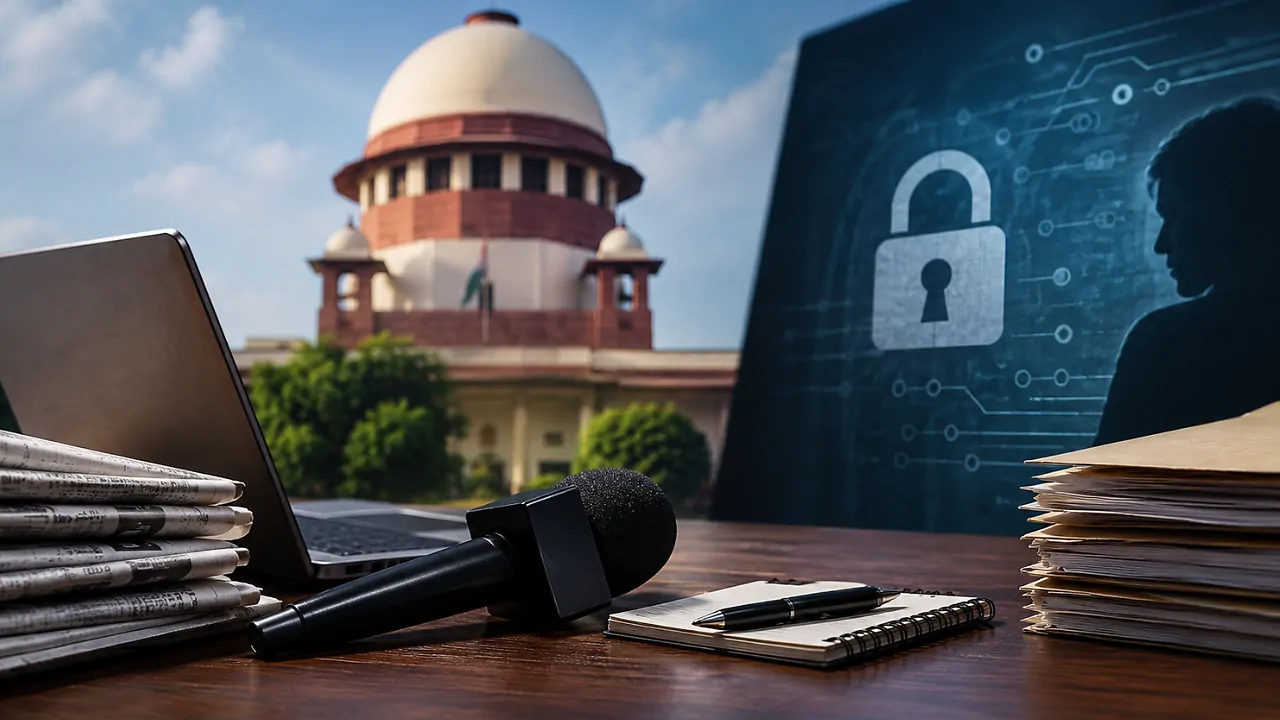
New Delhi, October 27, 2026: A coalition of 21 major Indian news publishers has moved the Supreme Court challenging key provisions of the Digital Personal Data Protection Act, 2023 and the Digital Personal Data Protection Rules, 2025, arguing that the framework could severely restrict investigative journalism, expose confidential sources and threaten the functioning of newsrooms.
The Supreme Court on Tuesday issued notice to the Centre on the petition filed by the Digital News Publishers Association (DNPA) and also sought a response on an application seeking a stay on the challenged provisions. The matter is scheduled to be heard again on November 17.
Supreme Court Issues Notice to Centre
A three-judge bench headed by Chief Justice of India Surya Kant issued notice to the Union government after hearing the publishers’ challenge.
The petition questions provisions of the DPDP Act and Rules that the publishers say impose data-protection obligations on journalism without providing a specific exemption for news gathering and reporting.
21 Publishers Part of Challenge
The petition represents 21 news publishers through the Digital News Publishers Association.
The group includes major media organisations such as Network18, NDTV, The Indian Express and Times Internet, among others.
Publishers Say Law Could Amount to Pre-Censorship
The media organisations argue that requiring journalists to comply with consent-based data rules before investigating individuals could effectively act as a form of pre-censorship.
Their counsel told the court that such obligations could make it harder to investigate corruption, corporate wrongdoing and other matters of public interest.
Consent Requirement at Centre of Challenge
One of the publishers’ biggest concerns is the requirement to notify individuals and obtain consent before processing their personal digital data.
They argue that applying this requirement to journalism could force reporters to alert the very people they are investigating.
In an investigative story, that could potentially give a subject time to destroy evidence, influence witnesses or interfere with the reporting process.
Investigative Journalism Could Be Hit Hardest
The publishers say ordinary news reporting often relies on gathering and analysing personal information without seeking prior permission from every person mentioned.
They argue that this is particularly important in investigations involving financial misconduct, political wrongdoing, electoral malpractice and abuse of public office.
A mandatory consent structure, according to the petition, could therefore make investigative journalism significantly more difficult.
Confidential Sources Could Be Exposed
Another major concern involves the protection of journalistic sources.
The law gives the government power in certain circumstances to require organisations handling personal data to furnish information.
Publishers argue that if such powers are applied to media organisations, authorities could potentially seek information capable of identifying confidential sources or whistleblowers.
Whistleblowers May Be Discouraged
The petition warns that confidential sources may become less willing to share information if they fear their identity could later be disclosed through government information demands.
That, publishers say, could reduce the flow of information about corruption, corporate wrongdoing and government misconduct.
Right to Erasure Raises Concerns
The DPDP framework also gives individuals rights relating to deletion of personal data.
News publishers fear that such provisions could be used to demand removal or redaction of factual news reports containing personal information.
They argue that this could affect archived journalism and alter the historical public record.
Publishers Warn Stories Could Be Removed
The DNPA says that if individuals are allowed to withdraw consent and seek erasure of their data without an adequate journalistic exemption, publishers could face pressure to take down legitimate reports.
The group argues that public-interest journalism should not be treated in the same manner as ordinary commercial data processing.
Heavy Penalties Also Challenged
The DPDP framework allows substantial financial penalties for non-compliance.
Publishers say the possibility of heavy fines could create a chilling effect, especially for smaller digital news organisations with limited financial resources.
The law allows penalties that can run into hundreds of crores of rupees depending on the violation.
Newsrooms Could Face Shutdown Risk, Court Told
During the hearing, the publishers’ counsel argued that the combined effect of consent requirements, potential fines and lack of a journalism exemption could pose an existential threat to some newsrooms.
The concern is particularly acute for smaller publishers that may not have the resources to absorb repeated compliance costs or penalties.
Challenge Includes DPDP Rules, 2025
The petition does not challenge only the parent law.
It also questions provisions of the Digital Personal Data Protection Rules, 2025, which set out how several obligations under the Act are to operate in practice.
Contested Provisions Due to Take Effect in May 2027
Many of the provisions being challenged are scheduled to become operational from May 2027.
Publishers are therefore seeking judicial intervention before the full compliance regime takes effect.
Publishers Seek Journalism Exemption
The central demand is for a specific exemption or protection for journalistic activities.
The petitioners have pointed out that data-protection regimes in jurisdictions including the European Union, United Kingdom and Singapore provide specific safeguards for journalism or public-interest reporting.
India’s Law Does Not Explicitly Exempt Journalism
The Indian framework does not currently contain a broad written exemption for journalistic activity comparable to those cited by the publishers.
This absence is at the heart of the legal challenge.
Government Had Earlier Given Assurances
According to the publishers, government representatives had previously indicated that press freedom would be protected.
However, the DNPA argues that verbal or informal assurances are insufficient unless they are reflected clearly in the law or rules.
Petition Invokes Freedom of Speech
The publishers argue that the challenged provisions violate Article 19(1)(a) of the Constitution, which protects freedom of speech and expression.
They contend that press freedom and the public’s right to receive information are essential components of that constitutional guarantee.
Puttaswamy Judgment Also Cited
The petition also relies on the Supreme Court’s landmark K S Puttaswamy judgment, which recognised privacy as a fundamental right.
The publishers argue that while privacy must be protected, restrictions affecting journalism must still satisfy constitutional tests of necessity and proportionality.
Privacy and Press Freedom at Centre of Case
The case raises a broader constitutional question: how should India balance an individual’s right to privacy with the media’s role in reporting information in the public interest?
Both rights enjoy constitutional importance, making the dispute potentially significant for the future of digital journalism in India.
Government Has Broad Exemptions, Publishers Say
The DNPA has also criticised what it sees as an imbalance in the law.
Publishers argue that the framework grants broad exemptions to government authorities while failing to provide comparable protection for the press.
Data Protection Board Powers Under Scrutiny
The law creates a Data Protection Board empowered to examine violations and impose penalties.
Publishers fear that a regulator appointed under the government could potentially exercise substantial influence over media organisations handling personal data.
Blocking Powers Also Raise Alarm
The law contains provisions that may eventually permit access to information to be blocked in certain circumstances following repeated violations.
Publishers argue that such powers, combined with financial penalties, could have serious consequences for online news organisations.
Earlier Challenges Already Pending
The DNPA case is not the first constitutional challenge to the DPDP framework.
Other petitions filed earlier have raised concerns about the law’s impact on the Right to Information, journalism and institutional independence.
However, the involvement of 21 major news publishers makes the latest petition one of the most prominent challenges to the legislation so far.
Court Has Not Yet Ruled on Merits
The Supreme Court’s decision to issue notice does not mean that the challenged provisions have been struck down or declared unconstitutional.
At this stage, the court has asked the Centre to respond and will consider the arguments in greater detail at subsequent hearings.
Next Hearing on November 17
The Supreme Court has scheduled the matter for November 17, 2026.
The Centre is expected to place its position before the court, including its response to the publishers’ claims that the law threatens press freedom and investigative journalism.
Case Could Shape Future of Digital Journalism
The outcome could have far-reaching consequences for Indian media organisations, journalists and digital publishers.
A ruling on whether journalism requires a special exemption under India’s data-protection regime could determine how reporters collect, store and publish personal information in future.
For now, the Supreme Court challenge has turned the debate over privacy and press freedom into a major constitutional battle, with the country’s largest news organisations arguing that stronger written protections are necessary to prevent investigative journalism from being weakened.
Source: Supreme Court proceedings, Reuters, The Indian Express, LiveLaw, Bar & Bench
Supreme News Network