
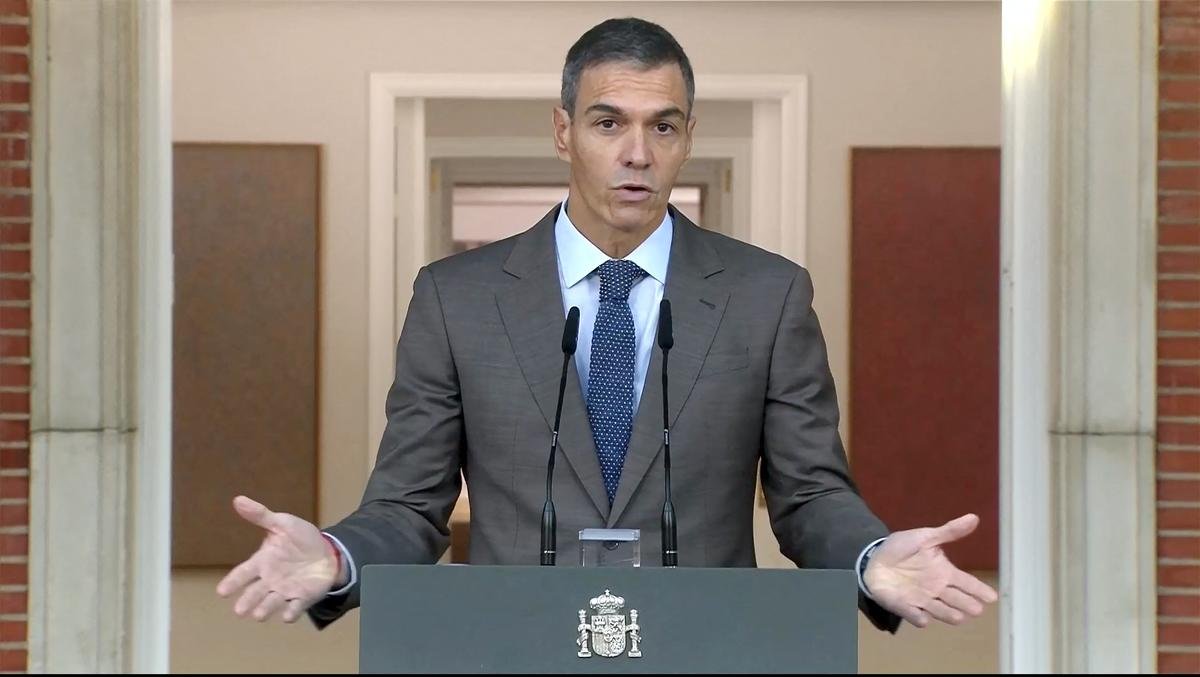
Madrid, November 28, 2026: Spain is preparing for a snap general election on Sunday, November 29, with Prime Minister Pedro Sánchez expressing confidence that his Socialist Party can secure enough parliamentary support to remain in government despite opinion polls showing an advantage for its conservative opponents.
The election campaign concluded on Friday, November 27, bringing an end to weeks of political rallies, debates and disagreements over housing affordability, immigration, public services and allegations of corruption.
Sánchez, leader of the Spanish Socialist Workers’ Party (PSOE), said he believed progressive voters would mobilise in sufficient numbers to support another left-wing government.
However, surveys published before Spain’s election polling restrictions indicated stronger support for a possible coalition involving the conservative People’s Party (PP) and the right-wing Vox party.
The election will determine the composition of Spain’s Congress of Deputies and Senate, with the outcome potentially affecting the country’s domestic policies and its position within the European Union.
No election result has been declared. Voting is scheduled for November 29.
Spain Prepares for November 29 Snap Election
Spain will hold an early general election on Sunday after Prime Minister Pedro Sánchez dissolved Parliament in October.
The election was originally scheduled to take place later in the parliamentary term.
However, the prime minister called an early vote following repeated disagreements with parliamentary allies.
The government’s inability to secure sufficient support for important housing measures contributed to the decision.
The election will give voters an opportunity to choose representatives for both chambers of Parliament.
Political parties are now preparing for the final stage of the electoral process.
Pedro Sánchez Expresses Confidence Despite Polls
On November 27, Sánchez told Spanish radio station Cadena SER that he believed his party could secure the support needed to remain in office.
He cited internal party information suggesting that the Socialists could finish ahead of their competitors.
The prime minister also argued that progressive voters were becoming increasingly motivated to participate.
His comments followed several public opinion surveys indicating a possible advantage for the conservative opposition.
However, Sánchez maintained that the final outcome would depend on voter participation.
His statements reflect the Socialist Party’s campaign position rather than a confirmed election result.
Why Did Spain Call an Early Election?
The snap election was announced on October 5.
The decision followed parliamentary opposition to government measures intended to address Spain’s housing affordability crisis.
Sánchez had been governing through a minority administration that depended on support from smaller parties.
Disagreements over important legislation made the parliamentary situation increasingly difficult.
The prime minister argued that a new election would allow voters to determine the direction of government policy.
The early election was formally established through a royal decree dissolving both chambers of Parliament.
Spain’s Housing Crisis Becomes Central Election Issue
Housing affordability has become one of the most important issues in Spain’s election campaign.
Rents and property prices have increased significantly in several major cities and popular tourist destinations.
Younger residents and lower-income households have reported increasing difficulty finding affordable accommodation.
Sánchez has emphasised stronger housing-market regulation and measures intended to improve access to homes.
His government has also sought to restrict certain unauthorised tourist accommodation practices.
The conservative People’s Party has proposed increasing housing supply through additional construction.
The competing approaches have formed a central part of the campaign debate.
People’s Party Challenges Socialist Government
The conservative People’s Party, led by Alberto Núñez Feijóo, is one of the principal challengers to Sánchez.
Feijóo has criticised the Socialist government’s management of public services and the economy.
He has also questioned its handling of corruption allegations involving individuals associated with the governing party.
The PP’s campaign has emphasised housing construction, public administration and changes to immigration policy.
Feijóo has presented his party as an alternative to the existing government.
However, the final composition of Parliament will depend on votes cast and the allocation of seats under Spain’s electoral system.
Vox Plays Important Role in Election Debate
Vox, led by Santiago Abascal, has campaigned on a platform that includes tougher immigration restrictions and changes to several existing government policies.
The party’s positions have been a major subject of debate during the election campaign.
Vox has advocated stricter border controls and criticised aspects of Spain’s current immigration framework.
Its climate and social policy positions also differ substantially from those of the Socialist Party.
Opinion surveys have examined the possibility of cooperation between the PP and Vox.
However, no future governing arrangement can be treated as confirmed before the election and subsequent parliamentary negotiations.
Broad Front Seeks to Support Progressive Government
Sánchez has also emphasised cooperation with smaller left-wing political groups.
The Broad Front, represented during the campaign by Ada Colau, has presented itself as a potential partner for a progressive administration.
Colau and Sánchez appeared together in the final campaign debate.
They challenged the positions of the PP and Vox on social policy and public services.
Their cooperation reflects ongoing efforts to coordinate parties on the left.
However, any formal governing arrangement would depend on the distribution of parliamentary seats after the election.
Final Election Debate Sparks Political Disagreement
The final major televised debate featured Sánchez, Feijóo, Abascal and Colau.
Participants exchanged criticism over housing, government performance, social policy and political accountability.
One controversy involved remarks made by Feijóo about Colau.
Sánchez and Colau criticised the comments as sexist.
Feijóo subsequently said he would withdraw the remark if it had offended anyone, while disputing the interpretation advanced by his opponents.
The exchange became part of a wider discussion about political conduct and gender-related issues during the campaign.
Immigration Emerges as Major Election Issue
Immigration has been another prominent subject in the campaign.
Spain has experienced substantial immigration from Latin America, Africa and other regions.
Sánchez has defended legal immigration as a contributor to economic activity and population growth.
His government has also introduced measures affecting the legal status of migrants already living in Spain.
The PP has advocated stronger border management.
Vox has called for much more restrictive immigration policies, including expanded deportation measures.
The differences could influence Spain’s approach to migration and cooperation with other European countries.
Corruption Allegations Add Pressure on Socialists
The Socialist Party has faced scrutiny over corruption investigations involving former officials and people associated with the prime minister.
Some legal proceedings have also involved members of Sánchez’s family.
The individuals concerned have disputed allegations against them.
Sánchez has maintained that he was not aware of wrongdoing by former party colleagues involved in proven corruption cases.
He has also criticised what he considers politically motivated attacks against his family.
The investigations and allegations have featured in opposition campaigning.
However, allegations involving individuals should not be presented as proof of wrongdoing by every person or institution associated with the government.
Train Safety and Public Services Under Scrutiny
Public transport safety has also featured in the election.
Two fatal railway accidents during 2026 intensified scrutiny of Spain’s extensive rail network.
Opposition leaders have questioned the government’s management of transport infrastructure.
Feijóo has proposed a review of the railway network and improvements to public administration.
Sánchez has defended public investment and social spending as important for maintaining essential services.
Healthcare and public service quality have also emerged as concerns among voters.
These issues form part of a broader debate about government performance.
Climate Policy Divides Major Parties
Climate and energy policies have produced significant differences between the parties.
Spain has invested heavily in renewable energy, particularly solar and wind power.
The Socialist government has supported the expansion of clean electricity generation.
Feijóo has advocated changes to Spain’s energy strategy, including a continued role for nuclear power.
Vox has criticised elements of the government’s climate agenda.
The outcome of the election could therefore influence future decisions on energy infrastructure, environmental regulation and climate commitments.
However, the specific policies adopted will depend on the next government’s parliamentary support.
How Many Seats Are Needed for a Majority?
Spain’s Congress of Deputies has 350 seats.
A party or coalition needs 176 seats for an absolute majority.
If no party wins an outright majority, political leaders may need to negotiate agreements with other parties.
Spain has experienced several coalition and minority governments in recent years.
The election will determine how many representatives each party receives.
The allocation of seats is influenced by votes within provincial constituencies rather than solely by a party’s national vote percentage.
Consequently, national polling figures do not translate directly into parliamentary majorities.
Why Are Election Opinion Polls Restricted?
Spanish election law restricts the publication of electoral opinion polls during the final days before voting.
The restriction is intended to prevent newly published polling figures from influencing voters immediately before the election.
As a result, the final campaign period has been shaped by previously published surveys, party statements and campaign events.
Sánchez has challenged the conclusions suggested by earlier polls, citing internal Socialist Party information.
However, that internal information has not independently established the election outcome.
The final result will be determined by official voting and counting.
November 28 Observed as Election Reflection Day
Saturday, November 28, is Spain’s election reflection day.
Under the country’s electoral rules, ordinary campaigning ends before this period.
Political rallies and election advertising are restricted so that voters can consider their choices ahead of polling.
The official campaign ran from November 13 through November 27.
Voting is scheduled to take place on November 29.
The reflection period is an established part of Spain’s electoral process.
Why Spain’s Election Matters for Europe
Spain is one of the European Union’s largest economies.
Its government plays an important role in discussions concerning economic policy, migration, European security and climate change.
A change in government could alter Spain’s approach to some of these matters.
The election has therefore attracted attention beyond the country’s borders.
However, the precise direction of future policy will depend on the election results and the formation of a government.
No particular coalition or policy outcome can be treated as settled before those events occur.
What Happens After Voting?
Spanish voters will elect representatives to the Congress of Deputies and Senate.
After the results are counted, political parties will assess whether they can secure sufficient parliamentary support to form a government.
If no party has an absolute majority, negotiations may be required.
A candidate for prime minister must secure parliamentary confidence according to the constitutional procedure.
The election itself does not automatically determine the final governing coalition.
The newly elected chambers are scheduled to hold their constituent sessions on December 23, 2026.
Spain Snap Election 2026: Key Highlights
Spain will hold a snap general election on November 29, 2026.
Prime Minister Pedro Sánchez announced the early election on October 5 after his minority government encountered parliamentary difficulties.
The election campaign ended on November 27.
Sánchez has expressed confidence that the Socialist Party and its allies can secure sufficient support to continue governing.
Earlier opinion polls indicated an advantage for the conservative People’s Party and Vox.
Housing affordability, immigration, corruption allegations, public services and climate policy have dominated the campaign.
The Congress of Deputies has 350 seats, with 176 required for an absolute majority.
November 28 is the official election reflection day.
Voting has not yet taken place, and no election winner or new governing coalition has been confirmed.
Source – Reuters, Associated Press, El País, The Guardian, EFE, Government of Spain
Supreme News Network