New Delhi, November 28, 2026: The Union Cabinet, chaired by Prime Minister Narendra Modi, has approved a revised legislative package linking the expansion of parliamentary and state Assembly constituencies with the implementation of 33% reservation for women.
The decision, taken on Friday, November 27, proposes increasing the maximum strength of the Lok Sabha to 850 seats, compared with its current 543 elected constituencies. The legislation also seeks a uniform 50% increase in seats allocated to each state and Union Territory.
The government’s proposal is intended to address concerns that delimitation based on population changes could reduce the relative political representation of some states, particularly in southern India.
The revised package includes the Constitution (132nd Amendment) Bill, 2026, and a new Delimitation (Second) Bill, 2026. Related legislation concerning Union Territories is also part of the government’s plans.
The bills are expected to be considered during a special parliamentary sitting beginning November 30.
However, the proposals have received Cabinet approval only. Parliamentary passage and the necessary constitutional procedures remain pending.
Union Cabinet Approves Revised Delimitation Proposal
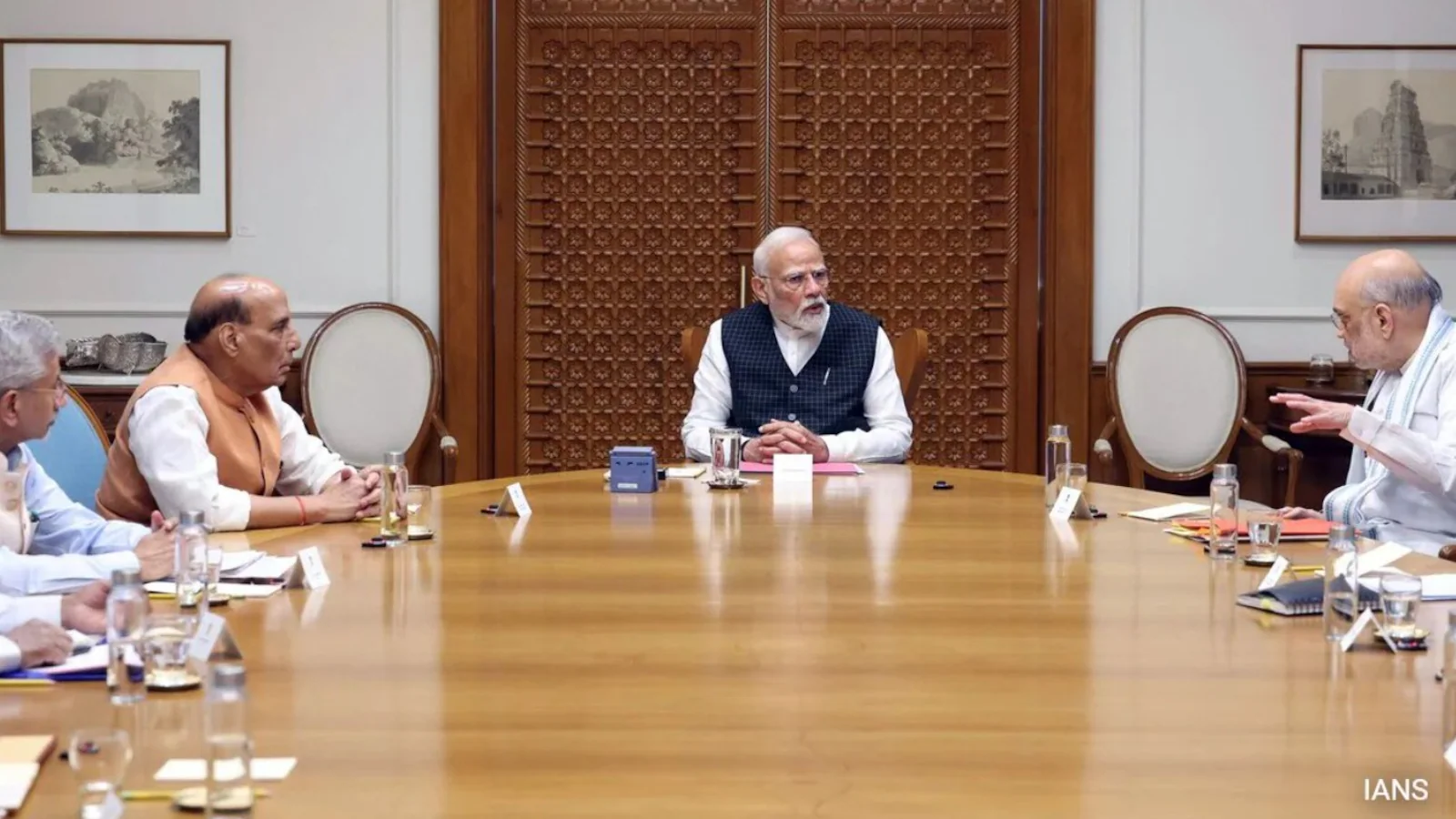
The Cabinet approved the revised constitutional amendment during a meeting chaired by Prime Minister Narendra Modi.
The legislation proposes changes to India’s parliamentary representation framework and the mechanism for implementing women’s reservation.
Under the revised approach, all states and Union Territories would receive a 50% increase in their existing Lok Sabha seat allocations.
The government argues that this formula would increase representation while maintaining the relative distribution of seats among states.
The proposal follows months of disagreement over the possible effect of delimitation on states with different population growth rates.
The revised legislation must now secure approval from Parliament before its provisions can take effect.
Lok Sabha Strength Could Increase to 850
One of the most significant proposals concerns the maximum size of the Lok Sabha.
The House currently has 543 elected constituencies.
The revised constitutional amendment proposes raising its permitted maximum strength to 850.
This would create additional parliamentary constituencies and increase the number of elected representatives.
However, 850 is the proposed constitutional ceiling, not necessarily the precise number of seats that would be created immediately.
The final allocation would depend on the legislation and subsequent delimitation exercise.
The proposed expansion has attracted attention because it could substantially change India’s electoral and legislative arrangements.
Each State to Receive 50% More Seats
The revised proposal guarantees a uniform increase in seats for individual states and Union Territories.
This means the number of seats allocated to each would rise by approximately half.
The government intends to preserve their relative proportions within the Lok Sabha.
The move is intended to address concerns raised during the earlier legislative debate.
Some regional parties had argued that a new population-based allocation could reduce the influence of states that recorded slower population growth.
The revised formula seeks to prevent such a change during the proposed period.
Exact constituency allocations and rounding arrangements will depend on the final legislative framework.
Women’s Reservation Linked to Delimitation
The legislation is intended to implement the 33% reservation for women established through the Constitution (106th Amendment) Act, 2023.
That amendment, commonly associated with the Nari Shakti Vandan Adhiniyam, provides a framework for reserving one-third of seats for women in the Lok Sabha and state legislative assemblies.
However, implementation under the existing framework is linked to a census and subsequent delimitation exercise.
The government now proposes to revise those arrangements so that reservation can be introduced earlier.
Its stated objective is to implement the policy in time for the 2029 Lok Sabha elections.
That target remains dependent on the passage and implementation of the necessary legislation.
What Is the Constitution (132nd Amendment) Bill, 2026?
The Constitution (132nd Amendment) Bill, 2026, is the central constitutional proposal in the revised package.
It seeks changes connected with parliamentary representation and women’s reservation.
The bill proposes amending Article 334A to provide for an increase of 50% in the seats allotted to each state and Union Territory during delimitation.
It also seeks to revise the constitutional arrangements governing the allocation of seats among states.
The proposed maximum strength of the Lok Sabha would become 850.
The changes are intended to create the legal basis for introducing women’s reservation through an expanded legislature.
However, the bill must satisfy the special majority requirements for constitutional amendments.
What Is the Delimitation (Second) Bill, 2026?
The proposed Delimitation (Second) Bill would establish procedures for implementing the revised constitutional framework.
The government intends to replace the earlier Delimitation Bill introduced in April 2026.
According to a parliamentary document dated November 27, the new bill would provide for a 50% increase in the number of seats allocated to each state and Union Territory.
It would also revise the duties of the Delimitation Commission.
The commission would be responsible for adjusting seat allocations and redrawing territorial constituency boundaries under the proposed law.
The government plans to constitute the commission after the relevant legislation comes into force.
Why Has the Government Proposed a Freeze Until 2051?
The revised legislation seeks to preserve the existing relative allocation of Lok Sabha seats among states until population figures from the first census conducted after 2051 are published.
This represents an extension of the current constitutional arrangement.
The proposed freeze is intended to address concerns about differences in population growth across India.
States that have experienced lower population growth have argued that they should not lose parliamentary representation because of demographic changes.
Under the proposed formula, their existing relative share would be preserved while the overall number of seats increases.
However, critics continue to question the constitutional and political implications of extending the freeze.
How Would the 2011 Census Be Used?
The government proposes using the latest applicable published census figures for drawing constituency boundaries.
Current reporting identifies the 2011 Census as the basis for the immediate exercise.
The proposed approach distinguishes between two issues: how many parliamentary seats each state receives and how those seats are divided into constituencies.
The relative allocation among states would remain protected under the revised formula.
The Delimitation Commission would then redraw constituencies using the population data specified by law.
This distinction is important because boundary changes within a state can occur even when its relative share of Lok Sabha representation remains unchanged.
Why Did the Earlier Bills Fail?
The government previously introduced a delimitation-linked legislative package during a special parliamentary sitting in April 2026.
The package included the Constitution (131st Amendment) Bill, 2026.
However, the constitutional amendment did not secure the required special majority in the Lok Sabha.
As a result, the linked delimitation legislation was not taken forward.
Opposition parties and some regional parties had raised concerns about the possible effect of delimitation on state-wise representation.
The revised bill seeks to address those objections by expressly including the uniform 50% seat-increase formula.
Whether this change will secure sufficient parliamentary support remains to be determined.
Why Are Southern States Concerned?
Delimitation has become a major federal issue because India’s states have experienced different demographic trends.
Some southern states have recorded relatively slower population growth.
Their political leaders have argued that population-based redistribution could reduce their proportional representation in Parliament.
The concern is that states with faster population growth might receive a larger relative share of seats.
The government’s revised plan seeks to preserve the existing balance while increasing the overall number of constituencies.
However, regional parties may still seek clarification about the legal guarantees and future arrangements.
The issue involves both representation based on population and the balance of political influence among states.
Congress Questions the Government’s Approach
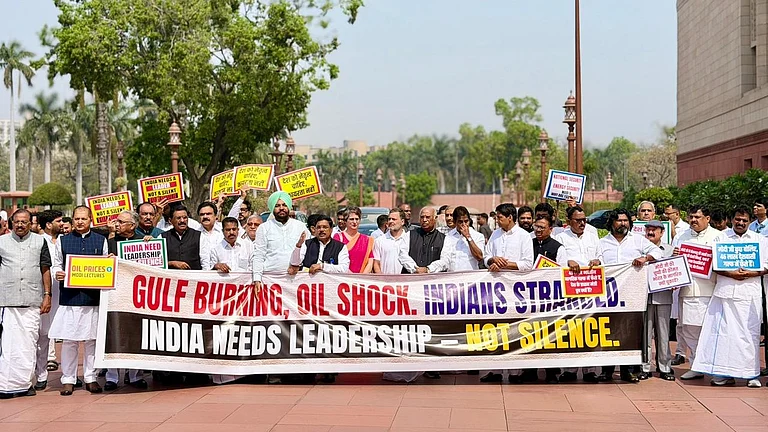
Congress has criticised the revised delimitation-linked proposal.
The party maintains that it supports women’s reservation but questions why its implementation should be tied to the government’s preferred delimitation framework.
Congress leaders have also raised concerns about the timing of the special parliamentary sitting and the scope for legislative scrutiny.
Following its Parliamentary Strategy Group meeting on November 27, the party alleged that the proposed process could enable politically motivated constituency boundaries.
Those allegations represent Congress’s position and have not been established as findings of fact.
The government maintains that the revised formula addresses regional concerns and supports the implementation of women’s reservation.
DMK and Other Regional Parties Examine the Proposal
The Dravida Munnetra Kazhagam (DMK) has placed particular emphasis on protecting Tamil Nadu’s existing share of parliamentary seats.
DMK leader M.K. Stalin has argued that the state’s relative representation must not be reduced.
The proposed uniform 50% increase has been viewed as potentially addressing part of that concern.
Reports have also indicated possible support from the Nationalist Congress Party (Sharadchandra Pawar).
However, parties may take different positions on individual provisions and the full legislative package.
Their final parliamentary votes should not be assumed before the legislation is considered.
Why a Special Majority Is Required
A constitutional amendment cannot ordinarily be passed through a simple majority alone.
Under Article 368 of the Constitution, the bill generally requires support from a majority of the total membership of each House and at least two-thirds of members present and voting.
Certain constitutional changes also require ratification by at least half of India’s state legislatures.
These requirements make support from multiple political parties important.
The ruling alliance will need to secure the necessary votes in both the Lok Sabha and Rajya Sabha.
Cabinet approval is therefore only one stage of the legislative process.
Parliament to Reconvene From November 30
The government has arranged a special parliamentary sitting to consider essential legislative business.
The Lok Sabha is scheduled to meet on November 30 and December 1.
The Rajya Sabha is scheduled to meet on December 2 and December 3.
The delimitation-linked women’s reservation package is expected to be a major item of discussion.
Members will have an opportunity to debate the proposed changes and vote on the legislation when it is formally taken up.
The outcome will determine whether the government can proceed with the next stages of delimitation.
What Happens After Parliamentary Approval?
If the proposed legislation receives the required approvals, the government intends to establish a Delimitation Commission.
The commission would undertake the process of reallocating and redrawing constituencies according to the new legal framework.
The government also intends to implement women’s reservation through the revised arrangements.
However, the timetable would depend on the final legislation and the completion of the necessary procedures.
The government has identified the 2029 Lok Sabha elections as its target for implementing the reservation policy.
There is no guarantee that all implementation steps will be completed by that date.
Why the Proposal Matters for Indian Democracy
The proposed changes could significantly affect the structure of India’s representative institutions.
Increasing the number of parliamentary constituencies would provide more elected seats.
Women’s reservation could also substantially change the composition of legislatures.
At the same time, the delimitation process raises important questions about federal representation, population equality and constituency boundaries.
Supporters of the legislation emphasise the potential for greater representation and faster implementation of the women’s quota.
Critics argue that the process requires careful constitutional scrutiny and broad political consultation.
The parliamentary debate will determine how these competing considerations are addressed.
Delimitation and Women’s Reservation Bills: Key Highlights
The Union Cabinet approved a revised delimitation-linked women’s reservation legislative package on November 27, 2026.
The Constitution (132nd Amendment) Bill proposes increasing the Lok Sabha’s maximum strength to 850.
The government’s plan would raise the number of seats allocated to each state and Union Territory by 50%.
The relative distribution of Lok Sabha seats among states would remain protected until the first census after 2051.
The Delimitation (Second) Bill would establish the framework for redrawing constituencies.
The proposals are intended to facilitate 33% reservation for women in Parliament and state legislative assemblies.
The government aims to implement women’s reservation in time for the 2029 general election.
Congress and regional parties have raised questions about the delimitation process and parliamentary scrutiny.
The special parliamentary sitting is scheduled to begin on November 30.
The proposals have Cabinet approval but have not yet become law.
Source – The Indian Express, Business Standard, Hindustan Times, The Tribune, Press Trust of India, Parliament of India
Supreme News Network