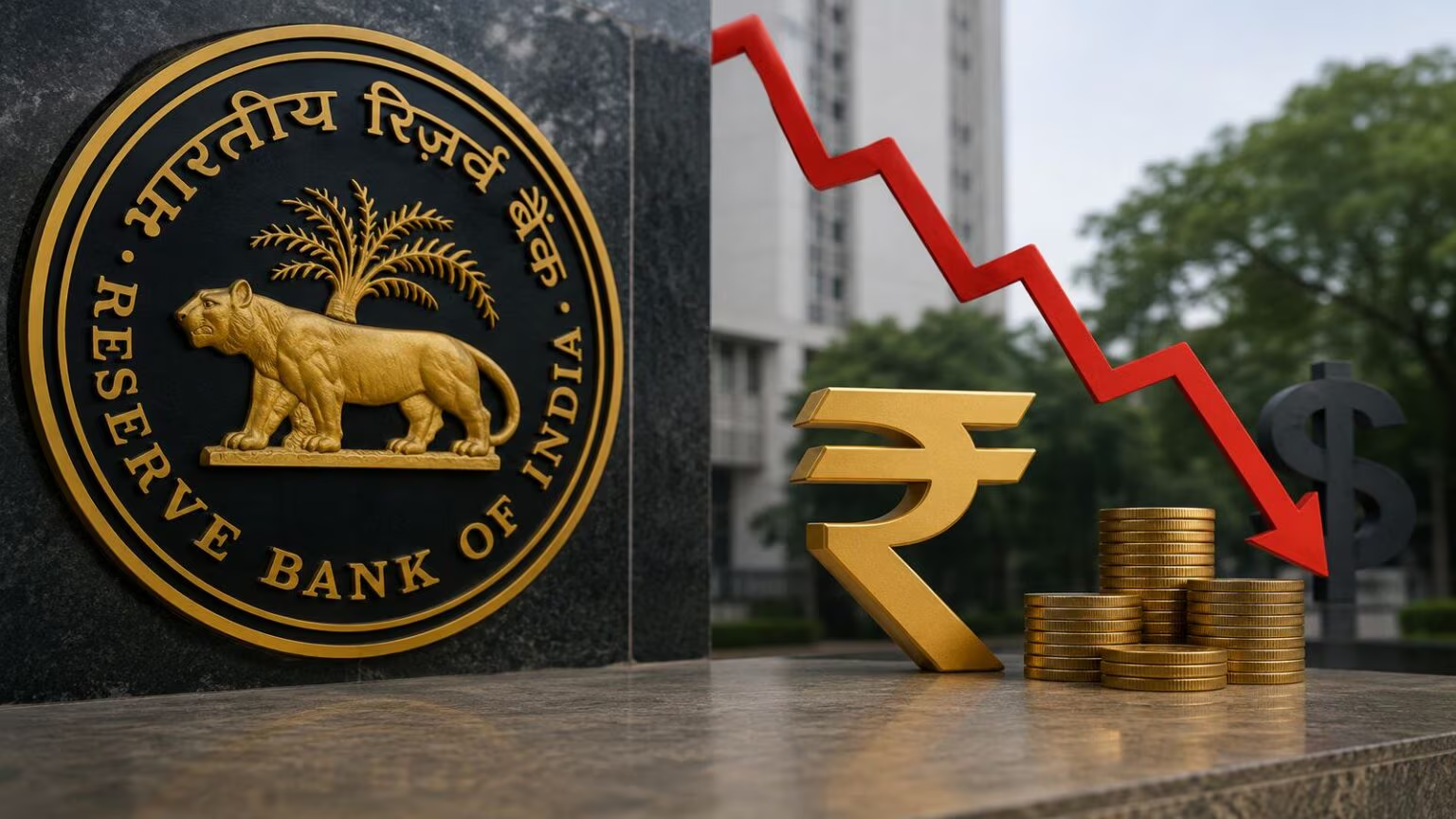
MUMBAI, October 14, 2026: The Indian rupee strengthened for a third consecutive session on Wednesday, touching a one-month high of ₹94.77 against the US dollar as recent Reserve Bank of India (RBI) measures and Governor Sanjay Malhotra’s commitment to maintaining currency-market stability boosted sentiment.
The currency later surrendered some of its gains and closed at around ₹95.15 per dollar, with importer demand for dollars and continued foreign portfolio outflows limiting its recovery.
Rupee Extends Three-Session Recovery
The rupee’s latest gains mark a reversal of some of the sharp losses recorded earlier in October. The currency briefly strengthened to ₹94.77 per dollar during Wednesday’s trading session before easing as demand for the US currency increased.
According to Reuters, the rupee has recovered approximately 2% since the RBI introduced its latest measures to support the currency. Last week, it had weakened towards its record low of ₹96.96 per dollar.
Despite the rebound, the currency remains under pressure from external economic factors and continued demand for dollars.
RBI Tightens Rules to Curb Speculative Trading
The RBI has introduced measures targeting foreign-exchange derivatives trading in an effort to discourage speculative positions against the rupee.
Governor Sanjay Malhotra said the central bank had observed unusually high speculative activity in the derivatives market, prompting regulatory action.
The measures are intended to support orderly market conditions and reduce destabilising currency movements. The RBI has clarified that its objective is not to defend a particular exchange-rate level but to limit excessive volatility.
Special Dollar Window Aims to Ease Market Pressure
One of the RBI’s measures involves a dedicated dollar window for state-owned oil companies.
Oil importers are among India’s major regular buyers of US dollars. Allowing some of their requirements to be met through a separate channel can reduce immediate demand in the open spot market, potentially easing pressure on the rupee.
The effectiveness of this arrangement will depend partly on the scale of oil companies’ dollar requirements and broader conditions in the foreign-exchange market.
Governor Signals Readiness for Further Action
Malhotra has indicated that the RBI remains prepared to take additional steps if required to maintain stability in the currency market.
The central bank’s approach focuses on containing excessive volatility rather than targeting a fixed exchange rate. Its interventions and regulatory measures are intended to discourage disruptive speculative activity while allowing legitimate currency transactions to continue.
Importer Demand Limits Further Appreciation
Despite the rupee’s recovery, importers continued purchasing dollars to meet and hedge future payment obligations.
Such demand can limit the currency’s gains, particularly when businesses seek to protect themselves against the possibility of further depreciation. The buying pressure contributed to the rupee’s retreat from its intraday high.
Foreign Investment Outflows Remain a Concern
Foreign portfolio outflows continue to pose a challenge for the rupee. When overseas investors sell Indian shares or bonds and convert the proceeds into dollars, demand for the US currency can increase.
Sustained outflows may therefore offset some of the support provided by RBI measures, particularly if global financial conditions encourage investors to move towards dollar-denominated assets.
High Crude Oil Prices Add to Currency Pressure
Elevated crude-oil prices remain another major risk for the Indian currency. India imports a large share of its crude-oil requirements, making its import bill sensitive to movements in global energy prices.
When oil becomes more expensive, importers generally require more dollars to pay for supplies. This can increase demand for foreign currency and place additional pressure on the rupee, potentially limiting the impact of central bank intervention.
New Forex Rules Raise Hedging-Cost Concerns
The RBI’s measures have also raised concerns among some banks and companies over the cost and availability of currency hedging.
Market participants have reportedly warned that tighter regulations and additional reserve requirements could increase hedging expenses and reduce liquidity in the domestic forward market.
While curbs on speculative activity may help contain excessive volatility, businesses with genuine foreign-currency exposures also depend on accessible and reasonably priced hedging instruments to manage exchange-rate risks.
Markets Assess Possible RBI Rate Increases
Interest-rate expectations are another factor influencing currency trading. Reuters reported that swap markets were indicating expectations of nearly 100 basis points of rate increases over the following year.
These market expectations do not represent a confirmed RBI policy decision. Any future changes in interest rates will depend on a range of factors, including inflation, economic growth, global financial conditions and developments in the currency market.
Rupee Remains More Than 7% Weaker in 2026
Despite its recent recovery, the rupee remains more than 7% weaker against the US dollar in 2026, according to the reports.
The currency’s decline has been associated with several pressures, including elevated oil prices, foreign investment outflows, global dollar strength and geopolitical uncertainty.
The latest gains have helped reverse part of the recent depreciation, but the broader challenges facing the currency remain.
US Inflation Data in Focus
Currency traders are also monitoring upcoming US inflation data and commentary from Federal Reserve officials for indications of the likely direction of US monetary policy.
Stronger-than-expected inflation could influence expectations for US interest rates and support the dollar, while softer data could alter the outlook. Any resulting movement in the dollar may affect the rupee and other emerging-market currencies.
RBI Measures Provide Near-Term Support
The rupee’s three-session recovery suggests that the RBI’s latest measures and communication have helped improve near-term market sentiment. However, the currency’s retreat from its intraday high shows that underlying demand for dollars remains significant.
Whether the recovery can continue will depend on crude-oil prices, foreign investment flows, global interest-rate expectations and the RBI’s ability to discourage destabilising speculation without unduly restricting legitimate currency hedging.
Source – Reuters, Reserve Bank of India, The Times of India, Moneycontrol and The Economic Times
Supreme News Network