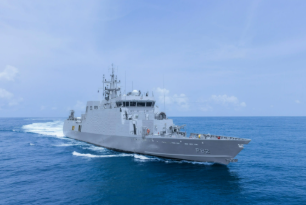
Mumbai, October 12, 2026: The Indian Navy on Monday commissioned INS Mangrol, the third vessel in the Mahe-class Anti-Submarine Warfare Shallow Water Craft (ASW-SWC) series, at the Naval Dockyard in Mumbai. Built by Cochin Shipyard Limited, the indigenously developed warship is designed to detect and counter submarine threats in shallow and coastal waters, strengthening India’s maritime security capabilities.
Third Mahe-Class Anti-Submarine Craft Joins Navy
INS Mangrol is the third vessel in the Navy’s new generation of shallow-water anti-submarine warfare craft. Its induction follows INS Arnala and INS Androth, expanding the Navy’s capabilities for underwater surveillance and anti-submarine operations near India’s coastline.
Built Indigenously by Cochin Shipyard
Designed and constructed by Cochin Shipyard Limited in Kochi, INS Mangrol reportedly incorporates more than 80% indigenous content. The achievement highlights India’s expanding domestic capabilities in warship construction, weapons integration and naval sensor technology.
The vessel’s construction also supports the country’s broader efforts to strengthen domestic defence manufacturing and reduce reliance on imported systems.
Designed for Shallow and Coastal Waters
INS Mangrol has been developed to operate in shallow waters and coastal zones where larger warships may face manoeuvring limitations. It is expected to contribute to the protection of ports, harbours, coastal approaches and other strategically important maritime areas.
Its specialised design enables the Navy to strengthen underwater surveillance and respond to potential submarine threats closer to shore.
Equipped With Sonar, Torpedoes and Rockets
The warship is equipped with advanced systems, including the Abhay hull-mounted sonar, lightweight torpedoes, an indigenous anti-submarine rocket launcher and the Mareech Advanced Torpedo Decoy System.
These systems are intended to help the vessel detect, track and respond to underwater threats while supporting broader naval operations.
Capable of Coordinated Maritime Operations
INS Mangrol can operate alongside maritime patrol aircraft, helicopters and other naval vessels. Such coordination can help the Navy improve underwater threat detection and strengthen its response to potential hostile submarine activity.
The craft adds another specialised platform to India’s wider maritime surveillance and anti-submarine warfare network.
Commissioning Ceremony Held in Mumbai
The commissioning ceremony was presided over by Vice Admiral Sanjay Vatsayan, Flag Officer Commanding-in-Chief of the Western Naval Command.
Senior naval officials and representatives from the Ministry of Defence, Cochin Shipyard Limited and indigenous weapons and sensor manufacturers were associated with the programme.
Indigenous Fleet Modernisation Continues
During the commissioning programme, Vice Admiral Vatsayan reportedly said that 10 ships had been commissioned into the Indian Navy in 2026 up to that point, with another eight expected to follow.
He also indicated that by 2034, around 60% of the Navy’s platforms were expected to have an average age of less than 10 years, reflecting the pace of fleet modernisation.
Named After Gujarat’s Coastal Town
INS Mangrol takes its name from Mangrol, a coastal town and prominent fishing harbour in Gujarat’s Junagadh district.
The vessel also revives the name of an earlier INS Mangrol, a minesweeper that served in the Indian Navy until April 2004, continuing the service’s tradition of carrying forward established ship names.
Strengthening India’s Coastal Defence
As underwater threats remain an important consideration in maritime security planning, shallow-water anti-submarine craft provide an additional layer of protection near the coastline.
INS Mangrol’s induction is expected to strengthen the Navy’s ability to monitor underwater activity, protect maritime approaches and support larger fleet operations.
Aatmanirbhar Bharat Receives Another Boost
The commissioning supports India’s Aatmanirbhar Bharat initiative in defence manufacturing. The vessel’s reported high level of indigenous content reflects ongoing efforts to expand domestic shipbuilding, develop naval technologies and strengthen the country’s defence-industrial base.
INS Mangrol’s entry into service marks another step in the Indian Navy’s continuing fleet modernisation and the development of indigenous maritime defence capabilities.
Source: Ministry of Defence, Indian Navy, The Indian Express, The Times of India, India Today, Akashvani News, Moneycontrol
Supreme News Network