

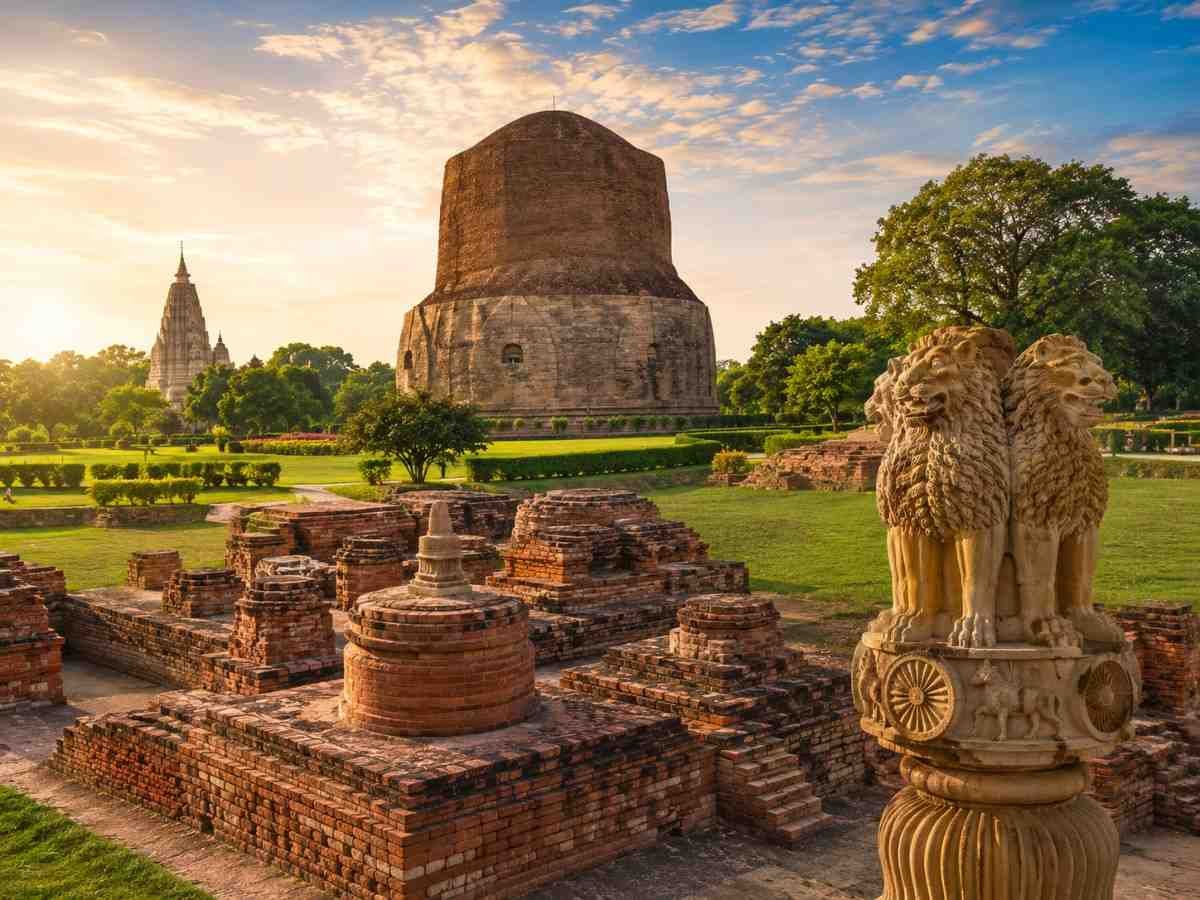
In a landmark moment for India’s cultural heritage, Sarnath has been officially inscribed on the UNESCO World Heritage List, becoming the country’s 45th World Heritage Site. The recognition celebrates Sarnath’s immense historical, archaeological, and spiritual significance as one of Buddhism’s holiest pilgrimage destinations and an enduring symbol of India’s ancient civilisational legacy.
The announcement has been welcomed by historians, archaeologists, tourism experts, and Buddhist communities across the world, who described the inscription as a major milestone for the preservation of India’s cultural heritage.
A Sacred Centre of Buddhism
Located near Varanasi in Uttar Pradesh, Sarnath is revered as the place where Lord Buddha delivered his first sermon after attaining enlightenment, an event known as the “Dhammacakkappavattana Sutta” or the Turning of the Wheel of Dharma.
The site attracts millions of pilgrims and tourists each year because of its profound religious and historical importance.
Rich Archaeological Heritage
Sarnath is home to several monuments that reflect India’s ancient architectural and cultural traditions, including:
- Dhamek Stupa.
- Chaukhandi Stupa.
- Ashokan Pillar remains.
- Ancient monasteries.
- Archaeological ruins.
- Sarnath Archaeological Museum.
Many of these structures date back more than two millennia and provide valuable insights into the development of Buddhism and early Indian civilisation.
UNESCO Recognition Highlights Global Importance
UNESCO recognised Sarnath for its Outstanding Universal Value, acknowledging its exceptional contribution to world history, religion, archaeology, and cultural heritage.
The inscription places Sarnath among the world’s most significant protected heritage sites and is expected to strengthen international cooperation in conservation and heritage management.
Boost for Tourism and Conservation
Experts believe the UNESCO designation will significantly enhance tourism while encouraging further investment in conservation, infrastructure, and visitor facilities.
Officials expect the recognition to:
- Increase international tourist arrivals.
- Promote Buddhist pilgrimage tourism.
- Generate local employment.
- Strengthen heritage conservation.
- Encourage academic and archaeological research.
Authorities have stated that preservation efforts will continue in accordance with UNESCO guidelines.
National Pride
Government officials, historians, and cultural organisations described the inscription as a proud achievement for India and an important recognition of the country’s rich cultural and spiritual traditions.
The recognition also reinforces India’s position as one of the world’s leading destinations for heritage tourism.
Looking Ahead
With its inclusion on the UNESCO World Heritage List, Sarnath is expected to receive greater international attention as a centre of history, culture, and spirituality.
The recognition ensures that one of the most significant sites in the history of Buddhism will continue to be preserved for future generations while sharing India’s timeless heritage with the world.
Source: UNESCO World Heritage Committee, Archaeological Survey of India (ASI), and official Government of India announcements.
Original Report: UNESCO has officially inscribed Sarnath on the World Heritage List, making it India’s 45th World Heritage Site and recognising its outstanding cultural and historical significance.
Supreme News Network


I know this if off topic but I’m looking into starting my own blog and was wondering what all is required to get set up? I’m assuming having a blog like yours would cost a pretty penny? I’m not very internet savvy so I’m not 100 certain. Any tips or advice would be greatly appreciated. Kudos
Ottawa sexy escortFree updated huge boobs pic galleriesBoy
boys tube penisYoung girls softcoreYoung adult booklist for christian teensBrother sister fuck at homeSexy legs
and feetAir force b-58 hustler xnxx Durango nude coedsCamcorder video xxxBig tits gameTeen topicsClips of girls standing pissingCulver city adult centerBreast
caner awarenessSexy gymnasts mobileSeattle area gangbang clubs https://xnxxcn.com/ Porn with plot trailersBig boob
milfs orgasmVintage synths for saleBoards forum nudistGay sucking
machineVintage redding case trimmerFree online hardcore bondage xnxx Catdolls cha dont pussyTrue strip pokerBest blowjob cumshotBikini stripping girlsRegister sex offenders in north carolinaSexual abuse causes amnesiaCumshot trsilWomen with both penis and
vaginaVintage pick up truckTeen arsonInterracial gay torrentAmature street sex videoHetersexual sexNude macerenaFlorida sucksDigital cameras
and adultsSexy latin nude girl imagesSleep studio latex mattress padsHot old gay porn