
Lucknow, October 26, 2026: Uttar Pradesh Chief Electoral Officer Navdeep Rinwa has ordered a statewide scrutiny of voter-registration and correction forms processed after the Special Intensive Revision of electoral rolls, following irregularities detected in Pilibhit and Azamgarh. The review will cover all Forms 6, 7 and 8 entered by computer assistants since April 10, 2026, across all 403 Assembly constituencies in the state.
The move significantly expands scrutiny beyond the districts where voter-roll errors were initially detected and places new accountability requirements on Electoral Registration Officers, Assistant Electoral Registration Officers, district officials and computer assistants.
Statewide Scrutiny Ordered
The CEO has directed election authorities across Uttar Pradesh to examine voter-related forms processed after the completion of the Special Intensive Revision.
April 10 has been chosen as the cut-off because that was when the final SIR electoral roll was published.
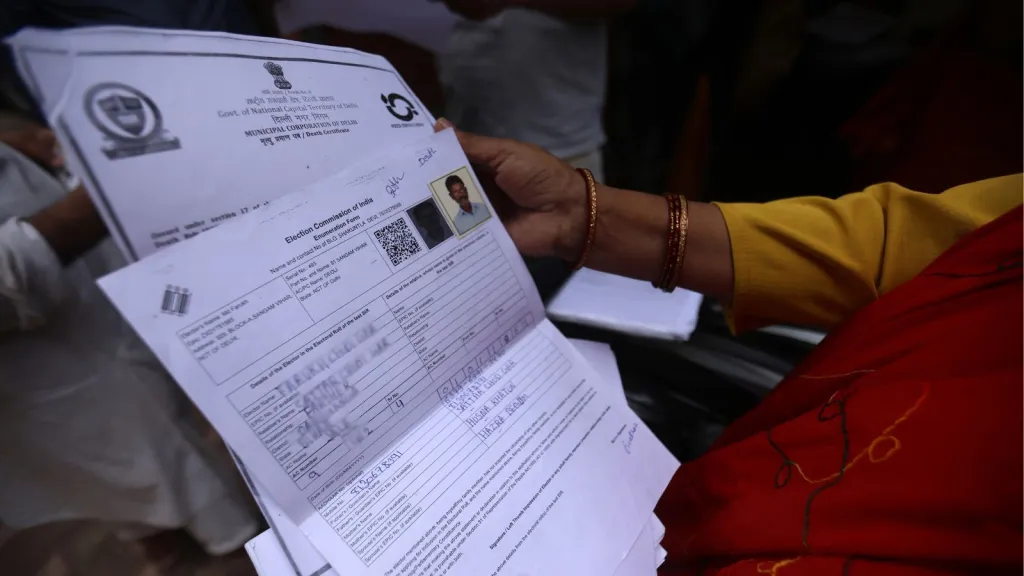
Forms 6, 7 and 8 Under Review
The audit covers three of the most important electoral-roll forms.
Form 6 is used for registering new voters, Form 7 is used for objections and deletion requests, and Form 8 is used for correction or updating of voter details.
Authorities will examine entries processed through these forms for possible duplication, incorrect data entry or other discrepancies.
All 403 Assembly Constituencies Covered
The order applies across Uttar Pradesh rather than only Pilibhit and Azamgarh.
Election officials in all 403 Assembly constituencies have been asked to scrutinise additions, deletions and corrections made after the SIR process ended.
Computer Assistants Barred From Entering Forms
A major procedural change has also been introduced.
Computer assistants will no longer be allowed to directly enter Forms 6, 7 and 8 into the electoral-roll system.
Physical forms submitted by voters will instead be digitised by Booth Level Officers through the official BLO App.
Pilibhit Irregularities Triggered Scrutiny
The statewide review follows serious discrepancies previously detected in Pilibhit Sadar.
Authorities had earlier found irregularities involving thousands of voter-detail correction entries and initiated legal and departmental action against officials connected with the case.
The Pilibhit episode raised concerns about how voter-roll changes were being processed and supervised.
Azamgarh Case Added to Concerns
Fresh scrutiny intensified after irregular entries were also found in Azamgarh.
Thirteen voter records carried the name “Vikas Yadav” with duplicated personal details even though the entries belonged to different individuals, including women.
Election authorities ordered disciplinary action against nine officials connected with those errors.
Accountability Extended to Senior Officials
The CEO has made it clear that responsibility will not rest only with computer assistants.
Electoral Registration Officers and Assistant Electoral Registration Officers may also face action if irregularities are found under their supervision.
District Election Officers could also be held accountable for inadequate oversight.
Section 32 of Representation of the People Act Cited
Officials have been instructed to familiarise themselves with Section 32 of the Representation of the People Act, 1950.
The provision deals with breaches of official duty connected with the preparation, revision and correction of electoral rolls.
The CEO has warned that negligence could result in strict disciplinary or legal action.
Divisional Commissioners Made Roll Observers
Divisional Commissioners have been assigned an expanded supervisory role.
They will act as Electoral Roll Observers and monitor the revision and verification process across districts within their divisions.
EROs Told to Review Pending Forms Daily
Electoral Registration Officers have been directed to check pending Forms 6, 7 and 8 on a daily basis.
The objective is to ensure that genuine voter applications are processed quickly while suspicious or inconsistent entries receive additional verification.
ERONET Credentials Must Be Protected
The CEO has also issued strict instructions regarding access to the electoral database.
Officials have been told not to share their ERONET login IDs or passwords with other staff and to immediately update passwords in accordance with security policy.
Complaints Must Be Resolved Quickly
Election officials have been asked to promptly address complaints received through social media, the National Grievance Service Portal, the Public Grievance Redressal System and other channels.
The CEO said complaints relating to electoral rolls should not remain unresolved unnecessarily.
‘Book a Call With BLO’ Requests Get 48-Hour Deadline
Requests made through the Election Commission’s “Book a Call With BLO” service must now be handled within 48 hours.
Officials have been warned against marking themselves unavailable without actually contacting voters.
Duplicate Entries Must Be Removed
One of the central objectives of the new scrutiny is to identify and remove duplicate voter entries before the next draft roll is published.
Rinwa specifically instructed officials to ensure that errors similar to those discovered in Pilibhit do not recur.
Basti Also Reports Duplicate Entries
The scrutiny comes as another case has emerged in Basti district.
Authorities identified 163 duplicate entries across five Assembly constituencies in Basti — 26 in Harraiya, 52 in Kaptanganj, 20 in Rudhauli, 18 in Basti Sadar and 47 in Mahadewa.
The discovery indicates that concerns over electoral-roll accuracy are no longer limited to Pilibhit and Azamgarh.
Special Summary Revision Ahead
The review is being undertaken ahead of the upcoming Special Summary Revision, making accuracy especially important.
The draft roll published during the next revision is expected to incorporate corrections identified during the statewide scrutiny.
UP Electoral Roll Fell Sharply After SIR
Uttar Pradesh’s electoral roll declined from around 15.44 crore voters in October 2025 to 13.39 crore in the final roll published on April 10, 2026.
That represents a net reduction of roughly 2.04 crore names during the SIR process.
Opposition Parties Have Raised Concerns
The Samajwadi Party and Congress have repeatedly raised allegations concerning voter deletions, duplicate entries and inconsistencies in electoral records.
Election authorities have responded by ordering investigations and disciplinary action where specific irregularities have been established.
Election Commission Focuses on Data Integrity
The latest statewide order signals a broader effort to strengthen the integrity of Uttar Pradesh’s electoral rolls ahead of upcoming elections.
Instead of treating the Pilibhit and Azamgarh cases as isolated errors, the Election Commission has now widened the review across the entire state.
Scrutiny Could Lead to Further Action
If additional irregularities are found, more officials could face departmental proceedings, removal from electoral-roll duties or legal action.
The review could also lead to thousands of voter records being corrected before the next draft roll is published.
Fresh Statewide Action Marks New Phase
The key development on October 26 is therefore the transition from district-specific probes to a statewide electoral-roll audit.
All voter additions, deletions and corrections processed by computer assistants after April 10 are now under scrutiny, making this one of the most significant election-administration reviews currently underway in Uttar Pradesh.
Source: The Indian Express, Hindustan Times, Times of India, Uttar Pradesh Chief Electoral Officer
Supreme News Network