

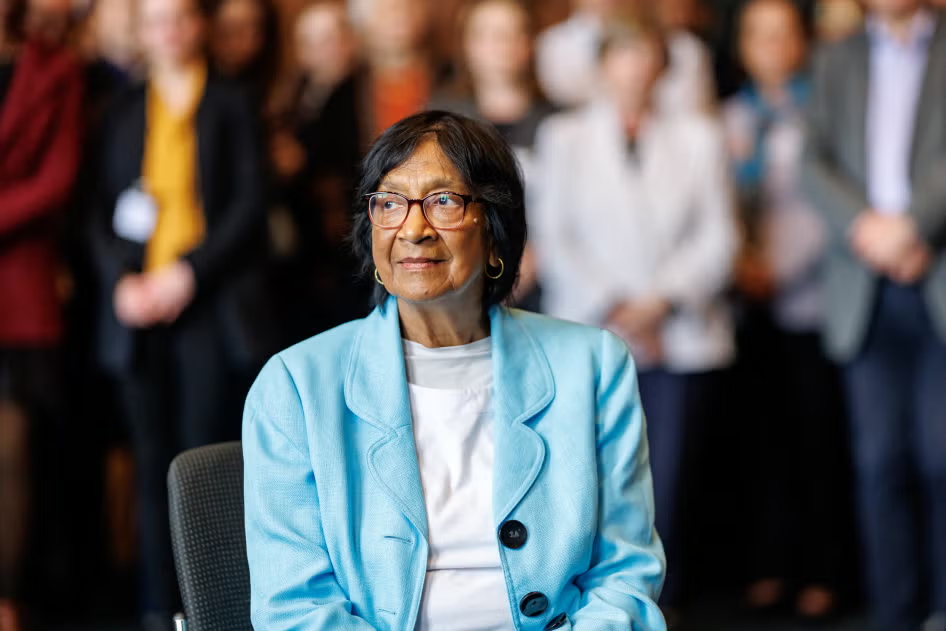
Oslo, October 10, 2026: South African jurist and former United Nations High Commissioner for Human Rights Navanethem “Navi” Pillay has won the 2026 Nobel Peace Prize in recognition of her decades-long efforts to promote human rights, international law and accountability for serious international crimes.
The Norwegian Nobel Committee recognised her contribution to strengthening international justice, particularly in cases involving war crimes, crimes against humanity and genocide.
Nobel Committee Recognises Commitment to International Justice
The Norwegian Nobel Committee honoured Pillay for her sustained efforts to uphold peace through international law. Throughout her career, she has held senior positions in several prominent judicial and human-rights institutions, contributing to the development of international criminal justice.
From Anti-Apartheid Lawyer to International Jurist
Born in South Africa, Pillay began her legal career challenging apartheid and defending people whose rights were restricted under the system.
She later became the first non-white woman appointed as a judge of the High Court of South Africa, marking a significant milestone in the country’s judicial history.
Key Role in Rwanda Genocide Tribunal
Pillay served as a judge at the International Criminal Tribunal for Rwanda, which prosecuted individuals responsible for crimes committed during the 1994 genocide.
Her judicial work included landmark cases involving genocide and sexual violence. These proceedings helped establish important legal precedents concerning the recognition of sexual violence as an international crime.
Served as a Judge at the International Criminal Court
Pillay also served as a judge at the International Criminal Court (ICC), further strengthening her role in international criminal justice.
The ICC prosecutes individuals accused of genocide, war crimes, crimes against humanity and, under specific conditions, the crime of aggression.
Led UN Human Rights Office from 2008 to 2014
From 2008 to 2014, Pillay served as the United Nations High Commissioner for Human Rights. During her tenure, she spoke out against human-rights violations committed by governments and armed groups and called for greater accountability under international law.
Her work focused on protecting fundamental rights and strengthening international mechanisms for addressing abuses.
Gaza Inquiry Brought Renewed Global Attention
In more recent years, Pillay chaired a UN Commission of Inquiry examining the Israeli-Palestinian conflict. A report by the commission accused Israel of committing genocide in Gaza, allegations that Israel has strongly rejected.
Her involvement in the inquiry brought renewed attention to her work and placed her at the centre of international legal and political debates.
Pillay Dedicates Nobel Prize to Survivors
Following the announcement, Pillay dedicated the honour to survivors of international crimes and people around the world working to defend justice and human rights.
She was in Nuremberg, Germany, when the Nobel Prize announcement was made.
UN Human Rights Chief Welcomes the Recognition
UN High Commissioner for Human Rights Volker Türk welcomed Pillay’s recognition, describing it as a broader victory for human-rights defenders and international justice.
He highlighted the importance of institutions that seek to hold perpetrators of serious international crimes accountable.
Award Announced Amid Pressure on the ICC
The Nobel announcement came amid continuing international debate over the role of global judicial institutions. According to Reuters, the United States announced fresh sanctions against the International Criminal Court hours after the prize announcement, prompting criticism from the court and other international stakeholders.
The developments have renewed discussion about the challenges facing institutions responsible for investigating and prosecuting serious international crimes.
Decades of Work Receive Global Recognition
At 85, Pillay’s career spans anti-apartheid activism, domestic judicial service, international criminal tribunals and senior United Nations leadership.
Her reported 2026 Nobel Peace Prize has brought renewed attention to the role of international law and judicial institutions in addressing human-rights violations and pursuing accountability amid ongoing geopolitical conflicts.
Sources: Norwegian Nobel Committee, Reuters, United Nations
Supreme News Network