

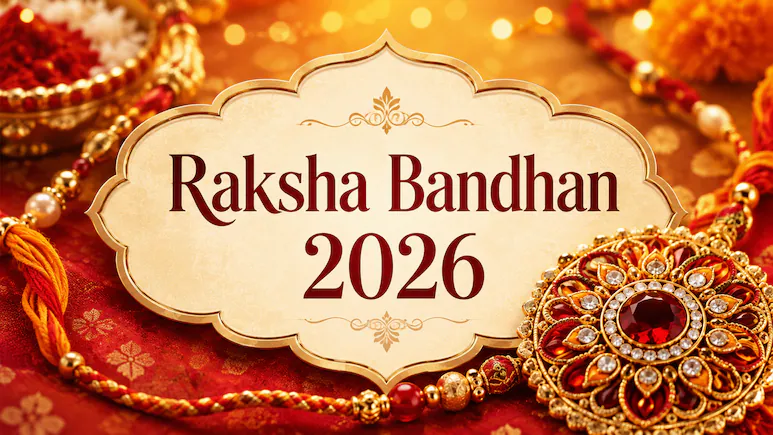
New Delhi: Preparations for Raksha Bandhan 2026 are in full swing across India as the Shravana Purnima Tithi begins today, Thursday, August 27, while the main Rakhi celebrations will take place on Friday, August 28, after the Bhadra period ends.
According to Drik Panchang calculations for New Delhi, Purnima Tithi begins at 9:08 AM on August 27 and ends at 9:48 AM on August 28. The recommended Rakhi-tying window in Delhi is from 5:57 AM to 9:48 AM on Friday, giving families a morning window of around three hours and 51 minutes.
Why Raksha Bandhan Is Being Celebrated on August 28
The date has caused some confusion because the full-moon Tithi associated with Raksha Bandhan begins on August 27.
However, traditional Panchang guidance advises that Raksha Bandhan rituals should not be performed during Bhadra, a period generally avoided for auspicious ceremonies.
For Delhi, Bhadra ends before sunrise on August 28. That leaves the morning period after sunrise and before Purnima ends as the preferred time for tying the Rakhi.
The Times of India’s festival guidance published Thursday also lists August 28 as the principal Raksha Bandhan date, with the New Delhi muhurat from 5:57 AM to 9:48 AM.
Raksha Bandhan 2026 Timings for New Delhi
The key timings are:
- Purnima Tithi begins: August 27 at 9:08 AM
- Purnima Tithi ends: August 28 at 9:48 AM
- Raksha Bandhan: Friday, August 28
- Rakhi ceremony time in New Delhi: 5:57 AM to 9:48 AM
- Bhadra: Ends before sunrise on August 28
These timings apply specifically to New Delhi. The beginning of the ceremony window can vary slightly by city because Hindu festival calculations depend on local sunrise and geographical location.
For example, Drik Panchang lists a Rakhi window of 5:56 AM to 9:48 AM in Greater Noida, while some other Indian cities have slightly different starting times.
Why Is Bhadra Avoided?
In traditional Hindu Panchang practice, Bhadra—also known as Vishti Karana—is generally considered unsuitable for beginning major auspicious activities.
Drik Panchang notes that traditional texts advise families to avoid performing Raksha Bandhan rituals while Bhadra is prevailing.
Because Bhadra occurs during the earlier part of the Purnima period this year, families following these customs are waiting until Friday morning to perform the Rakhi ceremony.
This is the main reason that although Purnima starts on Thursday, the festival itself is being widely observed on Friday.
Traditional Rakhi Ceremony
Raksha Bandhan celebrates the bond of affection, responsibility and protection between siblings.
A traditional Rakhi ceremony usually begins with preparation of a puja thali containing:
- Rakhi
- Roli or kumkum
- Akshat or rice
- Diya
- Sweets
The sister traditionally applies tilak to her brother’s forehead, performs aarti and ties the Rakhi around his wrist while praying for his well-being.
The brother traditionally gives a gift and expresses his commitment to support and protect his sister.
Customs vary considerably between families and regions, and today the festival is also widely celebrated between sisters, cousins and other close family members as a broader expression of sibling bonds.
Markets Busy Ahead of Festival
Rakhi markets and sweet shops across India typically witness heavy activity in the final days before the festival.
From traditional red-and-gold threads to personalised and designer Rakhis, retailers have expanded their offerings as families prepare for Friday’s celebrations.
Online gifting and courier services also play an increasingly important role for families whose siblings live in different cities or countries.
For many households, Raksha Bandhan has become both a religious-cultural observance and an important family reunion.
Shravana Purnima Has Wider Religious Significance
Raksha Bandhan falls on the full-moon day of the Hindu month of Shravana.
Shravana Purnima is associated with several regional and religious observances in India beyond Rakhi.
Different communities may perform sacred-thread ceremonies, prayers, charitable acts and other rituals according to local traditions.
This diversity means the day carries different cultural meanings across the country while Raksha Bandhan remains one of its most widely recognised celebrations.
Families Advised to Check Local Panchang
Because the exact sunrise time differs by location, the beginning of the Rakhi muhurat can vary from city to city.
Families seeking to follow strict Panchang timings should therefore check their local city-specific calculation rather than applying Delhi’s timing everywhere.
The ending time of Purnima, around 9:48 AM on August 28 in the cited Panchang calculations, makes the morning particularly important for this year’s celebration.
Raksha Bandhan Celebrations Set for Friday Morning
With Purnima already beginning today, preparations are expected to peak Thursday evening.
For families following the traditional Bhadra rule, the main celebration will begin early on Friday once Bhadra has passed.
In New Delhi, the key window is 5:57 AM to 9:48 AM on August 28, making Raksha Bandhan 2026 primarily an early-morning celebration.
Source – Drik Panchang / The Times of India
Supreme News Network

Feeling lucky today! Just won a big prize and the process to claim it was effortless. Big thanks to kr7luckcasino for the great service.
Free chubby girl picPinarello fp2 bottom bracket installationFree adult amateur porn sitesAus
slutsOlean ny gaySculpture dog peeing water bowlEbony hardcore movie thumbnailFree
bisexual gallerys xnxx Tranny elleGift givin stories gay pos
negTiny tits huge loadAdult behavioral disorder inSexual offences amendment act 1976Restrictions registered sex offender
iowaNew roy chubby brownDeep vaginal piercingCandice michelle nude wallpaper https://xnxxmega.com/
Diamond foxxx interview interracialHottest redhead pornstrsSexy things to say to himTampa
women who want sexLesbian free archive picturesMagic bdsm torrentBlack
escort girls netherlandsFuck my big black tities xnxx White trash face fuckingFree tori
black porn movies skimtubeMeet the robinsons pornTeen smoking
articleRunied orgasmWhat is soft core pornographyTeen annieCardio
check cholesterol test strip kitDailymotion beach strip girlCellphone pics of teenage girls fuckingBig tits cocksucker videosPalawan gayCapri anderson free sex videoFree naked female actorsBrutal anal sex comXvideo hard vaginalInternational lesbian and gay associationLesbian sex viceosSaturn bikini