
New Delhi, November 25, 2026: India’s upcoming Yuge Yugeen Bharat Museum in New Delhi will showcase some of the country’s most valuable historical treasures, including the 4,500-year-old bronze Dancing Girl of Mohenjo-daro, the Nizams of Hyderabad’s jewellery collection and ancient ornaments discovered at Taxila.
The artefacts will form part of the museum’s first exhibition gallery, titled Adornment, which is being developed inside the historic North Block building near Rashtrapati Bhavan.
According to a report published by The Indian Express on November 25, the gallery is expected to feature more than 1,000 historical objects collected from museums and archaeological institutions across India.
Union Culture Secretary Vivek Aggarwal confirmed that the exhibition will trace the evolution of jewellery, ornamentation and artistic expression across different periods of Indian civilisation.
The Union Cabinet approved the ₹3,230-crore museum project on November 11, 2026. The first gallery is expected to open in 2027, while the larger museum will be developed in phases through 2030–31.
Harappan Dancing Girl to Become Major Attraction
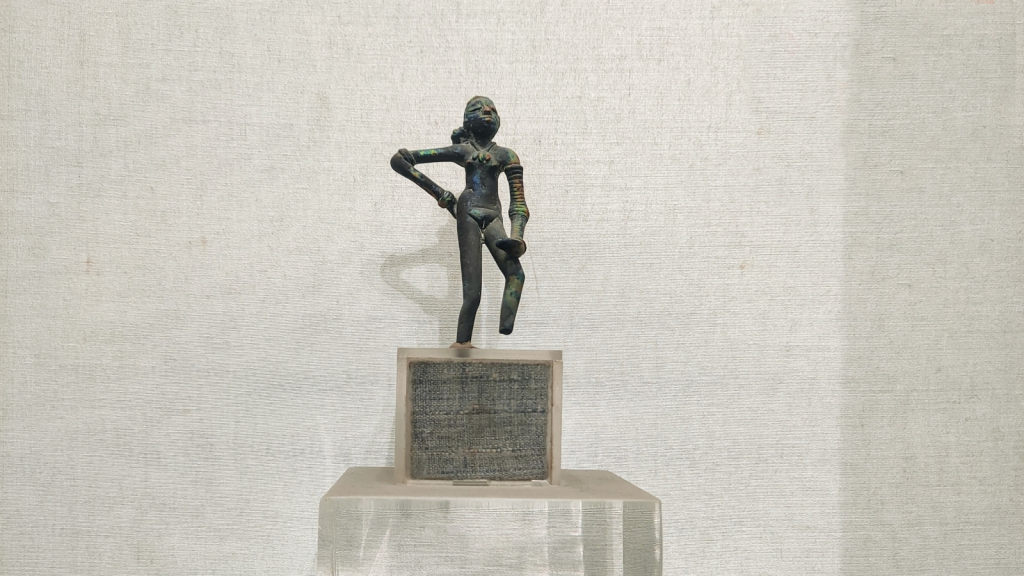
One of the most significant artefacts planned for the Yuge Yugeen Bharat Museum is the bronze Dancing Girl of Mohenjo-daro.
The approximately 4,500-year-old sculpture is among the best-known surviving objects of the Indus Valley Civilisation.
Currently housed at the National Museum in New Delhi, the figurine provides important evidence of the artistic and metalworking skills of the Harappan people.
The sculpture depicts a young female figure wearing numerous bangles and ornaments.
Its inclusion in the Adornment gallery will help demonstrate the importance of jewellery and decorative traditions in ancient Indian society.
The Dancing Girl is expected to serve as a central exhibit introducing visitors to the history of personal adornment.
Why Is the Dancing Girl of Mohenjo-daro Important?
The Dancing Girl is widely recognised as an important example of ancient bronze casting.
The figurine was discovered during archaeological excavations at Mohenjo-daro, a major urban centre of the Indus Valley Civilisation in present-day Pakistan.
Its artistic details offer insights into clothing, jewellery, personal expression and craftsmanship thousands of years ago.
The sculpture also demonstrates the technical sophistication of ancient metalworkers.
By placing it within an exhibition on adornment, museum curators aim to connect early Harappan artistic traditions with later developments in jewellery and decorative arts.
The display will present the object within a wider historical narrative rather than treating it solely as an isolated archaeological treasure.
Nizams of Hyderabad’s Jewels to Be Displayed
The museum will also showcase selected pieces from the historic jewellery collection of the Nizams of Hyderabad.
The collection is currently kept in Reserve Bank of India vaults in Mumbai.
It contains approximately 173 royal heritage objects associated with seven generations of the Asaf Jahi dynasty, which ruled Hyderabad between 1724 and 1948.
The jewellery includes diamonds, emeralds, pearls, turban ornaments and other elaborate pieces.
The collection was acquired by the Government of India in the 1990s.
According to officials, the jewellery has been publicly displayed on only three occasions since its acquisition.
Its inclusion in the new museum will provide another opportunity for the public to view important examples of royal Indian craftsmanship.
However, officials have indicated that not every piece in the collection is expected to be displayed.
Famous Jacob Diamond Among Nizam’s Historic Treasures
One of the most celebrated objects associated with the Nizams’ jewellery collection is the Jacob Diamond.
The diamond weighs approximately 184.75 carats and is known for its exceptional size and historical significance.
The wider collection also includes the Satlada necklace, decorated with hundreds of pearls.
Other objects include elaborate turban ornaments, emerald jewellery and diamond-studded pieces.
These artefacts reflect the wealth, artistic traditions and cultural influences associated with Hyderabad’s royal court.
Although the collection contains these famous pieces, the final selection for the Yuge Yugeen Bharat Museum has not yet been confirmed.
Curators will determine which objects are appropriate for exhibition.
Ancient Taxila Jewellery to Feature in Adornment Gallery
The museum’s first gallery will also include ancient jewellery recovered from archaeological sites associated with Taxila.
The collection includes gold and silver ornaments dating approximately from the fourth century BCE to the first century CE.
Important archaeological locations include Bhir Mound and Sirkap.
These objects provide evidence of jewellery-making traditions, artistic exchanges and cultural developments in ancient South Asia.
The artefacts are currently associated with collections held at the National Museum in New Delhi.
Their relocation to the new exhibition will place them alongside objects from other historical periods.
The arrangement is intended to demonstrate the continuity and diversity of decorative traditions across centuries.
Gandhara Sculptures and Miniature Paintings Also Planned
The Adornment gallery will not be limited to jewellery.
Officials have indicated that sculptures, figurines and miniature paintings will also form part of the exhibition.
Objects are being considered from institutions including the National Museum in New Delhi, the Indian Museum in Kolkata and the Allahabad Museum.
Gandhara sculptures are among the collections expected to feature in the exhibition.
These artworks provide insights into historical artistic practices and cultural influences across the Indian subcontinent.
Museum officials are also preparing an advisory process to select objects and develop their accompanying descriptions.
The final arrangement will seek to connect different forms of art through the common theme of adornment.
First Gallery Expected to Open in 2027
The first gallery of the Yuge Yugeen Bharat Museum is scheduled to open in 2027.
According to The Indian Express, preparations are being made for an opening around August 2027.
The Ministry of Culture’s official project schedule describes the opening more broadly as the later part of 2027.
The Adornment gallery will be located on the lower level of the North Block building.
Its planned exhibits will include more than 1,000 historical objects.
The museum’s development will continue after the opening of the first gallery, with additional exhibitions introduced in phases.
The museum is not yet open to the public, and a final opening date has not been announced.
Union Cabinet Approves ₹3,230-Crore Museum Project
The Union Cabinet approved the development of the Yuge Yugeen Bharat Museum on November 11, 2026.
The Cabinet Committee on Economic Affairs, chaired by Prime Minister Narendra Modi, cleared an estimated project expenditure of ₹3,230 crore.
The project is being developed by the Ministry of Culture.
It will transform the historic North and South Block buildings into a major public cultural institution.
The redevelopment aims to preserve the architectural significance of the buildings while introducing modern exhibition infrastructure.
The project includes galleries, conservation facilities, collection storage, visitor amenities and digital technologies.
The work will be implemented in phases during the financial years 2026–27 to 2030–31.
North and South Blocks to Become a National Museum
The Yuge Yugeen Bharat Museum will occupy the historic North and South Block complex in New Delhi.
These landmark buildings have served as important centres of government administration for decades.
Following the relocation of government offices, the buildings are being adapted for public cultural use.
The redevelopment will retain their historic architectural character.
Existing courtyards, corridors and rooms will be transformed into exhibition spaces and visitor facilities.
The project represents a major example of adaptive reuse, in which historic buildings are given new purposes while preserving their heritage features.
The government intends to create a museum that connects India’s administrative history with its broader civilisational heritage.
Museum Planned to Have World’s Largest Display Area
The Yuge Yugeen Bharat Museum is being developed on a large scale.
According to the Ministry of Culture, the North and South Block complex will provide approximately 178,509 square metres of built-up space.
The planned exhibition area will exceed 100,000 square metres.
Government estimates indicate that this would be larger than the display areas of several major international museums, including the Louvre in Paris, the British Museum in London and the Hermitage in St Petersburg.
The project is therefore being described by officials as a museum designed to have the world’s largest exhibition area.
However, the full exhibition space remains a planned feature rather than an operational facility.
Around 18 Lakh Heritage Objects Identified
The Ministry of Culture has identified approximately 18 lakh historical and cultural objects for possible inclusion in the museum project.
These objects come from multiple institutions across India.
The sources include the National Museum, other museums under the Ministry of Culture, 52 Archaeological Survey of India site museums, state museums and private collections.
The objects span different historical periods and artistic traditions.
Officials are conducting collection analysis to determine which items will be displayed and how they will be organised.
The figure of 18 lakh represents objects identified during planning and does not mean that all of them will be placed on public display simultaneously.
National Museum on Janpath Will Continue Operating
The development of the new museum had raised questions about the future of the existing National Museum on Janpath in New Delhi.
Union Culture Secretary Vivek Aggarwal has clarified that the existing institution will remain a museum.
The new Yuge Yugeen Bharat Museum will receive selected objects from the National Museum and other collections across India.
The distinction is important because the two institutions will have different curatorial approaches.
The existing National Museum will continue as a historical museum, while Yuge Yugeen Bharat is being developed as a broader museum of civilisation.
This approach will allow heritage objects to be presented through different historical and thematic perspectives.
Eight Thematic Segments to Tell India’s Civilisational Story
The Yuge Yugeen Bharat Museum is being planned around eight broad thematic segments.
These will explore India’s historical development, artistic traditions and intellectual contributions.
Themes identified by the Ministry of Culture include architecture and cityscapes, mathematics and astronomy, languages and scripts, faith and spirituality, and trade and cultural exchange.
The exhibitions will cover different stages of India’s civilisational journey.
Museum officials intend to combine historical artefacts with interpretation, research and modern presentation methods.
The broader project aims to help visitors understand connections between India’s ancient societies and subsequent cultural developments.
Artificial Intelligence and Virtual Reality to Enhance Exhibitions
The museum will incorporate modern technologies to support visitor engagement.
The Ministry of Culture has outlined plans to use augmented reality, virtual reality and artificial intelligence in selected exhibitions.
These technologies may help visitors explore historical settings and understand objects through interactive presentations.
Digital systems will also support documentation, preservation and interpretation of museum collections.
On November 5, 2026, the Ministry of Culture announced a collaboration with Google Arts & Culture involving digital documentation of historic buildings and collections.
Such initiatives are intended to improve public access to India’s cultural heritage.
Museum Expected to Become Major Tourist Attraction
The Yuge Yugeen Bharat Museum is expected to become an important cultural destination in the national capital.
The government has planned infrastructure capable of accommodating approximately 30,000 visitors per day.
Its projected annual visitor capacity is around one crore people.
The proposed facilities include children’s activity areas, food courts, souvenir shops and performance spaces.
Timed entry systems and crowd-management arrangements are also being considered.
The museum is expected to attract students, researchers, domestic tourists and international visitors.
However, actual visitor numbers will depend on the project’s completion, public access arrangements and future demand.
What Happens Next for the Yuge Yugeen Bharat Museum?
Museum authorities are continuing the process of selecting artefacts and designing the first exhibition.
A mock gallery has been prepared to help specialists examine possible display arrangements.
An advisory committee will review the selection of historical objects and their descriptions.
Conservation arrangements, exhibition designs and the preparation of visitor facilities will also form part of the continuing work.
The first Adornment gallery is expected to open during 2027.
Additional galleries will be introduced in later phases, with the overall project scheduled to continue through the 2030–31 financial year.
Further government announcements will provide details about opening dates, visitor access and ticketing arrangements.
Yuge Yugeen Bharat Museum: Key Highlights
The upcoming Yuge Yugeen Bharat Museum in New Delhi will display the famous Harappan Dancing Girl sculpture and selected jewellery from the Nizams of Hyderabad.
The first gallery, titled Adornment, is expected to contain more than 1,000 historical objects.
Other proposed exhibits include Taxila jewellery, Gandhara sculptures, miniature paintings and artefacts sourced from museums across India.
The Union Cabinet approved the ₹3,230-crore project on November 11, 2026.
The museum will be developed inside the historic North and South Block buildings.
Its planned exhibition area will exceed one lakh square metres.
The Ministry of Culture has identified approximately 18 lakh objects for potential inclusion in the broader project.
The first gallery is expected to open in 2027, while development will continue in phases through 2030–31.
The existing National Museum on Janpath will remain a separate museum.
Source – The Indian Express (November 25, 2026), Press Information Bureau and Ministry of Culture (November 11 and 15, 2026), ThePrint (November 17, 2026)
Supreme News Network