

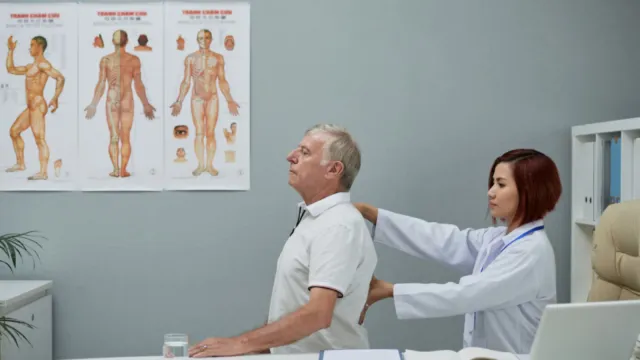
New Delhi, November 25, 2026: Your spine may show signs of age-related wear and tear earlier than expected, even when the rest of your body appears healthy. Medical experts say prolonged sitting, previous injuries, excess body weight, genetics and physically demanding activities can contribute to changes in spinal health.
The issue has attracted attention following a discussion between spine surgeon Dr Ram Chaddha and neurologist Dr Siddharth Warrier about the difference between a person’s chronological age and the condition of their spine.
In a health report published by The Indian Express on Wednesday, Dr Aashish Chaudhary, Director and Head of Orthopaedics and Joint Replacement at Aakash Healthcare, explained that changes in spinal discs, joints and supporting muscles do not always correspond to a person’s actual age.
For example, a 38-year-old may show spinal changes more commonly associated with someone several years older.
However, experts emphasise that spinal age is not a standard medical measurement, and age-related changes visible on scans do not necessarily indicate disease.
The most important warning signs include persistent stiffness, reduced flexibility, recurring neck or back discomfort and a decline in everyday mobility.
Can Your Spine Really Age Faster Than Your Body?
The spine undergoes natural changes throughout life.
Over time, the discs between vertebrae may lose water, become less flexible and gradually decrease in height.
The joints and supporting tissues can also experience wear and tear.
However, these changes do not occur at the same pace in every individual.
Some people develop noticeable spinal degeneration relatively early, while others maintain good mobility into older age.
Dr Aashish Chaudhary explained that a person’s spinal condition may differ from what would typically be expected at their chronological age.
This does not mean that doctors can accurately assign every person a separate biological age for their spine.
Instead, the expression describes differences in structural changes and physical function.
What Is Spinal Ageing?
Spinal ageing refers to changes affecting the bones, discs, joints, ligaments and supporting muscles of the spine.
The spinal column consists of vertebrae separated by cushioning discs.
These structures help support body weight, protect the spinal cord and allow movement.
As people age, the discs can gradually lose hydration and elasticity.
The joints may develop degenerative changes, while the muscles supporting the spine can weaken.
Some people experience stiffness or pain, while others have no noticeable symptoms.
The severity of structural changes does not always match the intensity of discomfort.
Early Warning Sign 1: Stiffness After Waking Up
One symptom that deserves attention is recurring stiffness in the neck or back.
People may notice that their spine feels less flexible immediately after waking up.
The stiffness may make bending, stretching or turning uncomfortable.
According to Dr Chaudhary, stiffness after waking or remaining seated for long periods can be an early indication of reduced spinal mobility.
However, morning stiffness alone does not confirm spinal degeneration.
It can have several causes, including muscular tension and inflammatory conditions.
Stiffness that persists, becomes severe or interferes with daily activities should be assessed by a healthcare professional.
Early Warning Sign 2: Difficulty Sitting for Long Periods
Many office workers spend several hours sitting at desks or using computers.
Prolonged sitting can place sustained demands on the muscles supporting the back and neck.
Some individuals develop discomfort after remaining in one position for an extended period.
They may feel the need to stand, stretch or change posture more frequently.
Dr Chaudhary explained that prolonged sitting and insufficient movement can contribute to poor spinal health.
However, sitting alone does not necessarily cause structural spinal degeneration.
The risk depends on several factors, including activity levels, physical conditioning and existing health conditions.
Early Warning Sign 3: Reduced Flexibility
A gradual reduction in flexibility can indicate changes in spinal movement.
Some individuals find it increasingly difficult to bend forward, rotate their upper body or perform movements that previously felt comfortable.
Reduced mobility may be associated with joint stiffness, muscular tightness or degenerative changes.
Experts recommend paying attention when these limitations become persistent or progressively worsen.
However, flexibility naturally differs between individuals.
A person who cannot perform a particular stretch does not automatically have an unhealthy spine.
The important consideration is whether their normal range of comfortable movement has changed.
Early Warning Sign 4: Recurring Neck and Back Pain
Repeated episodes of neck or lower-back discomfort can indicate that the spine or surrounding muscles are experiencing strain.
Pain may occur after prolonged desk work, lifting activities or certain movements.
It can sometimes improve with rest or changes in activity.
However, recurring pain should not automatically be dismissed as a normal consequence of ageing.
Potential causes include muscular strain, disc-related problems and joint conditions.
A medical assessment can help identify the underlying cause when symptoms persist or affect daily functioning.
Early Warning Sign 5: Changes in Posture
Changes in posture may develop gradually.
Some people notice that they have difficulty maintaining a comfortable upright position for extended periods.
Others may experience increasing muscular fatigue while sitting or standing.
Weakness in supporting muscles, reduced mobility and pain can contribute to these changes.
However, there is no single perfect posture that everyone must maintain.
Experts generally recommend varying positions throughout the day rather than trying to remain rigidly upright.
Persistent or progressive postural changes should be discussed with a healthcare professional.
Early Warning Sign 6: Reduced Ability to Perform Daily Activities
A decline in everyday physical ability can be another important warning sign.
Activities such as bending, lifting household objects, walking or performing routine exercises may become more uncomfortable.
People may notice that movements they previously performed easily now require greater effort.
Dr Chaudhary identified a gradual reduction in comfortable physical function as something worth monitoring.
However, reduced physical capacity can arise from several causes besides spinal degeneration.
Medical evaluation may be necessary to determine whether the problem involves the spine, muscles, joints or another condition.
Early Warning Sign 7: Tingling or Numbness in Arms and Legs
Persistent numbness or tingling in the arms or legs requires particular attention.
These symptoms may sometimes occur when a spinal nerve is irritated or compressed.
Depending on the affected nerve, discomfort may spread from the neck into an arm or from the lower back into a leg.
Other possible symptoms include burning sensations or altered sensitivity.
However, numbness and tingling can also arise from conditions unrelated to the spine.
People experiencing persistent or worsening symptoms should seek medical assessment rather than assuming they are simply ageing.
Early Warning Sign 8: Muscle Weakness or Radiating Pain
Muscle weakness and pain spreading into the limbs may indicate nerve involvement.
A person with a lumbar nerve problem may experience pain travelling down one leg.
A cervical spine condition may cause discomfort extending into the shoulder, arm or hand.
In some cases, individuals notice reduced grip strength or difficulty lifting the foot.
These symptoms require medical attention, particularly when weakness is progressing.
Sudden or severe weakness should be assessed urgently.
Why Does the Spine Age Earlier in Some People?
Several factors can influence the development of degenerative spinal changes.
Genetics may affect disc health and susceptibility to certain spinal conditions.
Previous injuries can contribute to later discomfort or structural changes.
Excess body weight may increase mechanical demands on the spine.
Physically demanding occupations involving frequent lifting, bending or twisting can also contribute to strain.
Insufficient physical activity may weaken the muscles that support normal movement.
However, spinal degeneration is influenced by multiple interacting factors, and no single habit explains every case.
Does Prolonged Sitting Damage Your Spine?
Prolonged sitting is frequently associated with neck and back discomfort.
However, experts caution against assuming that sitting automatically causes spinal degeneration.
The more important concern is remaining inactive or in uncomfortable positions for long periods without movement.
Dr Chaudhary recommends changing position regularly during the working day.
Walking, standing and gentle movement can help reduce sustained muscular strain.
For people working at computers, adjusting desk height and screen position may also improve comfort.
There is no need to maintain one fixed posture continuously.
How Does Poor Posture Affect Spinal Health?
Posture influences how muscles and joints are loaded during daily activities.
An uncomfortable position maintained for long periods can contribute to muscular fatigue or discomfort.
However, posture is not the only determinant of spinal health.
Many people with variations in posture do not experience significant back pain.
Experts recommend focusing on comfortable movement, muscular strength and flexibility rather than attempting to maintain a single ideal position.
Regular activity is generally more beneficial than repeatedly correcting minor postural differences.
Can Young Adults Experience Spinal Degeneration?
Age-related spinal changes are not limited to older adults.
Some individuals in their twenties and thirties may already show degenerative changes on imaging.
These findings can result from natural variation, genetic factors, injuries and other influences.
However, a scan showing disc degeneration does not automatically establish that the person has a painful or progressive disease.
Research has shown that spinal imaging abnormalities are common even among people without back pain.
Doctors therefore interpret imaging results alongside symptoms, physical examination and medical history.
Do MRI and X-Ray Reports Reveal Your Spine’s Real Age?
X-rays and MRI scans can reveal certain structural changes in the spine.
An X-ray may show changes in bone alignment or joint structures.
MRI can provide more detailed information about discs, nerves and surrounding soft tissues.
However, neither test provides a universally accepted numerical measurement of spinal age.
Dr Chaudhary emphasised that imaging changes alone do not necessarily mean a person’s spine is unhealthy.
Doctors generally assess whether the findings correspond with symptoms and physical examination results.
Routine scans are not recommended solely to discover whether someone’s spine looks older than their chronological age.
How Can You Maintain a Healthier Spine?
Experts recommend regular physical activity to support spinal health.
Walking can help maintain general fitness and mobility.
Appropriate strength training supports the muscles surrounding the spine.
Flexibility and mobility exercises may improve comfortable movement.
Maintaining a healthy weight can also reduce some of the mechanical demands on the back.
For people who spend long periods at desks, regular movement breaks and a comfortable workstation can help reduce strain.
Exercise programmes should be adapted to individual ability and medical conditions.
Why Core Strength Matters for Your Back
The muscles surrounding the abdomen, pelvis and back contribute to spinal stability.
Adequate muscular strength helps people perform everyday movements and physical activities.
A balanced exercise programme may include resistance training, walking and exercises designed to improve mobility.
However, there is no single exercise that prevents all spinal disorders.
People with existing back pain or neurological symptoms may need guidance from a physiotherapist or qualified healthcare professional.
Gradually increasing activity is generally preferable to suddenly beginning intensive workouts.
Lifestyle Habits That Support Spine Health
Spinal health is influenced by wider lifestyle factors.
Good sleep supports recovery and general wellbeing.
A nutritious diet helps maintain bone and muscular health.
Avoiding smoking is particularly important because smoking is associated with disc degeneration and several other health problems.
Maintaining physical activity can help prevent deconditioning.
People should also pay attention to persistent symptoms rather than relying exclusively on home exercises.
These measures support overall musculoskeletal health but cannot completely prevent natural age-related changes.
When Should You See a Doctor for Back Pain?
Many episodes of uncomplicated back pain improve with time and appropriate conservative care.
However, medical evaluation is recommended when pain persists, repeatedly returns or significantly affects daily activities.
Symptoms involving radiating pain, persistent tingling or muscle weakness also deserve assessment.
Some warning signs require urgent treatment.
These include new loss of bladder or bowel control, numbness around the groin or saddle area, and rapidly progressing leg weakness.
Such symptoms can indicate serious nerve compression.
Back pain following major trauma, or accompanied by fever or other concerning symptoms, also requires prompt medical assessment.
Can Spinal Ageing Be Reversed?
Natural age-related changes in the spine cannot simply be reversed through exercise or lifestyle modifications.
However, many people can improve their physical function and reduce discomfort.
Strengthening supporting muscles, maintaining mobility and managing contributing medical conditions can improve quality of life.
Treatment depends on the underlying problem.
Some individuals benefit from physiotherapy and changes in daily activities.
Others may require medication or specialist assessment.
Surgery is generally considered only for specific conditions when clinically appropriate.
The goal of treatment is not necessarily to make the spine appear younger on a scan but to maintain function and address symptoms.
Why Early Awareness Matters
The discussion about spinal ageing highlights an important distinction between chronological age and physical health.
A person may experience stiffness or reduced movement earlier than expected.
However, the presence of age-related changes does not automatically mean serious spinal disease.
Experts advise paying attention to persistent symptoms and maintaining regular physical activity.
Early medical evaluation can help identify conditions requiring treatment.
For most people, staying active, building strength and avoiding prolonged inactivity remain useful strategies for supporting long-term spinal health.
Spine Ageing Warning Signs: Key Highlights
Medical experts say the spine can show age-related structural changes earlier than a person’s chronological age might suggest.
The issue was discussed by spine surgeon Dr Ram Chaddha and neurologist Dr Siddharth Warrier.
Dr Aashish Chaudhary of Aakash Healthcare explained that genetics, injuries, obesity, prolonged sitting and physical demands can influence spinal health.
Common warning signs include stiffness, reduced flexibility, recurring neck or back discomfort and difficulty with everyday movements.
Persistent numbness, tingling, weakness or pain spreading into the arms or legs should not be dismissed as normal ageing.
Spinal imaging changes alone do not necessarily indicate disease.
Regular walking, appropriate strength training, movement breaks, good nutrition and avoiding smoking can support healthier spinal function.
Sudden bladder or bowel problems, saddle-area numbness or progressive weakness require emergency medical evaluation.
Source – The Indian Express (November 25, 2026), Dr Aashish Chaudhary (Aakash Healthcare), Dr Ram Chaddha, Dr Siddharth Warrier, National Institute of Arthritis and Musculoskeletal and Skin Diseases (NIAMS), Mayo Clinic
Supreme News Network