

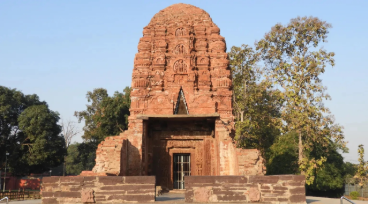
Raipur, October 21, 2026: Chhattisgarh’s historic Sirpur Cultural and Archaeological Landscape has been added to UNESCO’s World Heritage Tentative List, marking an important step towards potential recognition of the ancient settlement as a World Heritage Site.
Located in Mahasamund district on the eastern bank of the Mahanadi River, Sirpur is renowned for its rich archaeological remains, including Hindu temples, Buddhist monasteries and Jain monuments dating broadly from the 5th to the 12th centuries CE.
Sirpur Enters UNESCO Tentative List
According to the UNESCO World Heritage Centre, India submitted the Sirpur Cultural and Archaeological Landscape to the Tentative List on September 28, 2026.
The Tentative List is an essential preliminary stage in the World Heritage nomination process. It identifies sites that a country considers to have the potential to qualify for international heritage recognition.
Not Yet a Full UNESCO World Heritage Site
Sirpur’s inclusion on the Tentative List does not mean it has already received full UNESCO World Heritage status.
The site would need to undergo a separate nomination and evaluation process before the UNESCO World Heritage Committee could decide whether to inscribe it on the official World Heritage List.
Nevertheless, the development represents an important milestone in efforts to highlight and preserve Chhattisgarh’s archaeological heritage.
Ancient Centre of Hindu, Buddhist and Jain Traditions
One of Sirpur’s most distinctive characteristics is the presence of monuments associated with multiple religious traditions within the same historical landscape.
Archaeological remains include Hindu temples, Buddhist monasteries and stupas, as well as Jain religious structures. Together, these discoveries offer insights into the region’s religious diversity, artistic traditions and cultural exchanges during the early medieval period.
Sirpur is regarded as an important example of the interaction between religious communities, architectural styles and cultural practices in central India.
A Historic Settlement Dating Back Centuries
Sirpur’s surviving archaeological landscape reflects a period spanning approximately the 5th to the 12th centuries CE.
The settlement developed into an important political, commercial and religious centre and served as a capital of Dakshina Kosala under successive dynasties.
Its archaeological remains provide evidence of the region’s historical importance and its connections with wider networks of trade, administration and religious activity.
Lakshmana Temple Among Major Monuments
The Lakshmana Temple is among Sirpur’s best-known monuments and is recognised for its early medieval brick architecture.
Other important structures and archaeological features include the Gandheshwar Temple, Ram Temple, Buddhist viharas, the Rajmahal complex, temple groups and remains associated with historic market areas.
These monuments collectively demonstrate the architectural and artistic achievements of the communities that inhabited the settlement.
Evidence of Advanced Urban Planning
Sirpur’s significance extends beyond its religious monuments. Archaeological discoveries indicate that the settlement had a developed urban layout, incorporating roads, residential areas, drainage systems, religious structures, market spaces and water-management features.
These remains suggest that Sirpur functioned as a substantial urban centre rather than solely as a place of worship.
The landscape offers valuable evidence for understanding urban development, construction techniques and civic infrastructure in early medieval central India.
Mahanadi River Shaped Sirpur’s Development
Sirpur’s location along the Mahanadi River played an important role in its historical development.
The river provided access to regional routes that connected central India with eastern India, the Deccan and wider commercial networks. Such connections facilitated the movement of traders, artisans, pilgrims and religious communities.
The relationship between the settlement and its surrounding landscape is an important part of its archaeological and historical significance.
Excavations Revealed Remains of the Ancient City
Archaeological documentation of Sirpur began in the 19th century, followed by major excavations between 1953 and 1956 and subsequent investigations from 1999 to 2012.
These efforts uncovered extensive remains of the ancient settlement, helping researchers understand its temples, monasteries, urban structures and cultural development.
Further conservation and research could contribute to a more comprehensive understanding of the site’s historical importance.
Two Andaman Sites Also Added
Sirpur was among three Indian sites reported to have been added to UNESCO’s Tentative List in the same period.
The other two are the Karst-Mud-Volcano Complex of Baratang and Andaman Subduction Volcanoes, both located in the Andaman Islands.
Their inclusion highlights the diversity of India’s potential heritage sites, spanning archaeological landscapes as well as distinctive geological formations.
Recognition Could Boost Chhattisgarh’s Heritage Profile
Sirpur’s addition to the Tentative List could bring greater national and international attention to Chhattisgarh’s cultural heritage and strengthen efforts to conserve its archaeological remains.
It may also create opportunities to promote heritage tourism and encourage further research into the region’s history.
However, full UNESCO World Heritage status remains a future possibility and will depend on the completion of the formal nomination and evaluation process.
Source: UNESCO World Heritage Centre, The Times of India
Supreme News Network