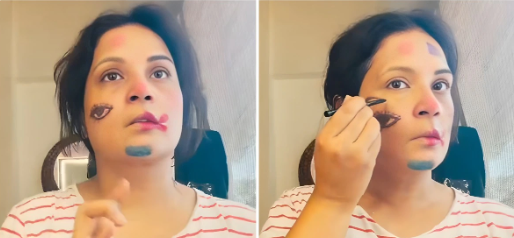
New Delhi, October 13, 2026: Actor Richa Chadha has drawn widespread attention after sharing a so-called “surveillance makeup” tutorial on X amid protests demanding the resignation of Chief Election Commissioner Gyanesh Kumar. Posted on October 11, the video suggested using makeup patterns intended to interfere with facial-recognition technology, triggering an online debate over privacy, protest surveillance and civil liberties.
Richa Chadha Shares Anti-Surveillance Makeup Tutorial
Chadha shared a makeup tutorial directed at people participating in demonstrations in Delhi. The video suggested that applying contrasting patterns around facial features could make identification by certain facial-recognition systems more difficult.
The post combined a beauty tutorial format with a message about digital privacy, bringing renewed attention to the use of surveillance technology during public demonstrations.
Video Emerges Amid Anti-CEC Protests
Chadha’s post came amid protests against Chief Election Commissioner Gyanesh Kumar over alleged irregularities in the Special Intensive Revision (SIR) of electoral rolls.
Youth groups and opposition parties have raised concerns about the voter-list revision process, alleging that it could unfairly affect eligible voters. The Election Commission has defended the process, stating that electoral-roll revisions are intended to improve the accuracy of voter lists.
Privacy and Consent at the Centre of Debate
The video raised questions about whether protesters should be recorded and identified through surveillance systems while participating in public demonstrations.
The discussion has extended beyond the immediate political dispute to broader concerns about the collection and use of facial data, individual privacy and the safeguards needed when monitoring people in public spaces.
What Is ‘Surveillance Makeup’?
The term refers to makeup patterns designed to interfere with certain automated facial-analysis or recognition systems. Such techniques attempt to exploit the way computer-vision systems identify and analyse facial features.
However, their effectiveness varies depending on the recognition technology, image quality, lighting and other conditions. The use of such makeup does not guarantee that a person cannot be identified.
Social Media Reactions Remain Divided
Chadha’s video has attracted mixed reactions online. Supporters have welcomed the attention it brings to surveillance and privacy concerns, while critics have questioned the appropriateness of promoting techniques intended to make identification more difficult during protests.
The discussion reflects wider disagreements over the balance between public safety, law enforcement and the protection of individual civil liberties.
Facial Recognition and Protest Monitoring Under Scrutiny
The use of CCTV footage, facial-recognition tools and social-media analysis in protest-related investigations has contributed to continuing debates over policing practices in Delhi.
Supporters of surveillance technology point to its potential role in identifying suspects and investigating incidents. Critics, however, have raised concerns about privacy, possible misuse and the risk of monitoring people who have not committed any offence.
Anti-CEC Demonstrations Continue in Delhi
The wider protest movement remained active on October 13, with police reportedly detaining youth leaders, including Saurav Das, Ashutosh Ranka and Ajinkya Shinde, during fresh demonstrations at Jantar Mantar.
The protests centre on demands for accountability over the electoral-roll revision process. The Election Commission maintains that the exercise is intended to improve the accuracy of electoral rolls and has denied allegations of political bias.
Debate Extends Beyond Electoral Politics
Chadha’s viral post has expanded the discussion beyond the immediate controversy surrounding the Election Commission.
The debate now encompasses facial-recognition technology, digital privacy, the limits of state surveillance and the rights of people attending political demonstrations. It also raises questions about transparency and the need for clear safeguards governing the use of surveillance tools.
Celebrity Intervention Brings Wider Attention
Chadha’s involvement has helped bring the issue to a broader audience beyond activists and political groups. The rapid circulation of the video illustrates how social media can amplify discussions about technology, privacy and civil liberties.
As demonstrations continue, the controversy may add momentum to calls for clearer rules on the use of facial recognition and other monitoring technologies at public gatherings.
Source: The Indian Express, Reuters, Navbharat Times
Supreme News Network