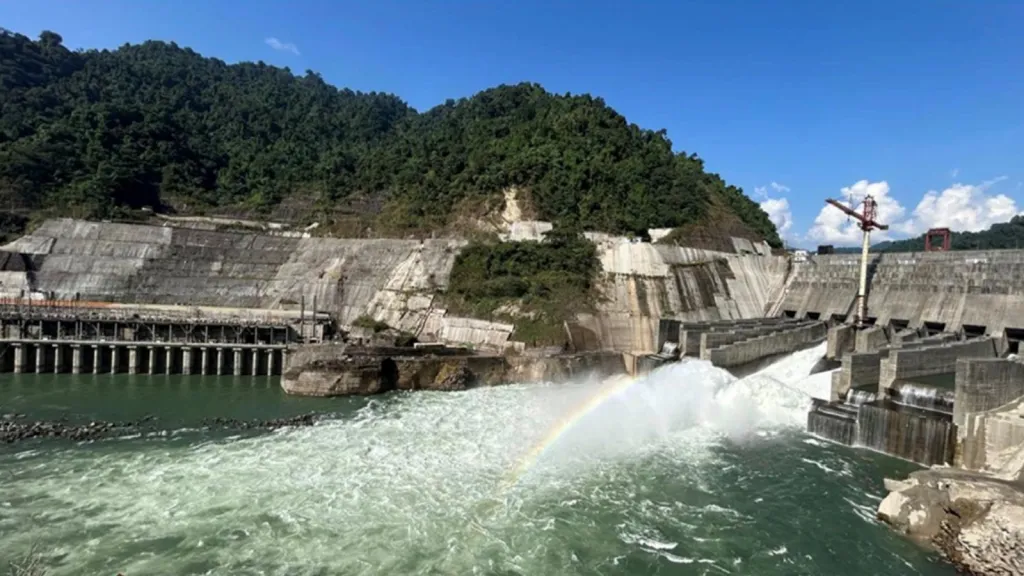
Itanagar, October 13, 2026: Security has been strengthened in areas associated with the proposed 11,200-MW Siang Upper Multipurpose Project in Arunachal Pradesh as protests by local communities continue over fears of displacement, loss of ancestral land and damage to traditional livelihoods. The project has also gained strategic significance amid concerns over China’s plans for a major hydropower project on the Yarlung Tsangpo in Tibet, the river that flows into India as the Siang before becoming part of the Brahmaputra system.
Security Deployment for Surveys and Drilling
Security personnel have been deployed in the Ugeng-Komkar area of the Siang Valley to facilitate surveys and drilling required for the project’s pre-feasibility report.
The deployment has intensified tensions with local residents, some of whom argue that technical work should not proceed without meaningful consultation with affected communities. The dispute centres on both the proposed project’s potential impact and the process through which it is being advanced.
Adi Community Raises Concerns Over Ancestral Land
Members of the indigenous Adi community have expressed concerns that the proposed hydropower project could submerge villages, agricultural land and areas deeply connected to their cultural identity.
For many residents, the issue extends beyond financial compensation. They fear losing ancestral territory, traditional livelihoods and cultural practices that have shaped community life for generations.
Protests Continue Amid Heightened Security
Demonstrations against the project have continued for weeks despite the increased security presence.
Fresh protests reportedly followed the detention of activists, while the youth wing of the Siang Indigenous Farmers’ Forum called for a boycott of government consultations related to the project.
The continuing demonstrations highlight the challenge facing authorities as they seek to advance preliminary technical work while addressing opposition from sections of the local population.
Earlier Clashes Deepened the Dispute
The controversy has also been marked by incidents of violence. During earlier protests, a local MLA’s residence was attacked and a police vehicle was set on fire.
Subsequent clashes prompted competing allegations concerning vandalism by protesters and the use of excessive force by security personnel. These incidents have added to tensions between sections of the community and the authorities.
China’s Upstream Dam Plans Add Strategic Significance
The Siang project has become increasingly important in India’s strategic debate because of China’s plans for a large hydropower project on the Yarlung Tsangpo in Tibet.
The river flows into Arunachal Pradesh as the Siang and later forms part of the Brahmaputra system. Developments upstream have raised concerns in India about the possible implications for downstream river flows, water management and regional security.
India Considers the Project a Potential Strategic Countermeasure
Supporters of the proposed project argue that a large reservoir on the Siang could help India manage fluctuations in river flows and strengthen its ability to respond to developments involving upstream infrastructure in China.
This strategic argument has become a significant part of the case for the project, alongside its proposed hydropower and water-management benefits. However, the extent to which the reservoir could mitigate particular upstream risks would depend on its design, operating arrangements and hydrological conditions.
Political Debate Over Large Dams Evolves
Opposition to major hydropower projects in Arunachal Pradesh has historically crossed party lines, reflecting concerns about environmental damage, displacement and the rights of indigenous communities.
China’s expanding hydropower ambitions and its position upstream have added a national-security dimension to the debate. Several political leaders who previously opposed large dam projects have since expressed support for the Siang development on strategic grounds.
The shift has brought renewed attention to the competing considerations of border security, energy development and local community interests.
Kiren Rijiju Calls for Dialogue
Union Minister Kiren Rijiju, who represents Arunachal Pradesh in national politics, has called for dialogue between the government and local communities to address the dispute.
He has emphasised the need to discuss technical issues and local concerns directly so that stakeholders can better understand the proposal and explore a way forward.
Dialogue remains a key challenge as residents seek greater clarity about the project’s possible consequences and the government’s strategic objectives.
Congress Leaders Stress Community Consent
Congress leaders in Arunachal Pradesh have argued that strategic concerns involving China should not override the rights of affected tribal communities.
They have called for transparency, meaningful consultations and safeguards for local interests before the project progresses further. The debate has also brought renewed focus to the principle of free, prior and informed consent in decisions affecting indigenous communities.
Siang Project Highlights Security and Rights Dilemma
The proposed Siang Upper Multipurpose Project has emerged as a major test of how India balances national-security priorities, energy requirements and river management with environmental protection and indigenous rights.
With protests continuing and concerns over China’s upstream plans shaping the discussion, the project remains a sensitive issue in the Northeast. Its future will depend not only on technical and strategic assessments but also on how authorities address the concerns of communities whose lives and ancestral lands could be affected.
Source: The Indian Express
Supreme News Network