
New Delhi, November 5, 2026: The Supreme Court of India has rejected a petition seeking mandatory rotation of constituencies reserved for Scheduled Castes (SCs) and Scheduled Tribes (STs) in Parliament and State Legislative Assemblies. The court ruled on Wednesday, November 4, that introducing such a system falls within Parliament’s legislative authority and cannot be imposed through judicial directions.
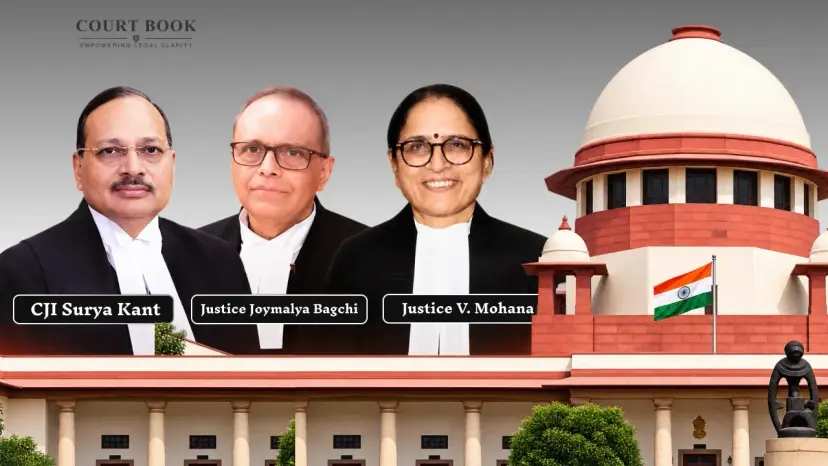
A three-judge bench headed by Chief Justice of India Surya Kant, along with Justices Joymalya Bagchi and V. Mohana, declined to interfere with an earlier Allahabad High Court judgment.
Supreme Court Says Parliament Must Decide
The Supreme Court observed that the introduction of mandatory rotation for reserved parliamentary and Assembly constituencies would require legislative consideration.
The bench explained that courts cannot rewrite existing laws or introduce provisions that Parliament has not enacted.
During the hearing, Chief Justice Surya Kant told the petitioner that he was approaching the wrong institution for the change he wanted.
The court suggested that the issue should be raised with elected representatives to build support for a possible legislative amendment.
Petition Filed by Uttar Pradesh Voter
The petition was filed by Jagdish Singh, a voter from the Kadipur Assembly constituency in Sultanpur district of Uttar Pradesh.
Singh challenged the continued reservation of the constituency for Scheduled Caste candidates.
According to the petitioner, Kadipur had remained reserved for approximately seven decades without a system of periodic rotation.
He argued that retaining reservation in the same constituency for such a prolonged period restricted the range of candidates voters could choose from.
Petitioner Challenges Delimitation Act Provision
The petition questioned the constitutional validity of Section 9(1)(c) of the Delimitation Act, 2002.
The provision governs the identification and distribution of reserved constituencies, particularly in areas where the proportion of Scheduled Caste residents is comparatively high.
Singh argued that the absence of periodic rotation was arbitrary and violated constitutional protections under Articles 14, 15 and 19.
He maintained that a rotation mechanism would allow different constituencies to provide reserved representation over time.
Demand for System Similar to Panchayat Elections
The petitioner referred to the system used in panchayat and municipal elections, where reserved seats can rotate between constituencies.
Articles 243D and 243T of the Constitution provide for reservation arrangements in panchayats and municipalities.
Singh argued that a comparable system should be introduced for parliamentary and State Assembly constituencies.
However, the Supreme Court pointed out that local government elections operate under a different constitutional framework.
The bench said it could not simply extend those provisions to Parliament and State Assemblies.
Court Rejects Argument About Restricted Voting Rights
During the hearing, the bench questioned the argument that long-term reservation necessarily restricts voters’ democratic rights.
Justice Joymalya Bagchi observed that voters in a multiparty democracy can make electoral choices based on political ideology and party preferences rather than caste or religion.
The court also distinguished between the right to vote and the opportunity to contest an election from a particular constituency.
It noted that reservation determines candidate eligibility in designated constituencies but does not prevent eligible voters from participating in elections.
Supreme Court Examines Constitutional Provisions
The bench considered the constitutional provisions governing political reservation.
Article 330 provides for the reservation of seats for Scheduled Castes and Scheduled Tribes in the Lok Sabha, while Article 332 deals with similar reservation in State Legislative Assemblies.
The court observed that these provisions establish the framework for reserved representation but do not themselves require periodic rotation of individual constituencies.
The judges held that disagreement with the existing method of selecting reserved seats does not automatically make the law unconstitutional.
Allahabad High Court Had Earlier Rejected Plea
Before approaching the Supreme Court, Singh had filed a petition before the Allahabad High Court.
The High Court dismissed the petition in June 2026, finding no sufficient legal basis to invalidate the challenged provision of the Delimitation Act.
Although the High Court acknowledged that rotation could be a desirable policy consideration, it concluded that introducing such a requirement was a matter for the legislature.
The Supreme Court agreed with that reasoning and found no grounds to interfere.
Chief Justice Advises Petitioner to Approach Lawmakers
During the proceedings, Chief Justice Surya Kant remarked that the petitioner was seeking relief from the wrong forum.
The Chief Justice suggested that the demand could be taken to Parliament through public representatives.
The court indicated that the petitioner was free to seek broader agreement among lawmakers for a system of rotating reserved constituencies.
However, it declined to issue directions compelling Parliament to amend the law.
What the Judgment Means for Reserved Constituencies
The ruling means that no new mandatory rotation requirement has been introduced for SC/ST-reserved seats in the Lok Sabha or State Legislative Assemblies.
Existing reservation and delimitation arrangements remain in force.
The decision does not prohibit Parliament from considering rotation in the future. Instead, it establishes that such a change must come through the appropriate legislative process.
The judgment also reinforces the distinction between judicial review of existing laws and the power of elected legislatures to determine electoral policy.
Debate Over Political Representation Continues
The case raises questions about how reserved constituencies should be selected and whether periodic rotation could broaden opportunities for political participation.
Supporters of rotation may argue that it would distribute reserved electoral opportunities across different constituencies.
Others may emphasise the importance of maintaining representation in areas with comparatively large SC/ST populations, as recognised by the existing delimitation framework.
The Supreme Court did not prescribe which policy approach Parliament should adopt.
Supreme Court Leaves Future Decision to Parliament
The dismissal brings the petitioner’s immediate legal challenge to an end without changing the current reservation system.
Any future proposal for mandatory rotation would require consideration by Parliament and the relevant constitutional authorities.
The November 4 ruling reaffirms that courts cannot introduce new electoral arrangements merely because an alternative system is proposed.
For now, the existing framework for SC/ST-reserved parliamentary and Assembly seats will continue.
Source: The Indian Express, LiveLaw, Bar & Bench, The Economic Times — November 4–5, 2026
Supreme News Network