
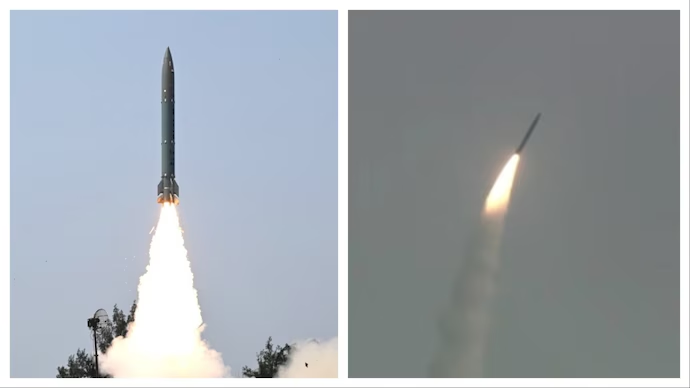
New Delhi, November 6, 2026: India’s Defence Research and Development Organisation (DRDO) has successfully flight-tested the indigenously developed Pralay quasi-ballistic missile off the coast of Odisha, marking a significant milestone in the country’s efforts to strengthen its conventional precision-strike capabilities.
The test was conducted on November 5, 2026, at approximately 11:10 AM, from Dr APJ Abdul Kalam Island. According to the Ministry of Defence, the missile met all designated test objectives, bringing the advanced weapon system closer to induction into the Indian Armed Forces.
Defence Minister Rajnath Singh congratulated DRDO scientists, the Armed Forces and industry partners on the successful trial.
DRDO Conducts Successful Pralay Missile Flight Test
The Pralay missile was launched from Dr APJ Abdul Kalam Island, located off the Odisha coast, during user evaluation trials.
The launch was monitored by multiple tracking and measurement instruments deployed at the Integrated Test Range (ITR), Chandipur.
According to the Ministry of Defence, data collected during the trial confirmed that all planned objectives were successfully achieved.
Senior officials from DRDO, representatives of the defence industry and personnel from the Armed Forces witnessed the test.
The successful trial represents another important step towards the missile’s operational deployment.
What Is the Pralay Quasi-Ballistic Missile?
Pralay is an indigenously developed, surface-to-surface, solid-propellant quasi-ballistic missile designed for conventional military operations.
Unlike a conventional ballistic missile, which generally follows a predictable trajectory after its powered flight phase, a quasi-ballistic missile can follow a lower flight path and perform manoeuvres during its journey.
This capability can make the missile more challenging for certain missile defence systems to intercept.
Pralay uses modern guidance and navigation technologies to achieve high precision when engaging designated targets.
The system is designed to strengthen India’s conventional tactical missile capabilities.
Pralay Missile Has Range of Up to 500 Kilometres
The missile is reported to have an operational range of approximately 150 to 500 kilometres.
Its specifications include the ability to carry different types of conventional warheads, allowing the system to be configured for different target requirements.
Reports indicate that Pralay can carry a payload weighing up to approximately 1,000 kilograms, depending on its configuration.
Its solid-fuel propulsion system supports operational readiness by eliminating the need for liquid-fuel preparation immediately before launch.
These capabilities make Pralay an important addition to India’s developing arsenal of precision-guided conventional weapons.
Indigenous Missile Developed by DRDO Laboratories
Pralay has been developed primarily by the Research Centre Imarat (RCI), Hyderabad, in collaboration with several other DRDO laboratories.
Three Pune-based DRDO establishments have also contributed to its development.
These include the Armament Research and Development Establishment (ARDE), High Energy Materials Research Laboratory (HEMRL) and Research and Development Establishment, Engineers (R&DE).
Their contributions cover areas of missile technology, propulsion-related systems and engineering.
The project demonstrates collaboration among India’s defence research institutions to develop complex military technologies domestically.
Bharat Dynamics Limited Produces Missile System
Bharat Dynamics Limited (BDL), a public-sector defence manufacturer, is one of the development-cum-production partners associated with Pralay.
The company has manufactured the missile system as part of the programme’s transition from research and development towards operational use.
The partnership reflects India’s efforts to connect defence research institutions with domestic manufacturing companies.
Indigenous production can support long-term maintenance, supply-chain security and the availability of missile systems for the Armed Forces.
Pralay Missile Could Soon Enter Military Service
The latest test was conducted as part of the missile’s user evaluation programme.
These trials allow the Armed Forces to assess whether a weapon system meets specified operational requirements before its induction.
Following the successful November 5 launch, the Defence Ministry indicated that Pralay’s induction into military service is imminent.
The missile is intended to strengthen the conventional strike capabilities of the Indian Army and Indian Air Force.
However, the government has not announced a specific induction date in its latest statement.
The successful flight test should therefore not be interpreted as confirmation that the missile has already entered operational service.
Rajnath Singh Congratulates DRDO Scientists
Defence Minister Rajnath Singh welcomed the successful test and praised the organisations involved.
He said the missile’s advanced technologies would strengthen India’s technological capabilities and improve the military’s readiness to respond to emerging threats.
The Defence Minister congratulated the DRDO, Armed Forces and defence industry partners for their contribution to the achievement.
Defence Secretary and DRDO Chairman Rajesh Kumar Singh also congratulated the teams associated with the successful flight test.
The statements reflect the government’s emphasis on indigenous defence technology development.
Pralay’s Development Began With Earlier Flight Trials
Pralay’s first flight tests were conducted in December 2021, marking the beginning of an extensive testing programme.
The missile has subsequently undergone trials to evaluate its performance under different conditions and configurations.
In December 2025, Pralay was also tested through a salvo launch involving multiple missiles.
Such trials are intended to assess system reliability, launch procedures and operational capabilities.
The November 2026 test represents further progress in the evaluation process ahead of planned military induction.
Missile Strengthens India’s Conventional Strike Capabilities
Pralay is designed to provide the Armed Forces with a precision-strike capability against designated targets within its operational range.
Conventional ballistic and quasi-ballistic missiles can complement other weapon systems, including artillery, aircraft and cruise missiles.
The ability to strike targets accurately from a significant distance can offer military planners additional operational flexibility.
Pralay is intended for conventional roles rather than being presented as a nuclear-capable strategic missile system.
Its development forms part of India’s broader efforts to modernise its defence capabilities.
Successful Test Supports Atmanirbhar Bharat Initiative
The development of Pralay aligns with the government’s Atmanirbhar Bharat initiative, which encourages domestic manufacturing and technological self-reliance.
India has increasingly focused on developing indigenous missile systems, military electronics, defence platforms and other advanced technologies.
Collaboration between DRDO laboratories and companies such as Bharat Dynamics Limited is an important component of this strategy.
Domestic production can reduce reliance on foreign suppliers and create opportunities for Indian defence manufacturers.
The successful Pralay test demonstrates progress in developing complex military systems within the country.
India Continues Modernisation of Missile Arsenal
India has invested in several indigenous missile programmes to strengthen its defence preparedness.
These include the BrahMos cruise missile, Akash air defence missile and other tactical and strategic systems.
Pralay occupies a different role by providing a conventionally armed quasi-ballistic missile capability.
Its planned induction is expected to expand the range of options available to military commanders.
The missile’s potential deployment will depend on the completion of user evaluation procedures and subsequent decisions by the Armed Forces.
DRDO Pralay Missile Test Marks Important Defence Milestone
The successful November 5 flight test represents an important achievement for India’s indigenous missile development programme.
With all test objectives met and user evaluation progressing, Pralay is moving closer to operational induction.
Its combination of precision guidance, manoeuvrability and domestic production is expected to strengthen India’s conventional military capabilities.
The latest development highlights the growing role of Indian research institutions and defence manufacturers in supporting the country’s military modernisation.
Source: Ministry of Defence, Press Information Bureau, November 5, 2026; The Indian Express, November 6, 2026; India Today
Supreme News Network