

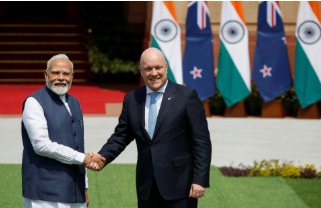
New Delhi/Wellington, October 20, 2026: The India–New Zealand Free Trade Agreement (FTA) has officially come into force, opening a new chapter in bilateral economic relations. The agreement provides Indian exporters with zero-duty access to the New Zealand market across all sectors, creating new opportunities for trade, investment and business cooperation.
The agreement was signed earlier this year and formally ratified by both countries in September. Along with trade in goods, it includes provisions covering services, professional mobility and investment.
Indian Exports Receive 100% Duty-Free Access
One of the key benefits of the agreement is that all Indian exports to New Zealand will receive zero-duty access from the date the FTA comes into effect.
The move is expected to benefit sectors such as textiles and apparel, leather and footwear, engineering goods, agriculture and processed food products. Micro, small and medium enterprises (MSMEs), along with labour-intensive industries, could gain new opportunities to compete in the New Zealand market.
New Zealand Exporters Also Gain Tariff Relief
New Zealand exporters will also benefit from reduced tariffs and improved access to the Indian market.
Under the agreement, around 57% of New Zealand exports to India will become tariff-free immediately, while tariffs on approximately 95% of its current exports are expected to be eliminated or reduced over time.
Products such as sheep meat, wool, coal, forestry products and wood products are among those expected to receive immediate or significant tariff relief.
Sensitive Indian Agricultural Sectors Remain Protected
India has kept several sensitive agricultural and food products outside major tariff concessions. These include dairy products, onions, chickpeas, peas, corn, almonds, sugar and certain oils.
The safeguards are intended to expand international trade while protecting Indian farmers and domestic industries from potential adverse effects.
Boost for Services and Professional Mobility
The FTA also includes important provisions for services and professional mobility. New Zealand has offered India market-access commitments across 118 services sectors and sub-sectors, along with Most-Favoured Nation (MFN) treatment in 139 sectors and sub-sectors.
These provisions are expected to support cross-border business activities, service providers and professional cooperation between the two countries.
Benefits for Indian Students
Indian students studying in New Zealand are expected to benefit from provisions relating to employment during their studies and post-study work opportunities.
According to the agreement’s reported terms, eligible students will be able to work at least 20 hours per week while studying. Graduates in STEM bachelor’s and master’s programmes may receive post-study work opportunities of up to three years, while doctoral graduates may qualify for up to four years.
These benefits will remain subject to the applicable eligibility requirements and immigration rules.
$20 Billion Investment Commitment
The agreement also includes a commitment by New Zealand to facilitate approximately $20 billion in investment into India.
The investment framework is expected to support opportunities in manufacturing, services and MSMEs, while potentially contributing to employment generation and deeper economic cooperation. Actual investment will depend on individual projects and commercial decisions.
Agreement Comes Amid Changing Global Trade Conditions
India and New Zealand are seeking to diversify their trading relationships and expand access to international markets. India has been widening its network of free trade agreements, while New Zealand is also looking to create new opportunities for its exporters.
New Zealand Trade and Investment Minister Todd McClay has said the agreement will provide exporters with greater certainty and access to one of the world’s fastest-growing major economies.
Next Round of Tariff Cuts Expected in January 2027
Since the FTA has entered into force before the end of 2026, New Zealand exporters are expected to benefit from another round of tariff reductions on January 1, 2027.
The next phase could further improve market access and support trade flows between the two countries in the coming months.
A New Chapter in India–New Zealand Economic Relations
The implementation of the India–New Zealand FTA marks a significant development in the economic relationship between the two countries. The agreement is expected to strengthen merchandise trade, services, investment, professional mobility and business cooperation.
Its overall impact will depend on how exporters, investors, service providers and businesses use the opportunities created by the new framework.
Source: Government of India, New Zealand Government, Reuters
Supreme News Network