NEW DELHI, September 14: India is set to receive significantly wider access to the European Union’s steel market under the India-EU Free Trade Agreement, with annual access of about 1.64 million metric tonnes. However, Indian steel exporters will still have to comply with the EU’s Carbon Border Adjustment Mechanism (CBAM), meaning the expanded quota does not remove carbon-related costs.
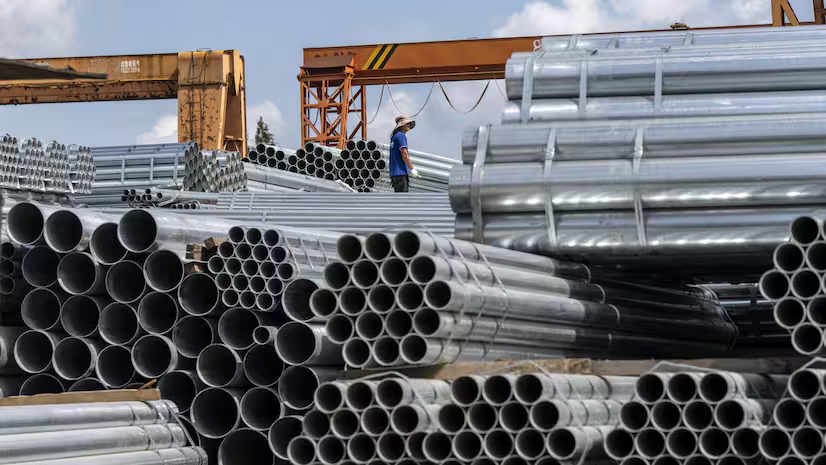
India Secures 1.64 Million-Tonne Steel Access
Under the trade framework, India has secured an additional 694,853-tonne preferential steel quota linked to the FTA.
This comes on top of approximately 946,616 tonnes available under the existing most-favoured-nation component, taking India’s overall annual access to roughly 1.64 million tonnes.
The quota covers several steel product categories and is expected to provide Indian producers with greater predictability when exporting to one of their most important overseas markets.
EU Has Tightened Steel Import Rules
The expanded access is particularly important because the EU introduced a tougher steel import regime from July 1, 2026.
Under the new system, the EU caps total duty-free steel imports at 18.3 million tonnes annually. Once the applicable quota is exhausted, imports can face an out-of-quota duty of 50%.
Free-trade agreement partners receive preferential treatment under the quota-distribution mechanism, which has helped India secure additional market access.
Carbon Border Levy Still Applies
The improved tariff quota does not exempt Indian steel from CBAM.
The EU’s Carbon Border Adjustment Mechanism entered its definitive phase on January 1, 2026 and applies to carbon-intensive imports including iron and steel, aluminium, cement, fertilisers, electricity and hydrogen.
Under CBAM, importers must account for the embedded carbon emissions associated with imported products and meet corresponding financial obligations through CBAM certificates.
That means Indian steel produced using more carbon-intensive processes could still face higher costs even if it enters the EU within the preferential tariff quota.
Indian Steelmakers Face Competitiveness Challenge
Europe remains an important destination for Indian steel producers, but tougher climate and trade rules have increased pressure on exporters.
Indian steel companies have already been adapting to stricter European import measures and carbon-related costs while also facing strong competition from low-priced Chinese steel in global and domestic markets.
The new quota therefore offers improved access, but its commercial benefit will partly depend on how quickly Indian producers can reduce the carbon intensity of steel manufacturing.
FTA Still Requires Final Approval
India and the EU concluded negotiations on their landmark Free Trade Agreement in January 2026.
On September 11, the European Commission formally sent proposals to the EU Council seeking approval for the agreement’s signature and conclusion. The deal still needs to complete the required European and Indian approval processes before taking full effect.
The agreement is expected to lower tariffs and expand market access across multiple sectors, including steel, automobiles, chemicals, pharmaceuticals and manufactured goods.
Wider Access, But Green Costs Remain
For Indian steelmakers, the deal represents an important improvement in access to the European market at a time when the EU is becoming more protective of its domestic steel industry.
However, the continued application of CBAM means Indian producers will increasingly need to invest in cleaner production, energy efficiency and lower-emission technologies if they want to remain competitive in Europe.
source – Reuters / European Commission
Supreme News Network