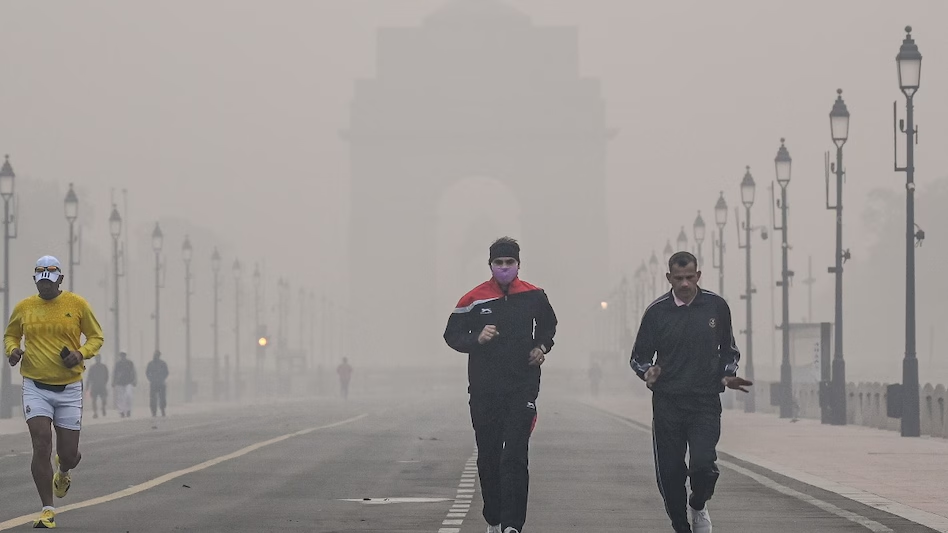

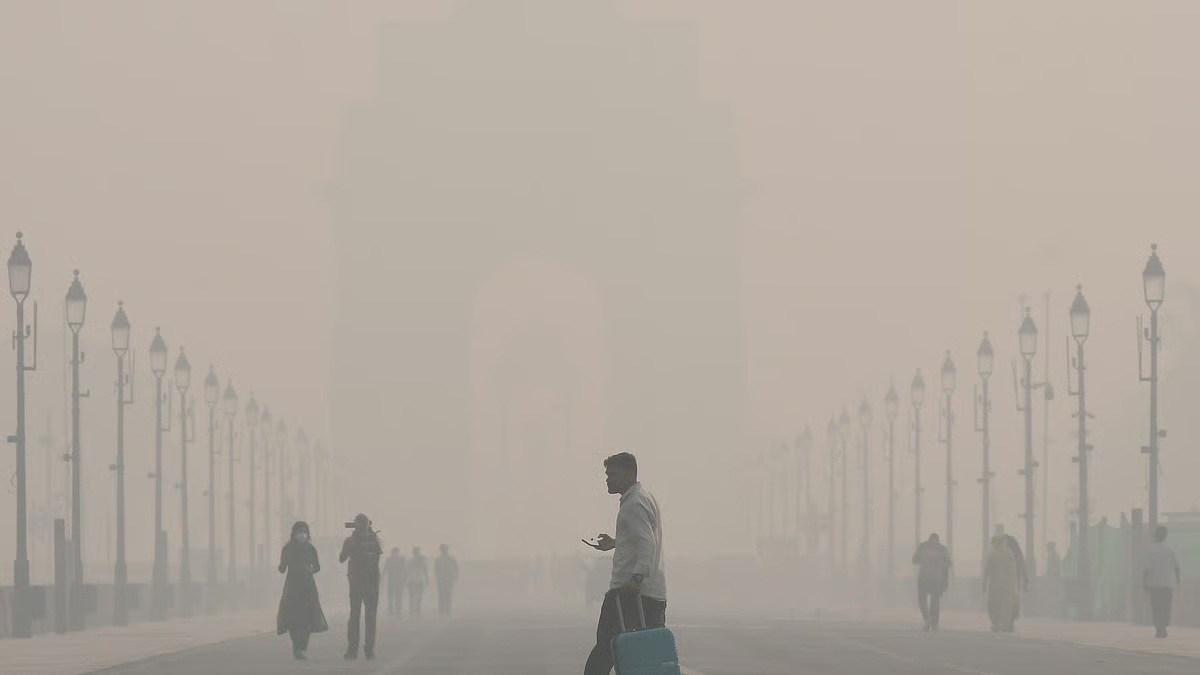
New Delhi, November 8, 2026: Delhi woke up to a thick layer of smog on Diwali morning, with the national capital’s Air Quality Index (AQI) reaching 384, according to data from the Central Pollution Control Board (CPCB).
The citywide reading remained in the ‘very poor’ category, but several neighbourhoods recorded ‘severe’ pollution levels. Authorities have warned that unfavourable weather conditions, vehicle emissions and firecracker-related pollution could worsen the situation during the festival.
Delhi AQI Reaches 384 on Diwali Morning
According to the CPCB data reported at 6 AM on Sunday, Delhi recorded an overall AQI of 384, approaching the severe threshold of 401.
Of the 23 monitoring stations included in the early morning update, 11 recorded AQI readings above 400.
The remaining 12 stations reported pollution in the very poor category.
The readings raised concerns about public health as residents prepared to celebrate Diwali.
Punjabi Bagh and RK Puram Among Worst-Affected Areas
Several locations across Delhi experienced severe air pollution.
The early morning readings included:
| Location | AQI |
|---|---|
| Punjabi Bagh | 450 |
| RK Puram | 449 |
| IIT Delhi | 446 |
| Dwarka | 444 |
| CRRI Mathura Road | 425 |
| Siri Fort | 423 |
| Delhi University North Campus | 423 |
| Chandni Chowk | 423 |
| Pusa | 415 |
| Burari Crossing | 411 |
| NSUT Jaffarpur | 409 |
These figures represent the early morning monitoring snapshot and may change throughout the day.
GRAP Stage 3 Restrictions Continue Across Delhi-NCR
The Commission for Air Quality Management (CAQM) had already imposed Stage 3 restrictions under the Graded Response Action Plan (GRAP) on November 6.
The restrictions remain in force across Delhi-NCR to prevent further deterioration.
Measures include limitations on specified construction and demolition activities, restrictions on certain older petrol and diesel vehicles, and additional pollution-control enforcement.
Authorities are also implementing measures affecting school operations and encouraging reduced commuting where applicable.
Weather Conditions Trap Pollutants
Meteorological conditions are contributing to the pollution crisis.
According to the Air Quality Early Warning System, weak winds and poor atmospheric ventilation are limiting the dispersal of pollutants.
Average wind speeds below 10 kilometres per hour could allow harmful particles to accumulate near the ground.
Vehicle emissions, road dust, industrial activity and agricultural residue burning are among the factors contributing to pollution across the region.
Air Quality Could Worsen After Diwali Celebrations
Officials are concerned that firecracker emissions during Diwali celebrations could further increase pollution levels.
Delhi’s air quality was already very poor before the main festival celebrations began.
Additional emissions during the evening, combined with weak winds, could increase concentrations of PM2.5 and PM10.
However, the full impact of Diwali celebrations will only become clear after subsequent pollution measurements are available.
Delhi Records Extremely Poor Air Ahead of Festival
On November 7, Delhi’s official 24-hour average AQI stood at 369, compared with 382 on November 6.
Despite the marginal improvement, several monitoring stations recorded severe air quality.
The November 7 reading was also reported as Delhi’s worst Diwali-eve air quality since 2016.
The increase to 384 on Sunday morning highlights the continuing deterioration in conditions.
Health Risks Increase as Pollution Rises
Severe air pollution can affect breathing, irritate the eyes and throat, and worsen existing respiratory and cardiovascular conditions.
Children, senior citizens, pregnant women and people with asthma are particularly vulnerable.
Health experts advise residents to reduce prolonged outdoor exertion during periods of very poor or severe air quality.
People who must travel outdoors can consider properly fitted N95 masks to reduce exposure to particulate pollution.
Those experiencing significant breathing difficulties should seek medical attention.
Authorities Urge Residents to Follow Pollution Guidelines
Authorities have urged residents to follow pollution-control measures during the festival.
Avoiding unnecessary vehicle use, reducing activities that generate smoke and complying with local firecracker regulations can help limit additional emissions.
Residents can monitor official AQI updates through CPCB and government air-quality monitoring platforms.
The effectiveness of emergency measures will depend on enforcement, weather conditions and public cooperation.
Delhi Pollution: Latest November 8 Update
As of Sunday morning, Delhi’s AQI stood at 384, with multiple monitoring stations recording severe pollution.
GRAP Stage 3 restrictions remained in force, while forecasts indicated the possibility of further deterioration.
The situation presents a significant challenge for authorities during Diwali, when existing pollution sources may be compounded by festive emissions.
With air quality approaching the severe category, public health precautions and sustained pollution-control measures remain essential.
Source: Central Pollution Control Board, India Today, The Economic Times, Hindustan Times — November 8, 2026
Supreme News Network