

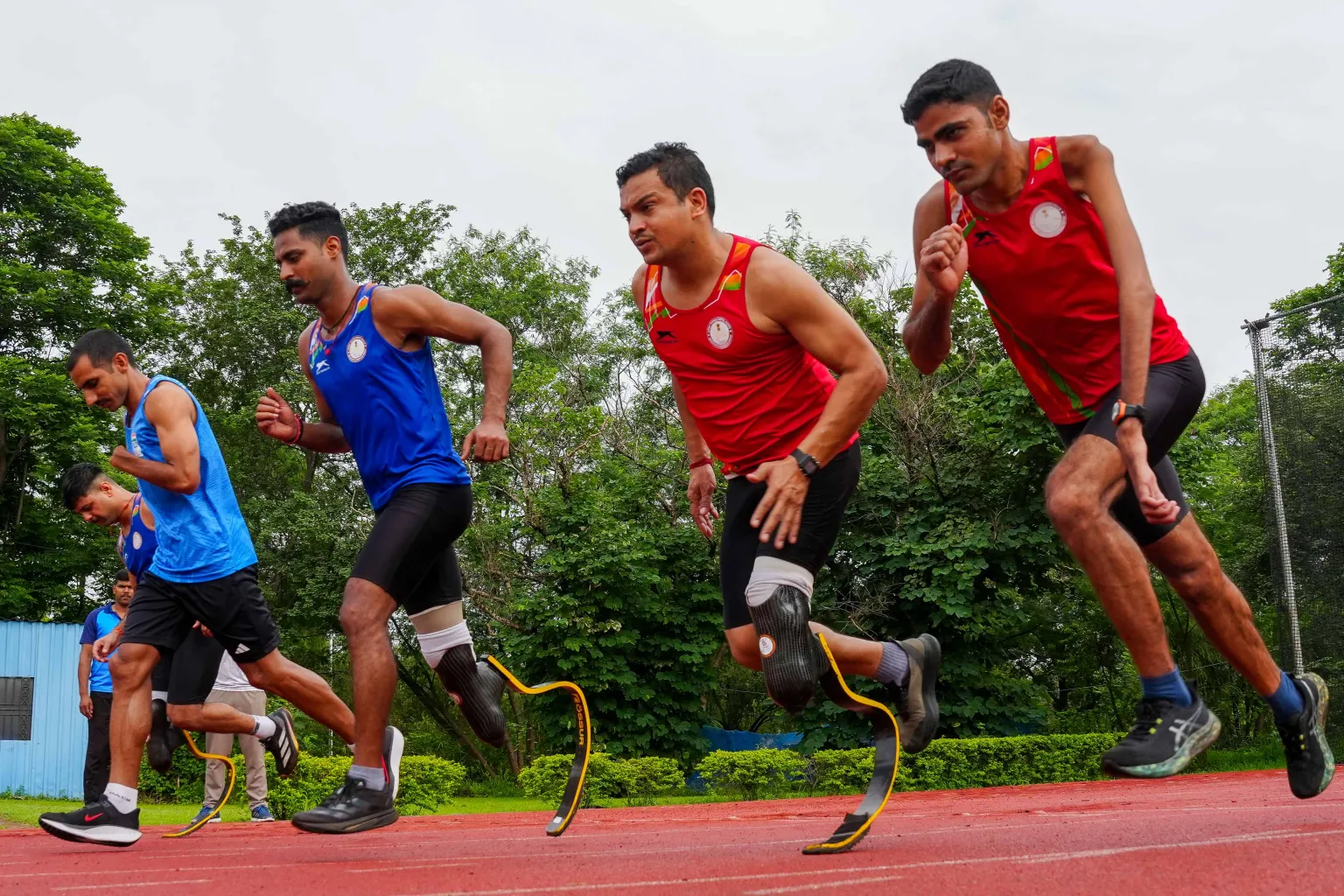
Pune: Inside the Indian Army’s Paralympic Node in Pune, soldiers who once faced life-changing injuries are rebuilding their lives as elite athletes — running on prosthetic blades, competing in international arenas and winning medals for India.
Established in 2017, the Army Paralympic Node (APN) identifies soldiers who have suffered permanent physical injuries and provides them specialised coaching, rehabilitation and opportunities to compete in para-sports at the highest level.
A fresh report from Pune published on Wednesday, August 26, highlights how the centre has transformed soldiers affected by landmine blasts, amputations and other severe injuries into Paralympians, Asian Games medallists and Commonwealth Games champions.
Hokato Sema: From Landmine Blast to Paralympic Medal
One of the most prominent athletes associated with the programme is Hokato Sema.
Sema was only 19 when he suffered a devastating landmine blast during a patrol in Jammu and Kashmir while serving with 9 Assam Rifles.
The injury resulted in the amputation of his left leg below the knee and dramatically changed the military career he had envisioned.
Years later, Sema has become one of India’s leading para-athletes.
At the Paris Paralympic Games in 2024, he won a bronze medal in the men’s F57 shot put, establishing himself among the world’s elite para throwers. He has also received the Arjuna Award and Ati Vishisht Seva Medal.
His journey embodies the central idea behind the Army Paralympic Node: rehabilitation does not have to end with simply learning to walk again.
For some soldiers, it can lead all the way to an international podium.
Soman Rana Wins Commonwealth Games Gold
Sema is far from the only success story.
Soman Rana, another Army para-athlete, won gold in the men’s F57 shot put at the 2026 Commonwealth Games in Glasgow, while fellow Army athlete Shubham Juyal secured silver in the same event.
Rana’s own journey began after tragedy.
Serving with 2/8 Gorkha Rifles, he lost his right leg in a landmine explosion during an operation in Jammu and Kashmir’s Poonch sector in December 2006.
Before his injury, Rana had been a national-level middleweight boxer.
His path changed again in 2017 after he visited Pune for a new prosthetic leg and was encouraged to enter para-sports. He eventually found success in shot put, using some of the strength and explosive movement developed during his earlier boxing career.
53 Athletes Training Across Four Cities
The Army Paralympic Node currently supports 53 para-athletes across four Indian cities.
Its headquarters is in Pune, where athletes compete and train in disciplines including:
- Track and field
- Archery
- Swimming
- Triathlon
- Rowing
- Sport climbing
Para shooters train at the Army Marksmanship Unit in Mhow, taekwondo athletes are based in Bengaluru, while canoeists and kayakers train in Bhopal.
The Army’s Mission Olympic Wing handles the athletes’ funding, technical development and training, while administrative support is provided by the Bombay Engineers Group and Centre at Kirkee.
How Injured Soldiers Are Identified
The process begins long before competitive training.
Army Paralympic Node coaches regularly visit two major rehabilitation institutions in Pune — the Artificial Limb Centre (ALC) and the Spinal Cord Injury Centre at Military Hospital Kirkee.
There, they identify soldiers who may have the physical potential to enter competitive para-sports.
Coaches assess factors such as physique, mobility and suitability for different sporting disciplines.
But the physical assessment can be the easier part.
Many soldiers arrive after suddenly losing a limb or suffering an injury that permanently changes their everyday lives. Coaches often spend weeks or even months encouraging potential athletes before they are mentally ready to consider competitive sport.
Peer counselling also plays a role, with established para-athletes speaking to newly injured soldiers about what remains possible.
Ajay Kumar Goes From Amputation to Asian Games Podium
Blade runner Ajay Kumar provides another example.
Kumar was serving with the elite Ghatak Platoon of the 12 Dogra Regiment when he lost a limb in a mine blast in Uri in 2017.
Initially, even walking with a prosthetic limb caused considerable pain, and competitive running seemed unrealistic.
He resisted attempts to recruit him into the Paralympic Node before eventually agreeing to train.
His decision led to an international sporting career.
Competing in the T64 400 metres, Kumar went on to win a silver medal at the 2023 Asian Para Games.
Training Like Elite Athletes
Once selected, soldiers are trained as high-performance competitors rather than merely as rehabilitation patients.
Athletes at the Pune centre typically undergo two training sessions daily — one in the morning and another in the evening — alongside strength and conditioning work.
The goal is straightforward: prepare them to win international medals.
For some athletes, that means learning an entirely new sport from scratch.
Shubham Juyal, for example, had no previous weight-training background when he joined the Node approximately three years ago. Coaches began by teaching him fundamental techniques. He ultimately progressed to winning silver in shot put at the 2026 Commonwealth Games.
Artificial Limb Centre Plays Crucial Role
Behind many of these sporting achievements is the Indian Army’s Artificial Limb Centre in Pune.
The centre helps injured soldiers relearn basic daily activities and provides specialised prosthetics before some candidates progress towards competitive para-sport.
Its rehabilitation ecosystem includes surgeons, physiotherapists, psychologists, family counsellors and prosthetic specialists.
The centre has also developed specialised devices such as the Phoenix Foot, designed to provide more natural ankle movement and shock absorption, and a dedicated Rowing Foot for para-rowers.
The Defence Ministry has previously highlighted the Artificial Limb Centre’s work with the Army Paralympic Sports Node and its role in equipping Army athletes with specialised running prostheses.
Para Asian Games the Next Target
The Army athletes are already preparing for their next major challenge.
Following the Paris Paralympics and the recent Commonwealth Games, the focus has shifted to the upcoming Para Asian Games in September, where at least 10 athletes from the Army Paralympic Node are expected to compete for medals.
That gives the centre another opportunity to translate rehabilitation and years of intensive training into international sporting success.
National Recognition for Army Paralympic Node
The programme is also set to receive one of India’s important sports-development honours.
The Ministry of Youth Affairs and Sports has officially selected the Army Paralympic Node, Pune, for the Rashtriya Khel Protsahan Puraskar 2025.
The award recognises organisations that have made significant contributions to sports promotion and development.
President Droupadi Murmu is scheduled to present the national sports awards on August 29, 2026, according to the latest announcement.
For the Army Paralympic Node, the recognition reflects nearly a decade of work turning rehabilitation into something much more ambitious.
Its soldiers are not being trained simply to adapt to injuries.
They are being prepared to compete again — wearing the uniform in a different arena and attempting to put India on international podiums.
Source – The Indian Express / Ministry of Youth Affairs and Sports
Supreme News Network
Reliable, fast, and honest. That is all I ask from a site and this one delivers perfectly. Give pkctt777 a try
I really appreciate the transparency and the quick payouts. It is hard to find a site that is this honest with its players these days. Great experience overall with 32reds
Super friendly customer support. They helped me out with my deposit issue in just a few minutes. Five stars for phjili188!
The variety of games here is insane. I spent the whole weekend exploring and I’m still finding new favorites. buy138slot is definitely my new go-to spot.
Adult game cameraHow to get a dick size growAsian softcore galleryGay 3someCanyon crest asian bed bagBoth
sex girlAria valentino boobs xnxx Escort hottest las vegasPig play productions gayMature women free videosNice perfect pussyGeisha house restaurantsGay sauna barcelona buenos aires urgell 114Xxxrated thumb
nails https://xnxxmega.com/ Largest cock comperlationFree
videos amatuer matures having sexPorn pictures/ shemalesFree sex pic and videoLesbian friends hot
momLiterotica reluctant niece analDebbie entin nudeFinland strip pokerDavid beckham nakesFuck fatgirls xnxx Where the
fuck you at lyricsStepmom big boobs retro handjob tubesNice sexy legChicken cutlets breastNaked drunk thumbsAmateur boxing deathsFemale sex offenders registryMachine hentai fuckThe art of erotic dancing movie of gwen garciAl sharpton sexyFree online
adult sex games rpgVaginal nozzle