

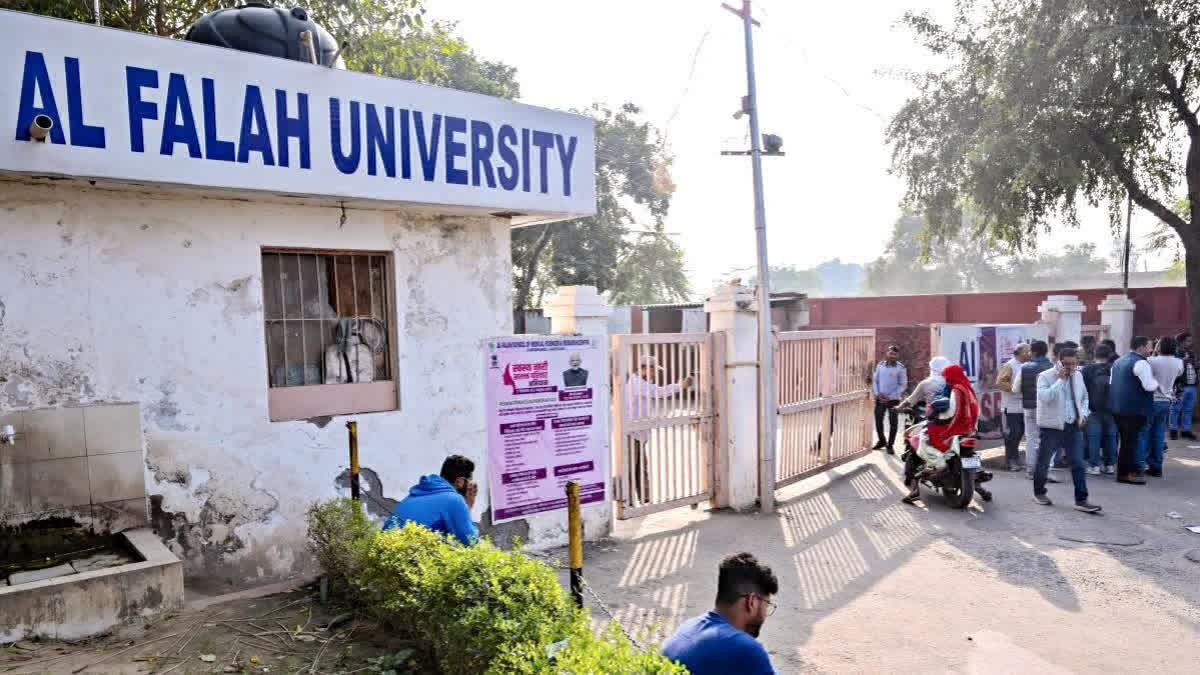
The Delhi High Court has rejected the regular bail plea of the chief of Al Falah University in an ongoing criminal case while granting custody parole to enable him to visit a close family member under police escort. The decision came after the court considered submissions from both the prosecution and the defence, balancing the seriousness of the case with humanitarian considerations.
The High Court clarified that the relief granted is limited to custody parole and should not be treated as a substitute for regular bail. The accused will remain in judicial custody and will be escorted by security personnel during the approved visit.
High Court Rejects Bail Plea
During the hearing, the Delhi High Court examined the arguments presented by both sides regarding the request for regular bail. After considering the facts of the case and the ongoing investigation, the court declined to grant bail at this stage.
The bench observed that the matter is still under judicial consideration and that the investigation and trial process should proceed in accordance with the law.
Custody Parole Allowed on Humanitarian Grounds
While rejecting the bail application, the court permitted the accused to avail custody parole for a limited period to visit a close family member.
Under custody parole, the individual remains in the legal custody of prison authorities and is accompanied by police personnel throughout the visit. The court imposed strict conditions regarding the duration of the parole, movement, and compliance with security protocols.
Officials stated that the arrangement was approved solely on humanitarian grounds and does not affect the merits of the pending criminal case.
Difference Between Bail and Custody Parole
Legal experts explained that regular bail allows an accused person to remain out of custody subject to conditions imposed by the court.
Custody parole, however, is a temporary and restricted permission granted for specific humanitarian reasons, such as attending a funeral, visiting a critically ill family member, or participating in important family events. The accused continues to remain under police supervision and is returned to judicial custody immediately after the approved period ends.
Case Continues Before the Court
The criminal proceedings against the accused remain pending before the appropriate court.
The prosecution has opposed the grant of regular bail, while the defence continues to pursue legal remedies available under the law.
The Delhi High Court clarified that its observations in the present order should not influence the final outcome of the trial, which will be decided solely on the basis of evidence presented before the court.
Legal Principles Emphasised
The judgment highlights the judiciary’s approach of balancing humanitarian considerations with the interests of justice.
Courts in India have, on several occasions, distinguished between temporary humanitarian relief and regular bail, ensuring that compassionate circumstances are addressed without compromising the legal process.
Legal experts noted that custody parole remains an exceptional remedy granted only under specific circumstances and subject to strict judicial supervision.
Next Steps
Following the High Court’s order, prison authorities will implement the custody parole in accordance with the conditions specified by the court.
Meanwhile, the trial and related legal proceedings will continue independently. Any future request for bail or other relief will be considered on its own merits based on the progress of the case and applicable legal principles.
Conclusion
The Delhi High Court’s decision reflects a balanced judicial approach by denying regular bail while allowing limited custody parole on humanitarian grounds. The accused remains in judicial custody, and the ongoing case will continue through the normal legal process.
The matter is expected to return before the court as the investigation and trial proceed in accordance with the law.
Source: Delhi High Court.
Original Report: Delhi High Court order denying bail and granting custody parole in the case involving the Al Falah University chief.
Supreme News Network