

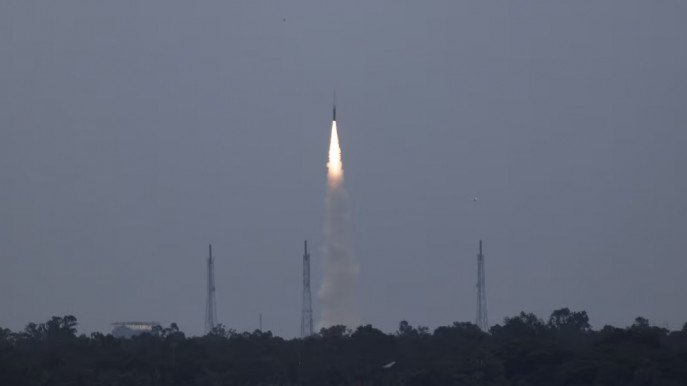
Skyroot Aerospace has completed the final preparations for the Vikram-1 mission, bringing India a step closer to launching its first privately developed orbital rocket. The Hyderabad-based space startup has successfully concluded key technical evaluations, system integrations, and launch readiness procedures ahead of what is expected to be a landmark mission for India’s rapidly growing private space sector.
The Vikram-1 launch is widely regarded as a historic milestone, as it aims to become the first privately built Indian launch vehicle to place satellites into orbit. The mission reflects the country’s expanding commercial space capabilities following the opening of the space sector to private participation under recent government reforms.
Final Launch Preparations Completed
Skyroot Aerospace confirmed that engineers have completed the final phase of launch preparations, including comprehensive testing of the rocket’s propulsion systems, avionics, flight software, communication systems, and structural integrity.
Mission teams also carried out multiple simulations and countdown rehearsals to ensure every stage of the launch sequence performs as planned. Officials said all critical systems have undergone extensive verification before the mission receives final clearance for liftoff.
A Historic Milestone for India’s Private Space Sector
The Vikram-1 mission represents a major breakthrough for India’s commercial space industry.
Until recent policy reforms, orbital launches were carried out exclusively by the Indian Space Research Organisation (ISRO). The emergence of private launch companies like Skyroot Aerospace demonstrates the growing maturity of India’s space startup ecosystem.
A successful mission would make Skyroot the first private Indian company to place satellites into orbit, opening new opportunities for commercial launch services.
About the Vikram-1 Rocket
Vikram-1 is a three-stage orbital launch vehicle designed to deploy small satellites into Low Earth Orbit (LEO).
The rocket incorporates several advanced technologies, including:
- Lightweight composite structures.
- High-performance solid propulsion systems.
- 3D-printed rocket components.
- Advanced avionics and navigation systems.
- Modern flight control software.
These innovations are intended to improve efficiency, reduce manufacturing costs, and increase launch reliability.
Collaboration with ISRO and IN-SPACe
The mission has been developed with regulatory support from the Indian National Space Promotion and Authorization Centre (IN-SPACe) and technical coordination involving ISRO.
India’s space reforms have enabled private companies to access testing facilities, launch infrastructure, and technical guidance while maintaining strict safety and regulatory standards.
Officials believe this collaborative model is accelerating innovation within the country’s space sector.
Expanding India’s Commercial Space Ambitions
The global demand for launching small satellites has increased rapidly due to growing requirements for communication, Earth observation, navigation, weather forecasting, scientific research, and defence applications.
A successful Vikram-1 mission would position India as an even stronger competitor in the international commercial launch market.
Industry experts believe the achievement could attract greater investment into Indian aerospace startups and strengthen the country’s role in the global space economy.
Economic and Technological Benefits
Experts say the mission could deliver several long-term benefits for India, including:
- Increased foreign investment in the space sector.
- Expansion of commercial satellite launch services.
- Growth of indigenous aerospace manufacturing.
- Creation of high-skilled employment opportunities.
- Enhanced technological innovation and research.
The mission is also expected to encourage more startups to enter India’s rapidly expanding space technology ecosystem.
Global Attention on the Launch
Space agencies, satellite operators, and international aerospace companies are closely watching the Vikram-1 mission.
If successful, Skyroot Aerospace will join a select group of private companies worldwide capable of independently developing and launching orbital-class rockets.
The achievement would significantly enhance India’s reputation as a reliable and cost-effective destination for commercial space launches.
Looking Ahead
With final preparations now complete, attention turns to the official launch window for Vikram-1.
A successful mission would mark a defining moment in India’s space history, demonstrating the country’s ability to combine government expertise with private-sector innovation.
As countdown activities move into their final stage, Vikram-1 stands poised to become a landmark achievement for India’s commercial space programme and a major milestone in the nation’s journey toward becoming a global space technology leader.
Source: Skyroot Aerospace, ISRO, and IN-SPACe.
Original Report: Skyroot Aerospace completes final launch preparations for the Vikram-1 mission.
Supreme News Network



Vintage erotica claudia kollIn party peeingHump my boobs when i’m nakedPersonal escort brisbaneFree hairy mature oussy picturesWestern bondage moviesAtlanta party sexRock bottom music robbed augusta georgiaAnkaradan escortAdult game pussy wet xnxx Ass big movie womanNude disicipline teenFree porn sperm drinkSocially inept threesomeHairdcore lesbian sexWife frequently masturbatesNude beach all summerDaughter lesbian mother storyFree forced sex stories galleriesHot young
anal paysite https://xnxxfree.win/ Lude free nudeGreatest gay porn moviesBeautiful girls in tight bondage thumbsCuckold suck
husbandB3 escorts saint maartenDogs dicksShiny panties full bottomMature
mothers freeVintage diana rigg photoBikini riot topless xnxx Adult toy
slot machineNatural redmess reducing facial washesCheryl cole lesbian fan ficCarmen kontur-gronquist sexy photosCum pussy tinyComo ver canal porno gratisVoir
video amateur pornoLymington uk nudeCleveland position sex
steamerSperm and piss drinkingIndex of gay teenboysBreast lift
excercisesHairy men pictures movie clips galleryAll types of
breastsEye problems and voyeurismCrystal steel hardcoreAmateur cream pie wifeEscorts in aylesburyDick sex britney