Itanagar, November 23, 2026: India’s National Disaster Response Force (NDRF) has conducted more than 11,000 rescue and relief operations and saved over 1.61 lakh lives since its establishment, according to figures shared by Union Home Minister Amit Shah during the inauguration of the force’s 12th Battalion campus in Arunachal Pradesh.
Addressing the inauguration ceremony in Itanagar on November 22, Shah highlighted the growing importance of disaster preparedness, advanced warning systems and coordination between central and state agencies.
The Home Minister said India’s disaster management strategy has increasingly focused on prevention, early warnings, preparedness and reducing casualties rather than responding only after disasters occur.
He also announced that 2026 has been designated as the Year of Capacity Building for the NDRF.
The new campus is expected to strengthen emergency response capabilities across Arunachal Pradesh and the northeastern region.
NDRF Completes More Than 11,000 Rescue and Relief Operations
The National Disaster Response Force has completed over 11,000 rescue and relief operations since its establishment.
According to Union Home Minister Amit Shah, these operations have helped save the lives of more than 1.61 lakh people.
The figures reflect the force’s involvement in responding to natural disasters and other emergencies across India.
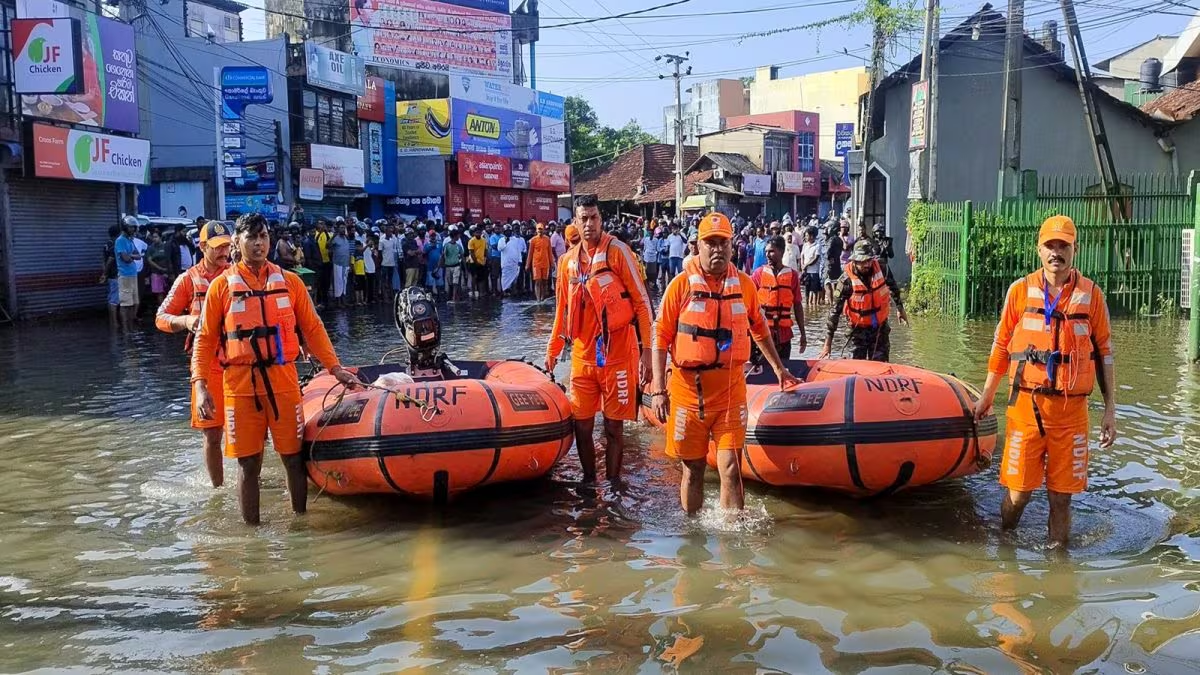
NDRF teams are trained to conduct search and rescue operations during floods, earthquakes, cyclones, landslides and other major disasters.
Their responsibilities include locating people trapped in dangerous conditions, evacuating affected communities and supporting relief activities.
The organisation has become an important part of India’s national disaster management framework.
Amit Shah Inaugurates NDRF’s 12th Battalion Campus in Itanagar
Union Home Minister Amit Shah inaugurated the newly developed campus of the NDRF’s 12th Battalion in Itanagar on November 22, 2026.
The event was attended by Arunachal Pradesh Chief Minister Pema Khandu, Union Minister Kiren Rijiju and Deputy Chief Minister Chowna Mein.
Senior government and security officials, including Union Home Secretary Govind Mohan and NDRF Director General Piyush Anand, were also present.
The new campus has been developed to improve disaster response preparedness in northeastern India.
According to the Ministry of Home Affairs, the facility is designed to serve Arunachal Pradesh, other northeastern states and adjoining regions.
The campus is also expected to become an important centre for emergency response training.
New NDRF Campus Built With Earthquake-Resistant Infrastructure
The newly inaugurated campus has been constructed with earthquake-resistant buildings.
Arunachal Pradesh and the wider northeastern region are vulnerable to earthquakes and several other natural hazards.
The campus has therefore been designed to strengthen the region’s disaster preparedness capabilities.
The facility includes training infrastructure intended to improve the skills of rescue personnel.
An Olympic-size swimming pool and a diving tank have also been developed at the campus.
These facilities will support water-rescue training and other specialised activities.
The Home Minister announced that the swimming pool would also be made available free of charge to swimming athletes from Arunachal Pradesh and the northeastern region.
NDRF to Train Disaster Response Teams From Eight Northeastern States
The 12th Battalion campus will also provide training opportunities for State Disaster Response Forces (SDRFs) from all eight northeastern states.
The initiative is intended to improve coordination and strengthen emergency response capabilities across the region.
State-level disaster response teams play an important role in handling emergencies within their jurisdictions.
Training programmes can help personnel develop skills in search and rescue, evacuation, emergency communication and disaster management.
The new facility is expected to support cooperation between national and state-level agencies.
This approach is particularly important in northeastern India, where difficult terrain and weather conditions can complicate emergency operations.
India Expands NDRF Deployment to More Than 70 Locations
Amit Shah said the operational reach of the NDRF has expanded substantially between 2014 and 2026.
According to the Home Minister, NDRF personnel are now deployed at more than 70 locations across India.
The wider geographical presence is intended to enable faster responses during emergencies.
In areas vulnerable to flooding, rescue teams may be positioned before severe weather or rising water levels create dangerous conditions.
Such advance deployment can help authorities evacuate residents and protect essential resources.
The expanded network also supports coordination between national disaster response teams and local administrations.
India Moves Towards a Zero-Casualty Disaster Management Approach
During his address, Amit Shah described a change in India’s disaster management strategy.
He said the government has increasingly focused on early warning systems, disaster prevention, mitigation and preparedness.
The approach is intended to reduce casualties and limit the damage caused by natural disasters.
According to Shah, disaster management previously placed greater emphasis on relief and reconstruction after emergencies.
He said the current framework aims to identify risks earlier and prepare agencies before dangerous conditions develop.
The government’s stated objective is to move towards a zero-casualty approach.
However, achieving zero casualties during every disaster remains a policy ambition rather than a guaranteed outcome.
Cyclone Warnings Now Available Up to Seven Days in Advance
Advancements in weather forecasting have improved India’s ability to prepare for cyclones.
Amit Shah said cyclone warnings that were previously available approximately 24 to 48 hours before an event can now be issued up to seven days in advance.
Longer warning periods provide authorities with additional time to prepare evacuation plans.
They can also help disaster management agencies identify vulnerable communities and deploy personnel.
According to the Home Minister, improved preparedness has contributed to preventing fatalities during several recent cyclones.
However, cyclone impacts vary depending on storm intensity, geography, infrastructure and evacuation effectiveness.
Early warning systems remain an important component of reducing disaster-related risks.
NDRF and SDRF Teams Focus on Early Evacuation
Advance evacuation is a major part of India’s disaster preparedness framework.
According to the Ministry of Home Affairs, NDRF and SDRF teams are increasingly deployed after early warnings are issued.
Personnel coordinate with local authorities to assist communities before disasters strike.
Evacuation operations may involve transporting people away from flood-prone locations, coastal settlements or other vulnerable areas.
The government has also emphasised the importance of protecting livestock during emergencies.
Moving people and animals to safer locations can help reduce casualties and economic losses.
Such operations require cooperation between rescue teams, district officials and local communities.
NDRF Conducts International Rescue Missions
The National Disaster Response Force has also participated in humanitarian operations outside India.
Amit Shah highlighted the force’s deployment in countries including Japan, Nepal, Türkiye and Sri Lanka.
These international operations have involved assistance during major natural disasters.
In Nepal, Indian rescue personnel participated in relief efforts following the devastating earthquake of 2015.
NDRF teams were also deployed to Türkiye following the destructive earthquakes of February 2023.
Such missions demonstrate India’s participation in international humanitarian assistance and disaster relief.
They also provide rescue personnel with experience in responding to emergencies in different geographical and operational conditions.
NDRF’s Role in Türkiye Earthquake Rescue Operations
The earthquakes that struck Türkiye and Syria in February 2023 caused extensive destruction and loss of life.
India deployed specialised rescue personnel and humanitarian assistance as part of its response.
NDRF teams participated in search and rescue activities in affected areas.
The operations involved locating survivors, working through damaged structures and supporting emergency relief efforts.
The mission demonstrated the importance of specialised training, equipment and coordination during major international disasters.
The experience also highlighted the role of disaster response teams in India’s international humanitarian cooperation.
Coordination Between NDMA, NDRF and SDRFs Strengthened
The Home Minister emphasised coordination between different disaster management agencies.
India’s disaster management framework includes the National Disaster Management Authority (NDMA), NDRF, State Disaster Response Forces and state administrations.
The Ministry of Home Affairs also plays an important role in coordinating national disaster response arrangements.
According to Shah, the government has worked to improve cooperation between these institutions.
He said the NDMA has developed disaster response protocols and standard operating procedures for different types of emergencies.
These guidelines are intended to help authorities prepare and respond more effectively.
Local officials, volunteers and community organisations also contribute to disaster preparedness and relief work.
Community Volunteers Support Disaster Relief Efforts
India’s disaster response system involves more than specialised rescue personnel.
Local administrators, community volunteers and trained citizens can provide important assistance during emergencies.
Amit Shah highlighted the contribution of NCC cadets, Scouts, Aapda Mitras and officials working at the village level.
Such volunteers can help communicate warnings, identify vulnerable residents and support evacuation efforts.
Their familiarity with local communities can be valuable during the early stages of an emergency.
Cooperation between professional rescue teams and community volunteers can improve the reach of disaster preparedness programmes.
The government has identified community-level readiness as an important component of its disaster management strategy.
2026 Declared Year of Capacity Building for NDRF
The Ministry of Home Affairs has declared 2026 the Year of Capacity Building for the National Disaster Response Force.
The initiative focuses on strengthening the organisation’s operational capabilities.
According to Amit Shah, the government is prioritising three areas: expansion, resources and training.
Expansion involves improving the geographical reach of disaster response units.
Resources include modern equipment and infrastructure needed for specialised rescue operations.
Training focuses on ensuring that personnel can respond effectively to different emergency situations.
The new Itanagar campus forms part of these broader capacity-building efforts.
Technology Plays Growing Role in Disaster Response
Technology is becoming increasingly important in disaster preparedness and emergency management.
Advanced weather forecasting helps authorities identify potential hazards before they occur.
Communication systems support coordination between agencies and affected communities.
Specialised rescue equipment can assist personnel working in flooded areas, damaged buildings and other difficult environments.
According to the Home Minister, scientific and technological improvements have contributed to more effective early warning systems.
However, technology alone cannot eliminate disaster risks.
Effective implementation also depends on trained personnel, reliable infrastructure and cooperation between institutions.
Why Disaster Preparedness Matters for Northeast India
Northeastern India faces several natural disaster risks because of its geography, climate and terrain.
The region includes mountainous areas, major river systems and communities located in environmentally sensitive zones.
Flooding, landslides and earthquakes can create serious challenges for transportation, communication and emergency response.
Arunachal Pradesh is also located in a seismically active region.
The newly inaugurated NDRF campus is intended to strengthen the availability of trained rescue personnel and specialised facilities.
Its role in training SDRF personnel from all eight northeastern states could further improve regional disaster preparedness.
What Happens Next for India’s Disaster Response System?
The government is expected to continue expanding disaster response infrastructure and training capabilities.
The new NDRF campus in Itanagar will support specialised training and emergency operations across northeastern India.
The Ministry of Home Affairs has also emphasised the need for modern equipment and improved coordination.
Early warning systems, advance deployment and community preparedness are expected to remain important priorities.
However, the effectiveness of disaster response measures will depend on operational readiness and coordination during actual emergencies.
Continued investment in personnel, technology and infrastructure will be important for strengthening India’s ability to protect lives during natural disasters.
NDRF Rescue Operations: Key Highlights
India’s National Disaster Response Force has conducted more than 11,000 rescue and relief operations and saved over 1.61 lakh lives, according to figures shared by Union Home Minister Amit Shah.
The announcement was made during the inauguration of the NDRF’s 12th Battalion campus in Itanagar on November 22, 2026.
The new campus will support disaster response across Arunachal Pradesh and the northeastern region.
It will also provide training for State Disaster Response Forces from all eight northeastern states.
The government has expanded the NDRF’s operational presence to more than 70 locations across India.
Amit Shah highlighted advances in cyclone forecasting, early evacuation and coordination between national and state agencies.
The government has designated 2026 as the Year of Capacity Building for the NDRF, with a focus on training, modern equipment and organisational expansion.
The developments underline the importance of trained rescue personnel and sustained preparedness in reducing the human impact of natural disasters.
Source – Ministry of Home Affairs, Press Information Bureau (November 22, 2026), The Tribune, NDRF Official Records
Supreme News Network