

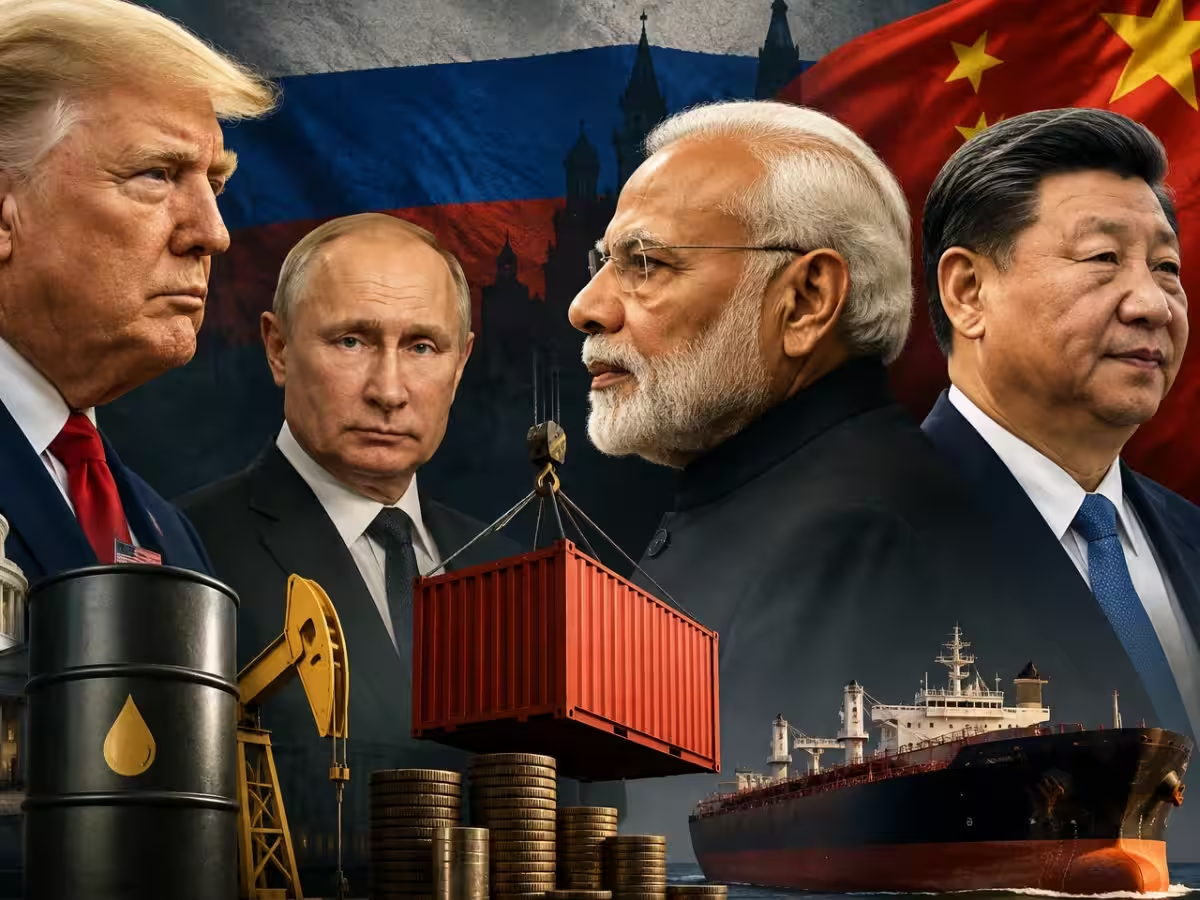
The United States has stepped up pressure on countries buying Russian oil after the US Senate approved a major Russia sanctions bill that could expose India and other major Russian energy buyers to tariffs of up to 100%.
The legislation, approved by the Senate in an 86–11 vote, gives the US president authority to impose steep tariffs on countries that continue purchasing Russian oil and natural gas. India and China are among the major economies that could be affected.
India Among Countries Facing Potential Tariff Pressure
India has become one of the world’s biggest buyers of Russian crude since Russia’s invasion of Ukraine. Discounted Russian oil has played an important role in India’s energy-import strategy, helping refiners secure crude at competitive prices.
The new US legislation could therefore create additional pressure on New Delhi to reduce or reconsider purchases of Russian energy.
However, the proposed tariff is not an automatic 100% duty at this stage. The legislation would give the US president the authority to impose such tariffs if the measure becomes law and is implemented.
Senate Vote Escalates US Pressure on Russia
The bill, known as the Lindsey O. Graham Sanctioning Russia and Iran Act, is designed to increase economic pressure on Moscow and countries continuing significant commercial relationships with Russia.
The legislation also contains provisions targeting Russian officials, energy projects and other entities connected to Russia’s economy.
The Senate’s overwhelming vote demonstrates strong bipartisan support in Congress for tougher economic measures against Russia.
Why Russian Oil Matters to India
Russian crude has become an important component of India’s oil-import basket since 2022.
Indian refiners have benefited from discounts on Russian crude, while India’s large refining capacity allows companies to process crude into fuels for the domestic and international markets.
Any significant disruption to Russian oil supplies could therefore affect:
- India’s crude-import costs
- Refining margins
- Fuel prices
- The trade balance
- India’s energy-security strategy
- Relations between India and the United States
Potential Impact on India-US Trade
A tariff of up to 100% would represent a major escalation in trade pressure if eventually imposed.
Indian exporters to the US could face higher costs, potentially affecting sectors that depend heavily on access to the American market.
Businesses are expected to closely monitor whether the bill becomes law and whether the administration eventually uses the authority against India.
India Faces a Diplomatic Challenge
The development creates a difficult diplomatic situation for New Delhi.
India has repeatedly maintained that its energy purchases are guided by national interest, energy security and market conditions.
At the same time, Washington wants to reduce Russia’s energy revenues and use economic pressure to push Moscow toward ending the war in Ukraine.
The disagreement over Russian oil therefore remains one of the most sensitive issues in India-US economic relations.
Global Oil Markets Also Watching Closely
The developments could have wider implications for global energy markets.
If major buyers significantly reduce purchases of Russian crude, global oil flows could change as refiners look for alternative suppliers.
Countries in the Middle East, Africa and other oil-producing regions could potentially gain additional demand, while changes in shipping routes and insurance costs could also influence the price of crude.
Bill Now Faces Further Legislative Steps
The Senate approval does not by itself mean that India will immediately face a 100% tariff.
The legislation still has to move through the remaining US legislative process before it can become law. Its final provisions and implementation will determine whether and how the tariff authority is ultimately used.
For India, the coming weeks will therefore be closely watched by government officials, oil companies, exporters and financial markets.
India-US Relations Under Fresh Pressure
The Russian oil issue adds another layer of complexity to an already important India-US economic relationship.
Both countries have strong commercial ties, but disagreements over tariffs, energy purchases and geopolitical policy have increasingly become part of their diplomatic discussions.
The latest Senate action could lead to further negotiations as India seeks to protect its energy interests while Washington continues its campaign to restrict Russia’s oil revenues.
Looking Ahead
The immediate focus will be on the bill’s progress through the US legislative process and the position eventually taken by the White House.
For India, the key question will be whether the proposed sanctions and tariff powers translate into actual trade measures.
Until then, the 100% tariff remains a potential threat rather than an imposed tariff, but the Senate vote has significantly increased pressure on India over its Russian oil purchases.
Source: US Senate developments and latest reports published on August 8, 2026.
Original Report: The US Senate approved the Russia sanctions bill by 86–11, creating the possibility of tariffs of up to 100% on major buyers of Russian oil, including India.
Supreme News Network


I used to think online casino bonuses were always full of fine print, but the promotions here are actually readable and fair. My weekend poker sessions have been much more rewarding thanks to the weekly leaderboard. Clean interface and honest rewards. casinobetmgm
I have tried plenty of betting spots but this one feels different. The odds are sharp, the deposit options are flexible and everything runs without a single hiccup. Truly a player first setup that I trust completely. pe1xbet
Looking for a trustworthy platform can be exhausting but this one checked all the boxes for me. Fast withdrawals and a friendly support team that replies instantly. I finally feel confident placing my bets here. bdbk11