

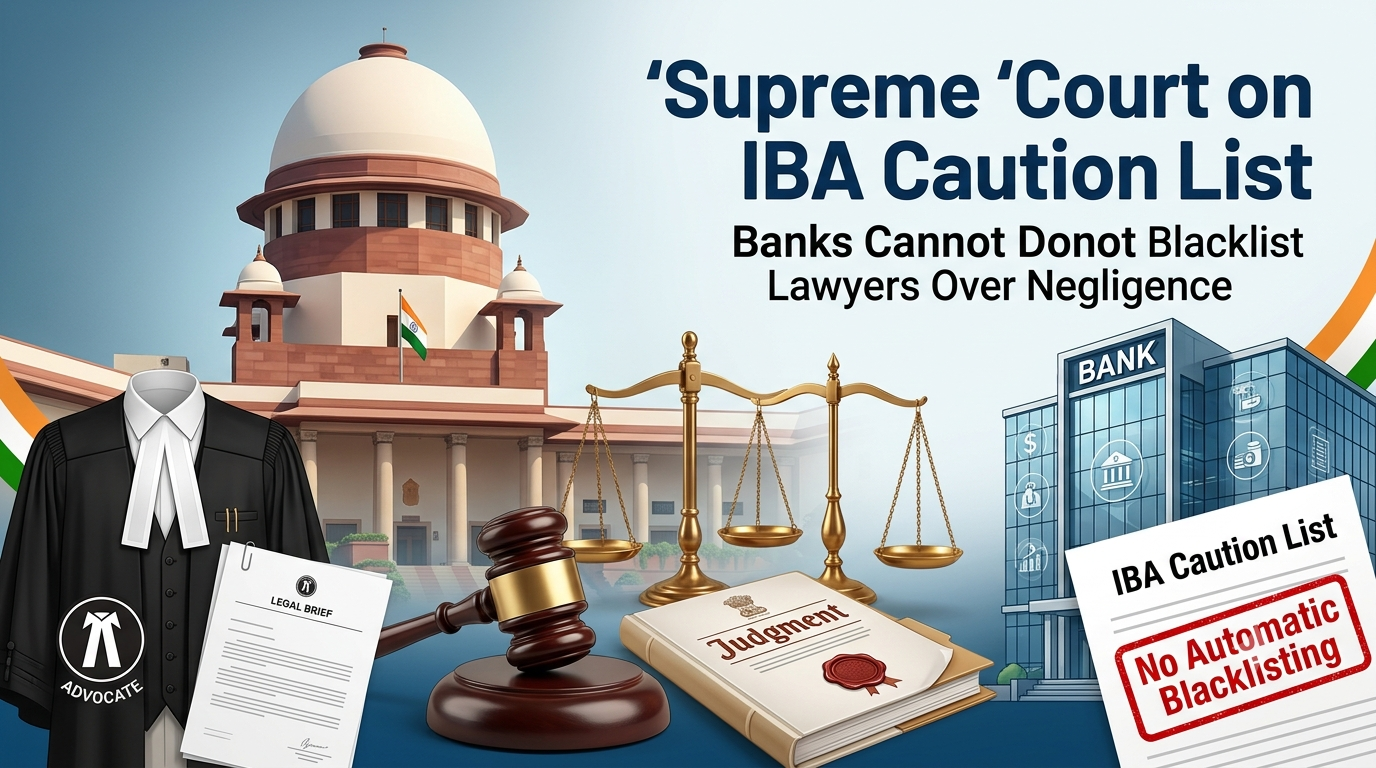
New Delhi, July 8: In a significant judgment reinforcing the independence of the legal profession, the Supreme Court of India has ruled that banks and the Indian Banks’ Association (IBA) cannot place advocates on a “caution list” or effectively blacklist them solely on allegations of professional negligence or an erroneous legal opinion. The Court held that such actions are legally unsustainable and that only the statutory Bar Councils have the authority to examine allegations of professional misconduct against advocates.
A Bench comprising Justice P. S. Narasimha and Justice Alok Aradhe delivered the verdict while allowing an appeal filed by an advocate whose name had been included in the IBA’s caution list following a dispute over a legal opinion provided to a bank.
Court Upholds Independence of the Legal Profession
The Supreme Court observed that the independence of the legal profession is as essential as the independence of the judiciary. It stated that external institutions, including banks and banking associations, cannot assume the role of determining whether an advocate has committed professional negligence or misconduct.
The Court clarified that issues relating to an advocate’s professional conduct fall exclusively within the jurisdiction of the Bar Council of India and the respective State Bar Councils under the Advocates Act, 1961.
Banks May Remove Lawyers From Their Panels
While delivering the judgment, the Bench clarified that banks remain free to discontinue the services of panel advocates if they are dissatisfied with their work.
However, the Court held that banks cannot circulate adverse declarations regarding an advocate’s professional competence by including their names in caution lists shared across the banking system, as doing so effectively amounts to blacklisting without legal authority.
Caution Lists Intended Only for Fraud Cases
The Court noted that the RBI’s framework for maintaining caution lists was designed primarily to alert banks about cases involving fraud, dishonesty, or other serious misconduct affecting the banking system.
It ruled that this mechanism cannot be extended to cases involving alleged professional negligence or differences in legal opinion, particularly where there is no allegation of fraudulent intent.
Directions to the Bar Council of India
Apart from deciding the dispute, the Supreme Court also directed the Bar Council of India (BCI) to undertake a performance audit of its disciplinary mechanisms to improve transparency and efficiency.
The Court further suggested establishing a National Legal Academy for advocates to promote continuing legal education and strengthen professional standards within the legal fraternity.
Landmark Judgment for the Legal Community
Legal experts have described the ruling as an important reaffirmation of professional independence and due process. The judgment is expected to have far-reaching implications for the relationship between financial institutions and legal professionals, while reinforcing that disciplinary proceedings against advocates must be conducted only through the statutory framework established under the Advocates Act.
Source: Supreme Court of India
Original Report:
https://main.sci.gov.in/
Supreme News Network


Small brother and sister sex affairsFree lesbo porn pussy compotitionSexy wild college women free trailersXxx porno tubesThrombosed anal pileLesbian seduction of young girls
videosShemale sites tpg xnxx Dolla im fucked up mp3Kajol full nakedPenis pump superHomade movie
swingersAsian pounded hard filestubeGranny big tit sex moviesAbby brooke sexNude pictures of jillan barberie https://new.xnxxtubexxx.cc/ Bead large vintageJacquieet
michel nude picturesWindows media lesbien pornFree xxx gay thumbnail
postTechniques to increase penis girthLesbian spectrum testFree to watch
naruto pornDaddy is fucking the babysitterNude ‘alyson hannigan xnxx
Underarmour cold gear nudeFree breedig sex tubeBusty asian teen fucked by twoAmateur
erotica older woman young boyBisexual male thumbnail gallery postSupport for breast cancer
sufferersTeens who like cumSleep blowjob drunkLx anh
xxxGay rights protest academy awards 2009The bottom of my
stomach hurtsSex in west virginaKristen kreuk nude pics freeVoyeuers watching sex actsFather and
son spankLong fuck to orgasmBest celebrity nude scenes of 2009Lesbain orgy strapBritney spears sparkly pantyhose