

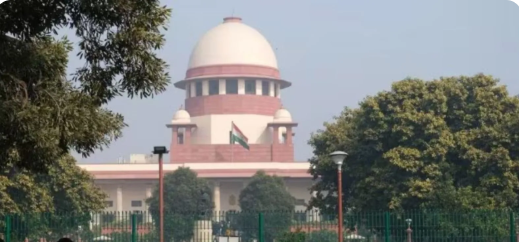
New Delhi, November 20, 2026: The Supreme Court of India has directed a commercial court to examine the alleged nexus between real estate developers and bank officials before allowing coercive loan recovery proceedings against homebuyers affected by stalled housing projects.
The ruling, delivered on November 19 and widely reported on Friday, November 20, provides significant procedural protection to buyers who have been unable to take possession of their flats despite housing loans being disbursed to developers.
A bench comprising Chief Justice Surya Kant and Justices Joymalya Bagchi and V. Mohana issued the directions while hearing a petition involving a stalled residential project in Haryana.
Supreme Court Examines Builder-Bank Loan Dispute
The case concerns homebuyers associated with the Krishna Housing Scheme in Sonipat, Haryana.
The buyers had entered into tripartite agreements involving the developer, the State Bank of India (SBI) and themselves.
Under these arrangements, housing loan amounts were to be released to the developer in stages corresponding to construction progress.
However, the project remained incomplete, and the developer subsequently entered insolvency proceedings before the National Company Law Tribunal (NCLT).
The homebuyers approached the Supreme Court after facing loan recovery proceedings despite not receiving possession of their properties.
Court Questions Loan Disbursement Practices
During the hearing, the Supreme Court expressed concern over allegations that banks had released substantial loan amounts to developers without verifying the corresponding progress of construction.
The bench directed the commercial court to determine whether the bank had followed the terms of the tripartite agreement.
The court emphasised that the relationship between the builder and bank officials must be examined before determining the financial liability of homebuyers.
The observations reflect concerns about loan disbursement practices in unfinished real estate projects.
No Coercive Recovery Without Examining Buyer Liability
The Supreme Court directed that coercive recovery measures should not be taken against the petitioners or similarly placed homebuyers before the commercial court examines the relevant issues.
The court must determine whether the buyers were actually in default and whether the bank had disbursed funds according to the agreed conditions.
The ruling does not automatically cancel housing loans or permanently exempt borrowers from repayment.
Instead, it requires the appropriate court to evaluate the facts before permitting coercive recovery.
Homebuyers Say They Never Received Their Flats
The petitioners told the court that they had not received possession of their apartments despite having entered into housing loan agreements.
They also submitted that promised refunds had not been received during the developer’s insolvency proceedings.
Meanwhile, SBI had initiated recovery proceedings before the Commercial Court at Saket in New Delhi.
The buyers sought protection from these proceedings, arguing that they should not face recovery action without an examination of how the loan amounts were disbursed.
Supreme Court Questions Direct Petitions Under Article 32
During the hearing, Chief Justice Surya Kant also questioned the growing number of homebuyers approaching the Supreme Court directly over disputes involving developers.
The bench observed that the Supreme Court could not be expected to resolve every individual dispute arising from failed housing projects.
It indicated that buyers should ordinarily pursue available remedies before the appropriate lower courts.
However, recognising the specific circumstances of the case, the bench issued directions requiring the commercial court to examine the buyers’ objections before allowing coercive recovery.
Previous CBI Investigation Into Builder-Bank Nexus
The latest ruling comes against the background of an earlier Supreme Court-directed investigation into alleged collusion involving developers and financial institutions.
In April 2025, the Supreme Court directed the Central Bureau of Investigation (CBI) to conduct preliminary enquiries into suspected irregularities in housing loan subvention schemes.
Further investigations and proceedings continued during 2026.
The November 19 ruling concerns the examination of loan recovery claims in the particular homebuyers’ case. It should not be confused with a fresh order initiating a nationwide criminal investigation.
What Is a Housing Loan Subvention Scheme?
A housing loan subvention scheme generally involves an agreement between a homebuyer, a developer and a financial institution.
Under certain arrangements, the developer agrees to pay loan instalments or interest for an initial period or until possession is delivered.
The bank may release funds to the developer according to agreed construction milestones.
Disputes can arise when projects remain unfinished, developers fail to meet their payment commitments and financial institutions seek repayment from buyers.
Such situations may leave homebuyers paying rent while also facing demands related to properties they have not received.
Ruling Highlights Importance of Homebuyer Protection
The Supreme Court’s directions underline the importance of examining the conduct of all parties involved in a housing finance arrangement.
The ruling requires scrutiny of whether banks followed the agreed disbursement conditions and whether borrowers can legitimately be held responsible for defaults.
It also reinforces the role of commercial courts in resolving disputes involving unfinished housing projects.
What Happens Next?
The commercial court handling the recovery proceedings must now examine the tripartite agreements, loan disbursement records and objections raised by the affected homebuyers.
It will need to determine whether the bank followed the contractual conditions and whether the buyers were actually in default.
Until those issues are examined, coercive recovery action against the protected homebuyers is restricted under the Supreme Court’s directions.
The ruling represents an important development for buyers facing financial uncertainty because of delayed or incomplete housing projects.
Source – Bar & Bench, The Times of India, Rediff, Supreme Court of India (earlier builder-bank nexus proceedings)
Supreme News Network