
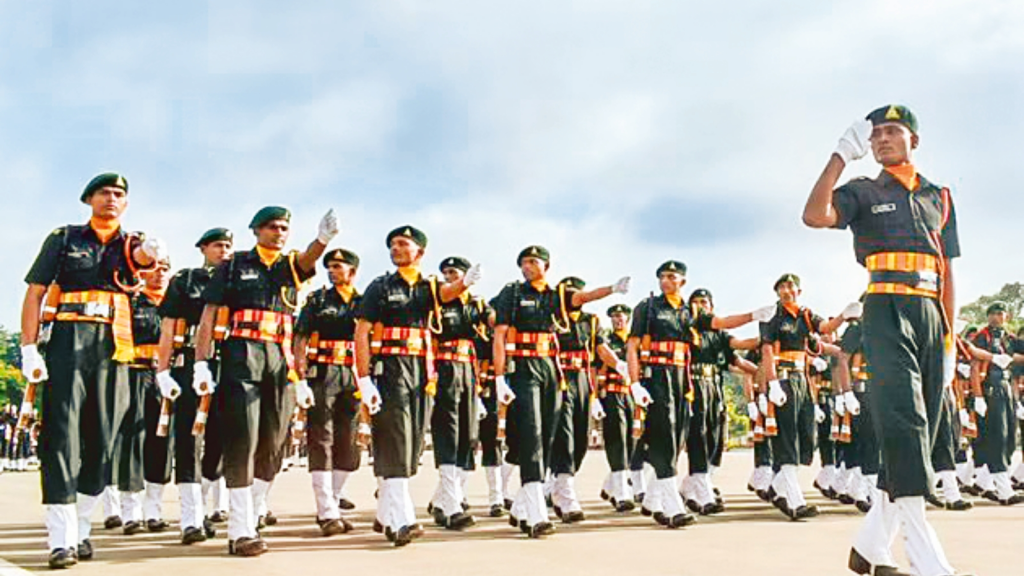
New Delhi, October 9, 2026: The Indian Armed Forces are preparing to review the retention policy for Agniveers as the first batches approach the completion of their four-year service tenure. The review could examine whether a larger proportion of Agniveers should be retained as regular personnel.
Under the existing Agnipath scheme, 25% of Agniveers from each service are eligible for selection into the regular cadre, while the remaining 75% complete their four-year tenure and exit the services.
First Navy Batch to Complete Tenure Next Month
The first batch of Agniveers recruited into the Indian Navy is expected to complete its four-year service period in November 2026.
The first sizeable batches in the Army are expected to complete their tenure in December 2026 and January 2027. These departures will mark an important phase in the implementation of the Agnipath recruitment model.
Current Retention Rate Stands at 25%
Under the current framework, Agniveers serve for four years. After completing their tenure, up to 25% may be selected for permanent enrolment in the regular cadre through a merit-based selection process, subject to applicable requirements.
The remaining personnel leave the services with the exit benefits provided under the scheme.
Armed Forces to Assess Initial Exit Cycles
The three services are expected to assess the experience of the first batches during selection, reabsorption, exit formalities and resettlement.
The initial exit cycles will provide an opportunity to evaluate how the system works in practice before any decision is taken on increasing the retention percentage. Further discussions on the policy are expected after the services review the process.
Higher Retention Has Been Under Discussion
The possibility of retaining a larger number of trained Agniveers has previously been discussed within the Armed Forces.
One concern is that releasing a substantial proportion of trained personnel after four years could affect manpower planning and reduce the number of soldiers already familiar with modern weapons, equipment and operational environments.
Trained Personnel Remain a Key Consideration
A major argument in favour of higher retention is the experience Agniveers gain during their four-year service.
Retaining more trained personnel could help the Armed Forces preserve operational experience and reduce the recurring requirement to train new recruits for certain roles. Any change, however, would need to be considered alongside recruitment requirements and the overall structure of military manpower.
Resettlement of Exiting Agniveers Also Under Review
The government is also working to improve employment opportunities for Agniveers who are not selected for regular service.
The Armed Forces are coordinating with the Ministry of Home Affairs on potential employment and absorption opportunities for former Agniveers in government departments and security organisations, subject to applicable rules.
States Prepare Employment Opportunities
Several states have begun developing initiatives to help former Agniveers transition into civilian employment.
Uttarakhand, for instance, has established an Agniveer Cell to support returning personnel through employment assistance, skill development and self-employment opportunities.
Such initiatives are intended to help former personnel use their military training and experience to pursue careers after leaving the services.
Review Could Shape the Future of the Agnipath Scheme
The completion of the first four-year tenures will give the government and the Armed Forces an opportunity to assess the recruitment model from induction through exit and resettlement.
The findings could inform future decisions on retention percentages, recruitment requirements and employment support for former Agniveers. Any change to the existing policy will depend on the outcome of the review and subsequent government decisions.
Source: The Indian Express
Supreme News Network