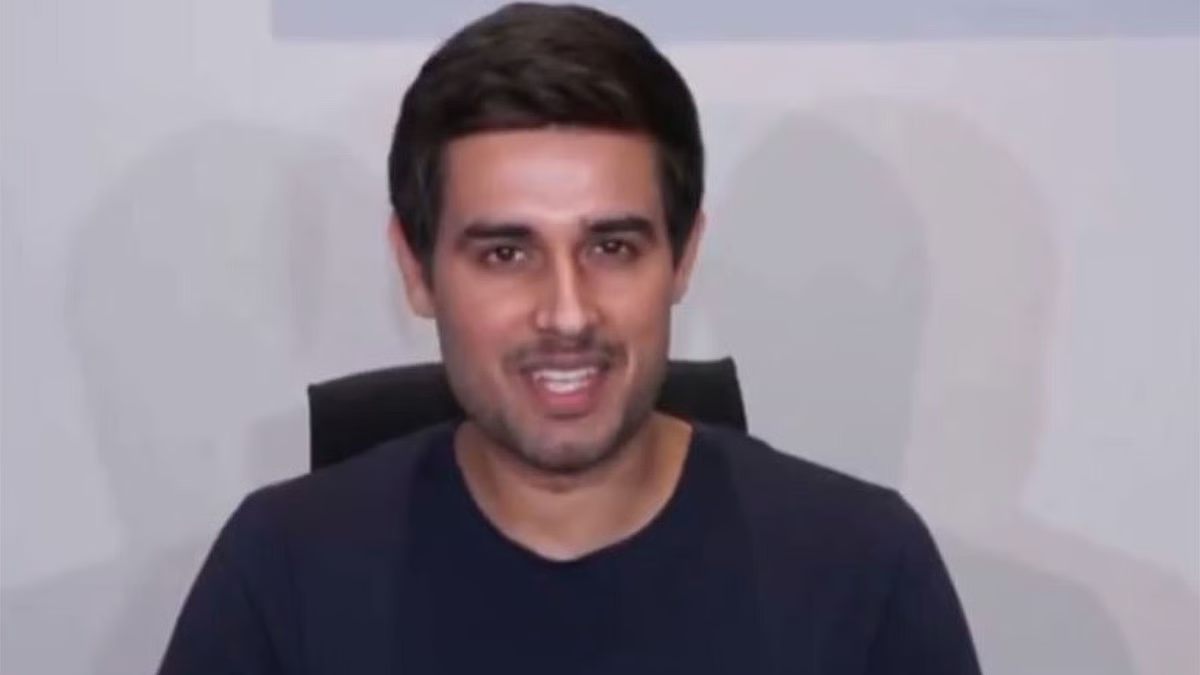
New Delhi, November 24, 2026: A Delhi court has issued a non-bailable warrant against YouTuber and political commentator Dhruv Rathee in connection with a criminal defamation case filed in 2018 by Vikas Sankrityayan, also known as Vikas Pandey.
The warrant was issued on Monday, November 23, by Judicial Magistrate First Class Anam Rais Khan at Delhi’s Saket Courts.
The case relates to a YouTube video published by Rathee in May 2018, in which he made allegations concerning the Bharatiya Janata Party’s (BJP) Information Technology cell and the complainant.
The latest order follows earlier attempts to secure Rathee’s appearance, including the issuance of summons and bailable warrants.
The court has scheduled the next hearing for December 3, 2026.
Delhi Court Issues Non-Bailable Warrant Against Dhruv Rathee
A Delhi court issued a non-bailable warrant against Dhruv Rathee on November 23 in an eight-year-old criminal defamation case.
Judicial Magistrate First Class Anam Rais Khan passed the order at the Saket Courts.
The case was originally filed by Vikas Sankrityayan, alias Vikas Pandey, who alleged that a video uploaded by Rathee contained false and defamatory statements against him.
The court had previously issued summons and bailable warrants to secure Rathee’s appearance.
However, difficulties in serving court notices and proceeding with the case led to further judicial action.
The matter is now scheduled for hearing on December 3.
What Is the 2018 Dhruv Rathee Defamation Case?
The legal dispute began following a video published by Dhruv Rathee on his YouTube channel in May 2018.
The video, titled “BJP IT Cell Part II”, discussed allegations involving the BJP’s Information Technology cell.
In the video, Rathee alleged that Vikas Pandey, whom he described as a senior BJP IT cell functionary, had offered ₹50 lakh to a person named Mahavir Prasad to damage Rathee’s reputation.
Pandey disputed the allegations and argued that the statements had harmed his reputation.
He subsequently initiated criminal defamation proceedings against Rathee.
The allegations made in the video are disputed, and the continuing legal proceedings do not establish their truth.
Who Filed the Defamation Complaint Against Dhruv Rathee?
The complaint was filed by Vikas Sankrityayan, also known as Vikas Pandey.
Pandey alleged that the contents of Rathee’s video were false and damaging to his reputation.
According to the complaint, the video was published and circulated on social media, bringing the allegations to a wider audience.
Pandey approached the court seeking legal action over the allegedly defamatory statements.
The dispute subsequently led to proceedings concerning the publication and further circulation of the video.
The case has remained before the courts for several years.
Arvind Kejriwal Was Also Named in the Case
The dispute also involved Arvind Kejriwal, who was serving as Delhi’s chief minister when the video circulated in 2018.
After Rathee shared the video on social media, Kejriwal retweeted it.
Pandey subsequently initiated defamation proceedings involving both Rathee and Kejriwal.
The case attracted attention because it raised questions about the legal consequences of sharing or republishing allegedly defamatory content.
The proceedings involving Kejriwal have included separate legal developments.
The latest non-bailable warrant concerns Dhruv Rathee’s appearance in the criminal defamation case.
Court Had Earlier Issued Bailable Warrant in October
Before issuing the non-bailable warrant, the Saket court had taken several steps to secure Rathee’s participation in the proceedings.
Rathee was initially summoned in July 2019.
In October 2026, the court permitted fresh attempts to serve summons at an address in Gurugram, Haryana.
The complainant had requested an earlier hearing, arguing that Rathee was in India at the time.
On October 17, Judicial Magistrate First Class Rahul Jain issued a bailable warrant after the court was informed that the premises at the Gurugram address were locked when officials attempted to serve notice.
The latest order follows these earlier proceedings.
Why Did the Court Issue a Non-Bailable Warrant?
The non-bailable warrant was issued during continuing proceedings in which the court had previously attempted to secure Rathee’s appearance.
According to legal reporting, the complainant had repeatedly raised difficulties in serving summons because Rathee ordinarily resides abroad.
The court had allowed fresh summons and subsequently issued bailable warrants.
The November 23 order represents a further step in the judicial process.
A non-bailable warrant authorises authorities to take a person into custody and produce them before the court.
However, it does not mean that the person has been convicted of the underlying allegation.
The issuance of such a warrant also does not automatically prevent a court from considering a subsequent bail application or request for other appropriate relief.
Dhruv Rathee’s Residence Abroad Complicated Proceedings
One of the issues raised during the case concerned the difficulty of serving court notices on Rathee.
According to the complainant’s submissions, Rathee ordinarily resides in Germany.
His residence outside India had reportedly complicated efforts to complete service of summons.
In October, the complainant sought an earlier hearing after claiming that Rathee was visiting India in connection with protests.
The court subsequently ordered fresh summons to be served at his Gurugram address.
When the premises were reportedly found locked, a bailable warrant was issued.
These procedural developments preceded the November 23 non-bailable warrant.
Saket Court Sets Next Hearing for December 3
The court has listed the matter for further proceedings on December 3, 2026.
The next hearing will be an important stage in determining how the case proceeds following the latest warrant.
The court may consider developments concerning the execution of the warrant, Rathee’s appearance and any applications filed by the parties.
However, the exact course of proceedings will depend on judicial orders and submissions made before the court.
As of November 24, the available reports do not establish that Rathee has been arrested under the warrant.
The matter remains pending before the court.
Who Is Dhruv Rathee?
Dhruv Rathee is an Indian YouTuber and social media commentator known for producing videos on politics, public policy, current affairs and social issues.
His online content frequently discusses government decisions, political controversies and other subjects of public interest.
Rathee has developed a substantial audience across YouTube and social media platforms.
His commentary has also attracted criticism and disagreement from political figures and other commentators.
The current legal dispute concerns specific statements made in a video published in 2018.
The court proceedings are separate from broader disagreements over his political commentary.
What Is a Non-Bailable Warrant?
A non-bailable warrant, commonly called an NBW, is a judicial order directing law enforcement authorities to arrest a person and produce them before a court.
Such warrants may be issued when a court considers stronger measures necessary to secure a person’s attendance.
A non-bailable warrant is different from a finding of criminal guilt.
It is a procedural measure used in the administration of justice.
The term also does not mean that the person can never receive bail.
Depending on the circumstances, the person concerned may seek appropriate relief before the competent court.
In Rathee’s case, the warrant relates to the pending criminal defamation proceedings.
Does the Warrant Mean Dhruv Rathee Has Been Convicted?
The issuance of the non-bailable warrant does not establish that Rathee is guilty of criminal defamation.
The underlying complaint remains a matter for judicial determination.
The complainant alleges that Rathee made false statements that harmed his reputation.
The court must assess the evidence and relevant legal arguments before reaching any final decision on the allegations.
Until such a decision is made, the complaint should be distinguished from a proven criminal offence.
The November 23 development primarily concerns the process of securing Rathee’s appearance before the court.
What Happens Next in the Dhruv Rathee Defamation Case?
The next hearing is scheduled for December 3, 2026.
Further proceedings will depend on the status of the warrant and any applications submitted by the parties.
The court may address matters relating to Rathee’s appearance and the continuation of the criminal defamation case.
The underlying allegations concerning the 2018 video have not been resolved by the latest warrant.
The case continues to raise legal questions about allegedly defamatory online statements and the circulation of content through social media.
Further judicial orders will determine the next steps.
Dhruv Rathee Non-Bailable Warrant: Key Highlights
A Delhi court issued a non-bailable warrant against YouTuber Dhruv Rathee on November 23, 2026.
The order was passed by Judicial Magistrate First Class Anam Rais Khan at the Saket Courts.
The case relates to a criminal defamation complaint filed in 2018 by Vikas Sankrityayan, also known as Vikas Pandey.
The complaint concerns allegations made in Rathee’s YouTube video titled “BJP IT Cell Part II”.
The court had previously issued summons and bailable warrants during efforts to secure Rathee’s appearance.
The next hearing is scheduled for December 3, 2026.
The warrant is a procedural order and does not constitute a conviction or establish that the disputed allegations are true.
Source – Bar & Bench (November 23, 2026), LiveLaw (November 23, 2026), The Indian Express (November 23, 2026), The Times of India (November 24, 2026)
Supreme News Network