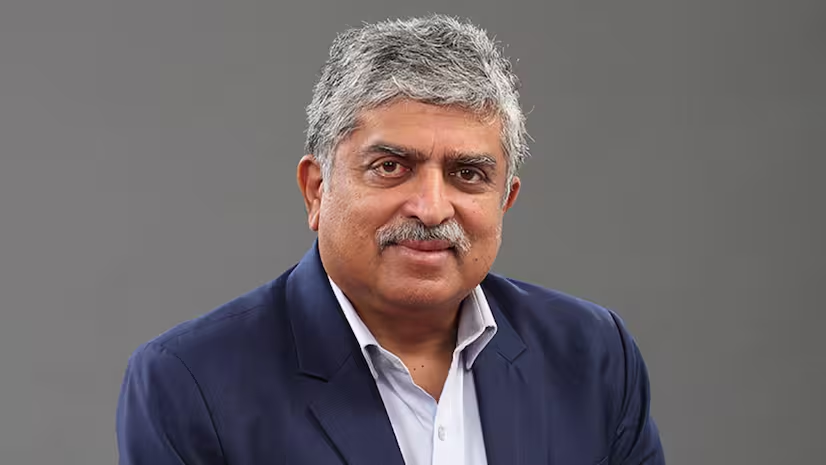
New Delhi, October 17, 2026: A high-powered examination reforms task force headed by Nandan Nilekani is considering a proposed “question vault” system that could securely store more than one lakh pre-vetted questions and enable final question papers to be generated or digitally delivered just minutes before an examination begins. The proposal aims to reduce opportunities for paper leaks in high-stakes examinations across India.
‘Question Vault’ Could Replace Fixed Papers
The panel is examining a system in which questions would be created, reviewed and translated throughout the year before being stored in a secure digital vault.
Instead of preparing a single question paper well in advance, examination authorities could select the final set of questions shortly before the test. This would reduce the period during which a complete examination paper could be stolen, leaked or sold.
More Than One Lakh Questions Under Consideration
The proposed vault could contain over 100,000 questions, supported by secure digital infrastructure.
A large pool of approved questions would allow authorities to select papers from a wider range of questions rather than relying on one pre-set paper. The system would also require strict controls to ensure that questions meet the prescribed syllabus, difficulty level and examination standards.
Digital Delivery Minutes Before the Exam
Another proposal under discussion is the digital transmission of final question papers to examination centres shortly before the test begins.
The objective is to shorten the chain of custody and limit the number of people who can access the final paper in advance. Secure transmission, encryption and controlled access would be important to the effectiveness of such a system.
Nilekani Says Fixed Papers Create Incentives for Leaks
Nandan Nilekani has argued that preparing a fixed question paper well in advance creates an opportunity for people to steal or sell it.
Under the proposed approach, generating the final paper at the last moment could reduce the time available for organised leaks and make advance access less valuable. However, the model’s effectiveness would depend on the security of the question bank, selection process and digital delivery system.
AI Could Help Generate Examination Papers
The task force is also exploring the use of artificial intelligence (AI) to help create or assemble examination papers from approved question banks.
AI could assist with question generation, classification and paper assembly. However, human review would remain essential to verify accuracy, syllabus alignment, fairness and consistency. Strong cybersecurity measures would also be necessary to protect the question bank and prevent unauthorised access.
SSC Already Uses a Similar Model
The Staff Selection Commission (SSC) reportedly uses a comparable approach in which encrypted question papers are generated shortly before examinations.
Reports have cited this model as an example of how late-stage paper generation can reduce opportunities for advance access. Its effectiveness, however, depends on the safeguards and procedures followed at each stage of the examination process.
Panel Considers Dividing Examination Responsibilities
The task force is also examining whether different examination-related responsibilities should be divided among multiple agencies.
This approach, described as “debundling”, would prevent a single vendor or organisation from controlling every stage of the examination process. Separating responsibilities could reduce the risk of a single point of failure and improve accountability.
Translation Identified as a Security Risk
Translation is another area under consideration because national examinations often require question papers in multiple languages.
The panel is examining whether secure digital workflows can reduce the number of people who access questions during translation and proofreading. At the same time, translation processes would need to preserve the original meaning, technical accuracy and difficulty level of each question across languages.
Computer-Based Testing Could Expand
Nilekani has also supported a wider shift towards computer-based testing (CBT).
A larger network of secure digital testing centres could reduce dependence on printed question papers and physical distribution. It could also make certain examination processes more efficient, provided that centres have reliable technology and adequate security arrangements.
Infrastructure Will Need a Major Upgrade
Expanding computer-based examinations nationwide would require investment in secure computers, reliable internet connectivity, cybersecurity systems and testing centres.
Many examination centres currently depend on infrastructure operated by private vendors. A wider transition would therefore require stronger oversight, standardised security requirements and sufficient capacity to handle large numbers of candidates.
Authorities would also need contingency plans for technical failures, power disruptions and connectivity issues to ensure that candidates are not unfairly affected.
Panel Formed After Examination-Leak Concerns
The six-member high-powered task force was constituted amid widespread concerns over examination integrity following the NEET-UG paper-leak controversy and student protests.
Its mandate is to recommend structural and technological changes aimed at making national examinations more secure, transparent and credible.
Final Recommendations Expected by October End
The task force is expected to submit its recommendations by the end of October 2026. The government will then consider the proposals and decide which measures can be implemented and on what timeline.
Until the recommendations are finalised and accepted, the question-vault system and last-minute digital delivery remain proposals under consideration rather than confirmed nationwide policy.
Reforms Could Change How India Conducts Exams
If adopted, the question-vault model and last-minute digital delivery could significantly change the way high-stakes examinations such as NEET and other national tests are conducted.
The central idea is to minimise the time between final question-paper generation and the start of an examination, reducing opportunities for organised leaks. The success of the reforms would ultimately depend on secure technology, independent oversight, reliable infrastructure and consistent implementation.
Source: The Indian Express, Financial Express, Times of India
Supreme News Network