
New Delhi, November 5, 2026: Indian universities have recorded a decline in the QS World University Rankings: Asia 2027, with no Indian institution securing a place among Asia’s top 50 universities for the second consecutive year. Despite India’s growing presence in the rankings, leading institutions including IIT Delhi, IISc Bengaluru, IIT Bombay and IIT Madras have slipped from their previous positions.
The latest rankings highlight concerns over international recognition, research impact and growing competition among Asian universities.
IIT Delhi Remains India’s Highest-Ranked University
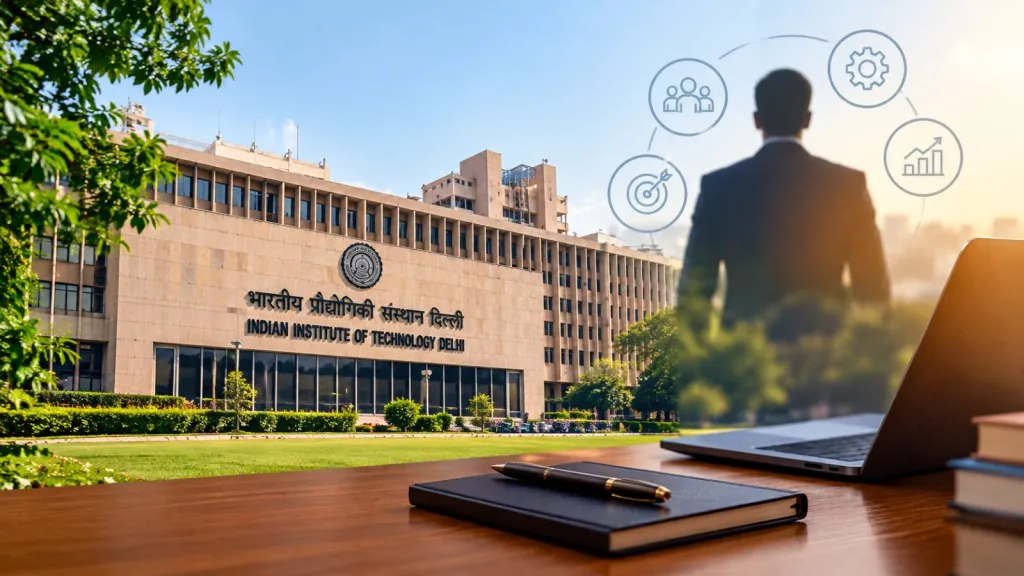
The Indian Institute of Technology Delhi (IIT Delhi) retained its position as India’s highest-ranked institution in the QS Asia Rankings 2027.
However, its ranking dropped from 59th in 2026 to 66th in 2027, placing it outside Asia’s top 50.
The Indian Institute of Science (IISc), Bengaluru, also recorded a decline, falling from 64th to 79th position.
India’s Leading IITs Record Declines
All six of India’s highest-ranked universities moved down in the latest rankings.
Their positions are as follows:
| University | 2026 Rank | 2027 Rank |
|---|---|---|
| IIT Delhi | 59 | 66 |
| IISc Bengaluru | 64 | 79 |
| IIT Bombay | 71 | 83 |
| IIT Madras | 70 | 85 |
| IIT Kharagpur | 77 | 90 |
| IIT Kanpur | 77 | 97 |
The results show that even India’s most established technical and research institutions are facing stronger competition across Asia.
No Indian University in Asia’s Top 50 for Second Year
For the second consecutive year, India has failed to secure a university in the regional top 50.
The last time Indian institutions appeared in this group was in the 2025 rankings, when IIT Delhi secured 44th place and IIT Bombay ranked 48th.
The continued absence of Indian universities from the top 50 raises questions about their ability to compete with leading institutions in China, Hong Kong and Singapore.
71% of Indian Universities Record Lower Rankings
The QS Asia Rankings 2027 reveal that approximately 71% of returning Indian universities experienced a decline in their positions.
Around 18% improved their rankings, while approximately 11% maintained their previous positions or ranking bands.
Experts have linked the weaker performance to challenges involving international engagement, research influence and academic reputation.
India Expands Representation to 325 Universities
Despite the decline among leading institutions, India’s overall participation in the rankings has increased significantly.
The country now has 325 universities featured in the QS Asia Rankings, including 34 new entrants.
India remains the second-most represented higher education system in Asia, behind mainland China.
The expansion reflects greater participation by Indian institutions in international university assessments.
Some Indian Universities Improve Their Positions
While several IITs recorded declines, other Indian institutions improved their performance.
Chandigarh University moved from 109th to 104th position.
Lovely Professional University climbed from 187th to 154th, while Symbiosis International University improved from 200th to 175th.
Jawaharlal Nehru University (JNU) moved from 130th to 128th, and Jamia Millia Islamia climbed from 197th to 183rd.
These improvements show that ranking movements varied considerably across Indian higher education institutions.
India Performs Strongly in Research Output
The rankings also highlight India’s strength in academic research and doctoral education.
According to QS, 27 Indian universities feature among Asia’s top 50 for research papers published per faculty member.
Five Indian institutions are among the top 10 for this indicator.
IISc Bengaluru holds the first position in Asia for research papers per faculty member, followed by IIT Madras in third place and IIT Delhi in seventh.
Doctoral Education Remains a Strength
India also performs strongly in the proportion of academic staff holding doctoral qualifications.
As many as 15 Indian universities share first place in Asia under the Staff with PhD indicator.
Another 47 Indian institutions feature among the regional top 100 for this measure.
However, only three Indian universities appear among Asia’s top 50 for citations per paper, highlighting the difference between research publication volume and research influence.
Hong Kong and China Lead Asia Rankings
The University of Hong Kong retained first place in the QS Asia University Rankings 2027.
Peking University secured second position, while Tsinghua University climbed to third.
Hong Kong institutions occupied five positions in the top 10, while mainland China and Singapore also maintained strong representation.
Their performance reflects increasing competition across Asia’s higher education sector.
Experts Highlight Need for Global Recognition
QS Senior Vice-President Ben Sowter acknowledged India’s considerable progress in research capacity and doctoral education.
However, he highlighted the need for Indian institutions to translate research output into stronger international recognition and influence.
Improving global collaboration, research quality, academic reputation and international engagement could help Indian universities strengthen their positions in future rankings.
Rankings Raise Questions About India’s Higher Education Future
The QS Asia Rankings 2027 present a mixed picture of Indian higher education.
While India’s representation and research capacity continue to expand, its leading universities have struggled to maintain their relative positions.
The findings are likely to renew discussions about university funding, research infrastructure, international partnerships and the global competitiveness of Indian institutions.
Source: QS Quacquarelli Symonds, The Indian Express, Hindustan Times, Careers360
Supreme News Network