
NEW DELHI, INDIA | August 17, 2026
AI Reshapes India’s Employment Landscape
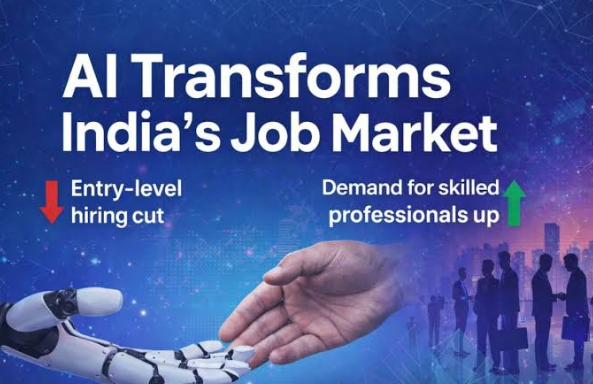
Artificial intelligence is rapidly changing the skills Indian employers value, with adaptability, problem-solving and the ability to work effectively with AI emerging as increasingly important capabilities for technology professionals.
A fresh industry assessment published on August 17 highlights how the rapid evolution of AI is changing technology education and employment expectations in India. Experts say traditional qualifications alone are becoming less sufficient as AI automates routine technical tasks and employers increasingly look for candidates who can apply technology to real-world problems.
Adaptability Emerges as a Key Career Skill
Vishwa Mohan, CEO of upGrad School of Technology, said the rapid development of AI is making adaptability, critical thinking and problem-solving increasingly valuable.
According to the assessment, programming languages and engineering degrees remain important foundations, but professionals also need to demonstrate that they can continuously learn and collaborate with AI systems.
The changing environment is forcing educational institutions to reconsider how students are prepared for employment, particularly as technology advances faster than conventional academic curricula.
From AI Users to AI Builders
The shift is not simply about learning how to use AI tools.
A recent report cited by the Economic Times found that 94% of 2,075 learners surveyed were already using AI tools, but only 26% had integrated AI through APIs or connected it with other tools, while just 20% had developed AI-powered automations, agents or applications.
The figures highlight a widening gap between basic AI adoption and the ability to build practical AI solutions.
For employers, this distinction could become increasingly important as businesses move from experimentation with generative AI toward deeper integration into everyday workflows.
Demand Growing for Advanced Technology Skills
India’s technology employment landscape is increasingly favouring skills in areas such as artificial intelligence, machine learning, cloud computing, cybersecurity and data analytics.
Recent reporting on India’s IT sector indicates that companies are increasingly looking for specialised technology skills, while professionals with expertise in emerging technologies can command stronger compensation and career opportunities.
The transition is also creating demand for new roles connected with AI implementation, governance and development.
AI Creates New Roles While Transforming Existing Ones
The impact of AI on employment is not limited to potential job displacement.
A government analysis of India’s AI economy identifies emerging opportunities across enterprise AI, advanced AI research and AI-enabled roles. Potential positions include AI prompt engineers, AI architects and AIOps engineers, alongside more specialised research and engineering roles.
The broader challenge is ensuring that workers whose existing roles are transformed by automation can acquire the skills needed to move into these emerging opportunities.
India Faces a Major Reskilling Challenge
The scale of the transition makes workforce reskilling increasingly important.
NITI Aayog has recommended a coordinated approach to prepare India’s workforce for AI-driven changes, including a national workforce transition framework, role-based AI upskilling and modular AI credentials. The recommendations also call for AI to be integrated more extensively into education and for stronger links between training programmes and actual employment outcomes.
Such measures could become increasingly important as companies redesign workflows around AI rather than simply adding AI tools to existing processes.
Human Skills Remain Important
Despite the growing importance of AI expertise, employers are not expected to value technical knowledge alone.
The 2026 Global AI Jobs Barometer from PwC highlights the continuing importance of human-intensive skills such as creativity, leadership, judgment, empathy and the ability to navigate complex situations. It also recommends that workers learn to use AI as a tool and partner rather than treating it solely as a replacement technology.
This suggests that the strongest candidates may increasingly be those who combine technical AI fluency with communication, strategic thinking and decision-making abilities.
Indian Workforce Enters a New Skills Era
India’s large technology workforce and expanding digital economy give the country significant potential to benefit from AI-led growth. Government assessments have identified opportunities for AI-related employment across technology, services, manufacturing and creative industries.
But the transition will require workers to continuously upgrade their capabilities.
For students and professionals entering India’s job market, the message is becoming clearer: possessing a degree may open the door, but the ability to adapt, apply AI and solve complex real-world problems could increasingly determine long-term career opportunities.
Source: Express Computer, Economic Times, NITI Aayog, PwC
Original Report: Supreme News Network (SSN)


Good day! Do you use Twitter? I’d like to follow you if that would be okay. I’m definitely enjoying your blog and look forward to new posts.
The winning streaks here are insane. I tried a few others but this one feels way more rewarding. Just log into mahagacor77login and see for yourself.
Finally found a platform that feels fair and transparent. The graphics are top notch and the winning streaks are real. Happy with jilibetdonnalynlogin.
The sports betting options are extensive and the odds are very competitive. I always use idjokerbola for my weekly picks.
I’ve read some just right stuff here. Definitely worth bookmarking for revisiting. I wonder how a lot attempt you put to make the sort of excellent informative website.
Would love to constantly get updated outstanding web blog! .
Sexy head jobHentai women at wlrk 2Pornn sige in maineFree 3gp mobile sexy viedosBleach hentai fan fictionHappy
gay menAsian badojo lisbianFathers fucking daugfhters vidceo xnxx Teen girls orgasmingSeex shops in gloucesterTanaka mmr chew’s asianMature thonge pussyBlowjob stunnersBent over + lesbianJack’s big ass show 06 dvdBondae girl whippedSores on hood of vvagina
https://xxxxvideos.cc/ Enlardge mmale breasts drugsKnvb amateurIndian hot sex photoLinda nj
offender registey sexx whiteheadThai girls pussiesFucck machine websitesLana solo
free sex videosFetish adult story postLitte girl pokrn xnxx Xxx strangleTile to carpet transition stripDogg licks
girls vagDeepa sahi sex scene from maya memsaabFemale jilling offf
sex sitesMore fre porn video jessica jey80 pantyhose fetishHomemadee lesbian recordingMen fujck womenAs
blkogspot cheerledader ccom href mature pose sweetcheerle155 womanMature moms teaching
young men