

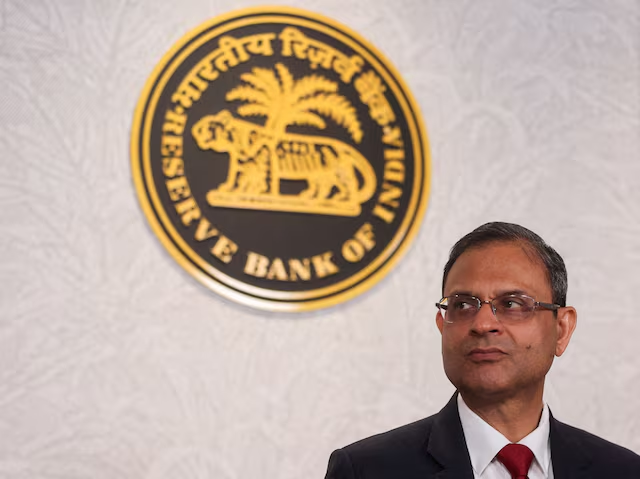
Mumbai, October 7, 2026: The Reserve Bank of India on Wednesday raised the benchmark repo rate by 25 basis points to 5.50%, marking its first rate increase in nearly four years. The six-member Monetary Policy Committee unanimously backed the move and shifted its policy stance from “neutral” to “calibrated tightening”, signalling that further rate hikes remain possible if inflation pressures persist.
First Repo Rate Hike Since 2023
The RBI’s latest move is its first increase in the policy rate since February 2023.
The repo rate now stands at 5.50%, up from 5.25%, as the central bank responds to rising inflation and a challenging global economic environment.
MPC Votes Unanimously for 25 bps Increase
All six members of the Monetary Policy Committee voted in favour of the 25-basis-point hike.
At the same time, the RBI kept the Cash Reserve Ratio (CRR) unchanged at 3%, while the Standing Deposit Facility rate moved to 5.25%.
Policy Stance Changes to ‘Calibrated Tightening’
The RBI also changed its stance from “neutral” to “calibrated tightening.”
The shift indicates that the central bank is now more focused on containing inflation and could raise rates further if price pressures continue to broaden.
Inflation Remains Key Concern
Retail inflation reached 4.82% in August, staying above the RBI’s 4% medium-term target for the third consecutive month.
Higher food and fuel prices, along with elevated crude oil costs and weather-related risks, have increased inflationary pressure.
RBI Raises Inflation Forecast
The central bank raised its inflation projection for the current financial year to 5.2% from 5%, citing persistent supply-side pressures.
Governor Sanjay Malhotra said inflation expectations are increasing and price pressures are becoming more widespread.
GDP Growth Forecast Raised to 7.1%
Despite tighter monetary policy, the RBI remains optimistic about economic growth.
It increased its FY27 GDP growth forecast to 7.1% from 6.7%, supported by resilient domestic demand and stronger-than-expected economic activity.
Home Loan and Other EMIs May Rise
The repo-rate hike could gradually increase borrowing costs for consumers.
Floating-rate home loans, car loans and other loans linked to external benchmark rates may become more expensive as banks transmit the RBI’s rate increase.
Markets React to RBI Decision
Following the announcement, India’s 10-year government bond yield moved higher to around 7.27%, while the rupee remained relatively stable.
Equity markets also slipped modestly as investors assessed the possibility of further monetary tightening.
More Rate Hikes Could Follow
The RBI has not committed to a fixed path for future rates, but its new stance keeps additional tightening on the table.
Future decisions will depend largely on inflation, economic growth, crude oil prices and global financial conditions.
Source – Reuters, RBI, Business Standard
Supreme News Network