London, November 26, 2026: The United Kingdom’s National Health Service (NHS) has begun recruiting women for what is being described as the world’s largest clinical trial of artificial intelligence-assisted breast cancer screening. Nearly 700,000 women are expected to participate across 30 screening centres over the next three years.
The study, known as EDITH (Early Detection using Information Technology in Health), aims to determine whether artificial intelligence can help specialists identify breast cancer earlier while reducing the time required to review mammograms.
The first participants began joining the programme at Cambridge University Hospitals on November 23, 2026. Additional NHS screening centres are expected to join the study in the coming months.
The £10 million trial is funded by the National Institute for Health and Care Research (NIHR) and led by researchers from the University of Warwick, the University of Cambridge and Cambridge University Hospitals NHS Foundation Trust.
Although AI will assist doctors in reviewing breast images, medical professionals will retain responsibility for interpreting results and making clinical decisions.
The trial is designed to test whether AI-assisted screening is safe and effective. It has not yet established that AI improves breast cancer outcomes.
NHS Begins Major AI Breast Cancer Screening Trial
The NHS has started a large-scale study examining whether artificial intelligence can improve the detection of breast cancer during routine screening.
Researchers will assess how AI performs when used alongside specialist clinicians who review mammograms.
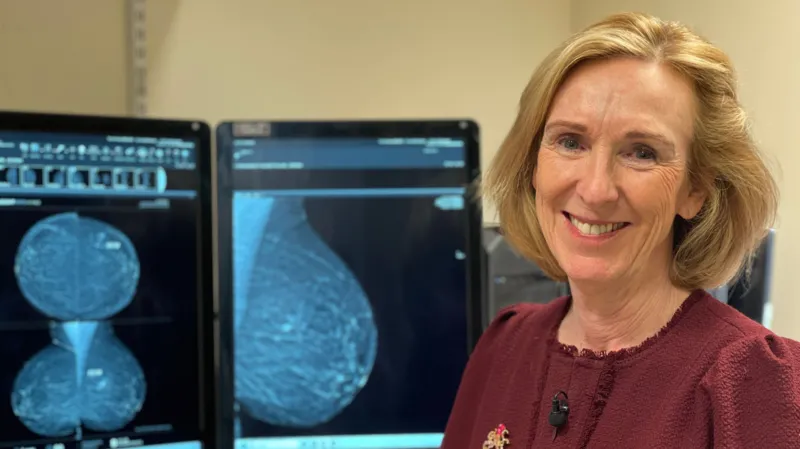
A mammogram is an X-ray image of the breast that can help detect suspicious changes, including abnormalities that cannot yet be felt.
Under the existing NHS screening system, mammograms are generally reviewed by two specialists.
The EDITH trial will examine whether an AI tool can safely perform part of that reviewing process while maintaining human oversight.
The programme will involve nearly 700,000 women at 30 participating screening centres.
What Is the EDITH Trial?
EDITH stands for Early Detection using Information Technology in Health.
It is a major research project investigating how artificial intelligence can support the NHS Breast Screening Programme.
The trial was first announced by the UK government in February 2025, with participant recruitment beginning in November 2026.
The researchers are examining whether combining AI technology with specialist medical expertise can improve screening efficiency and cancer detection.
The study will compare standard mammogram interpretation with different AI-assisted approaches.
Its findings could influence how breast cancer screening is delivered in the future.
However, any change to routine NHS screening will depend on evidence that the technology is safe, reliable and effective.
Nearly 700,000 Women to Participate Over Three Years
The study is expected to involve approximately 660,000 to 700,000 women.
The official research registration specifies a planned enrolment of 660,000 participants, while public announcements describe the programme as involving nearly 700,000 women.
Participants will be recruited through routine NHS breast screening appointments.
The programme will expand across 30 centres, beginning in Cambridgeshire.
The recruitment phase is expected to continue over approximately three years.
Researchers will also collect follow-up information to evaluate screening outcomes.
The scale of the trial is intended to provide substantial evidence about AI performance in real clinical settings.
Cambridgeshire Becomes First Trial Location
Cambridgeshire is the first area to begin participating in the EDITH trial.
Recruitment started through Cambridge University Hospitals, including the breast screening service associated with Addenbrooke’s Hospital.
UK Health and Social Care Secretary Yvette Cooper visited the hospital to meet the researchers and medical teams involved.
The visit marked the beginning of the participant recruitment phase.
Other screening centres are expected to start participating as the study expands.
The trial’s initial rollout will help researchers evaluate how the technology works within existing NHS procedures.
How Will Artificial Intelligence Detect Breast Cancer?
Artificial intelligence systems can be trained to examine medical images and identify patterns that may indicate abnormalities.
In breast screening, the technology analyses mammograms to highlight areas that might require closer examination.
The EDITH trial will test two AI-assisted approaches.
In one approach, AI will examine images before specialist assessment and help identify areas requiring attention.
In another approach, AI will review images after a specialist has assessed them, potentially identifying abnormalities that may have been missed.
Researchers will compare these methods with the existing system involving two human reviewers.
The objective is to understand whether AI can improve detection while maintaining patient safety.
Will AI Replace Radiologists?
The NHS has confirmed that AI will not independently replace clinical professionals during the trial.
Every mammogram will continue to be reviewed by at least one qualified human specialist.
Doctors will remain responsible for clinical decisions and any recommendations for further investigation.
The technology will be tested as an additional screening tool rather than as a fully independent diagnostic system.
If the research demonstrates that AI is sufficiently accurate, it could eventually reduce the need for two human readers for every routine screening image.
However, any wider implementation would require careful evaluation of the trial findings.
Why Is the NHS Testing AI for Breast Cancer?
Breast screening involves reviewing millions of medical images.
According to NHS-related research information, approximately 2.1 million women undergo breast screening in the UK annually.
Fewer than one in 100 screening mammograms result in a breast cancer diagnosis.
This means specialists spend substantial time reviewing images that do not show cancer.
Researchers hope AI could help make the process more efficient.
If the technology performs reliably, radiologists may be able to spend more time assessing complicated cases and supporting patients who need additional care.
However, efficiency gains must not come at the expense of diagnostic accuracy.
UK Government Backs Trial With £10 Million
The EDITH trial is supported by approximately £10 million in government research funding through NIHR.
Health and Social Care Secretary Yvette Cooper described the study as an opportunity to investigate whether advanced technology could speed up diagnosis.
The government hopes the project will contribute to wider efforts to modernise the NHS.
The programme also supports research into how digital tools can assist medical professionals.
However, the funding does not imply that the technology has already been demonstrated to improve clinical outcomes.
The trial will provide evidence for future policy and clinical decisions.
Researchers Aim to Detect Cancer Earlier
One of the study’s central objectives is to determine whether AI can identify cancers that might otherwise be missed during routine screening.
Early detection can be important because breast cancer treatment is often more effective when the disease is identified before it has advanced.
Professor Fiona Gilbert of the University of Cambridge is one of the trial’s leading researchers.
She has explained that AI-assisted screening may allow specialists to examine mammograms more efficiently while maintaining medical oversight.
Researchers will assess whether the technology improves the detection of clinically significant cancers.
They will also examine whether any improvements are accompanied by unwanted consequences.
Experts Warn About False Positives and Overdiagnosis
Although AI may help identify suspicious findings, detecting more abnormalities is not automatically beneficial.
Some findings may turn out not to be cancer.
These are known as false-positive results and can lead to additional tests, anxiety and unnecessary medical procedures.
Overdiagnosis is another concern.
It occurs when screening detects a cancer that would never have caused symptoms or harm during a person’s lifetime.
Professor Sian Taylor-Phillips of the University of Warwick has highlighted the importance of avoiding overdiagnosis while investigating the benefits of AI.
Researchers must therefore evaluate the quality of cancer detection, not simply the number of abnormalities identified.
Radiologists Say AI Is Not an Immediate Solution
The Royal College of Radiologists has welcomed the beginning of the EDITH trial.
However, the professional organisation has cautioned that artificial intelligence will not immediately solve staffing shortages.
Its president, Dr Stephen Harden, said the technology could eventually help specialists review mammograms more efficiently.
The organisation also warned about existing workforce pressures.
According to the college, more than one-fifth of the breast radiology workforce is expected to retire by 2030.
The EDITH trial may provide evidence about the future role of AI, but recruitment and investment in trained medical professionals remain important.
Will Breast Screening Appointments Change?
Women participating in the trial will continue attending normal NHS breast screening appointments.
The mammogram procedure itself will not change because of the research.
The difference concerns how the resulting images are reviewed.
Some mammograms will follow the existing system of specialist interpretation.
Others will be assessed using AI alongside clinical experts.
The NHS has confirmed that every mammogram will still be examined by a human specialist.
Participants will receive information about the research through their screening invitations.
Can Women Choose Not to Participate?
Women invited through participating NHS screening centres will receive information about the trial.
They will also be given the opportunity to opt out of having their mammograms assessed using AI.
Opting out of the research does not mean a woman must abandon routine breast cancer screening.
The study has undergone ethical and information-governance review.
The UK Health Research Authority has confirmed that the project received approval from a Research Ethics Committee and the Confidentiality Advisory Group.
These safeguards are intended to support appropriate use of medical information and protect participants’ interests.
How Does Routine Breast Cancer Screening Work in the UK?
Under the NHS Breast Screening Programme, women aged 50 to 71 are routinely invited for mammograms every three years.
Screening appointments may take place at hospitals, local clinics or mobile screening units.
Mammograms can reveal suspicious changes before noticeable symptoms develop.
If an abnormality is identified, the patient may be invited for further tests.
However, a mammogram is a screening procedure rather than a definitive diagnosis.
Additional imaging or a biopsy may be needed to establish whether cancer is present.
The EDITH study focuses on improving the assessment of these screening images.
Why Early Detection Matters
Breast cancer is a major public health concern worldwide.
Detecting the disease at an earlier stage can improve treatment options and outcomes for many patients.
However, not every breast cancer develops at the same rate, and screening has both benefits and limitations.
Mammograms can sometimes miss cancers or identify abnormalities that do not require treatment.
The EDITH trial aims to assess whether AI-assisted interpretation can improve the balance between these benefits and risks.
Researchers will need to determine whether the system identifies clinically important cancers more reliably without increasing unnecessary investigations.
Why the UK Trial Matters for India
The trial may also attract attention in India, where breast cancer is a significant health concern.
India’s public-health screening arrangements differ from those of the UK.
Under India’s public-sector non-communicable disease screening programme, clinical breast examinations are used to identify possible breast abnormalities among eligible women.
Patients with suspicious findings may be referred for further diagnostic evaluation.
If the EDITH trial demonstrates clear benefits, its findings could inform future research into AI-assisted cancer screening in other countries.
However, the UK’s results cannot automatically be applied to India without considering healthcare infrastructure, costs, access to imaging and differences in screening programmes.
What Happens Next in the EDITH Trial?
The immediate priority is to expand recruitment from Cambridgeshire to additional NHS screening centres.
Researchers will collect information about the performance of standard and AI-assisted screening methods.
They will examine cancer detection rates, additional investigations, clinical safety and the resources required.
The registered research programme also includes longer-term follow-up to identify cancers that may appear after screening.
Results will be evaluated before any decision about wider implementation.
Until then, the trial remains an investigation into the potential benefits and limitations of AI-assisted breast screening.
UK AI Breast Cancer Screening Trial: Key Highlights
The NHS began recruiting participants for the EDITH breast cancer screening trial on November 23, 2026.
Nearly 700,000 women are expected to participate through 30 screening centres over approximately three years.
Cambridgeshire is the first participating location.
The research is funded by NIHR with approximately £10 million.
Researchers from the University of Warwick, University of Cambridge and Cambridge University Hospitals are leading the study.
AI will be used to assist specialists in reviewing mammograms.
Every scan will continue to receive human clinical review.
The trial will examine cancer detection, safety, efficiency and risks such as false-positive findings and overdiagnosis.
The study is underway, but the benefits of AI-assisted screening have not yet been established by its results.
Source – NHS England, Health Research Authority, University of Cambridge, University of Warwick, Royal College of Radiologists, BBC News, NDTV
Supreme News Network