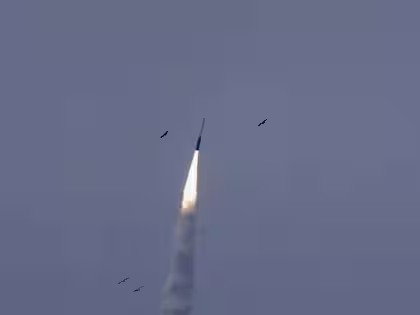

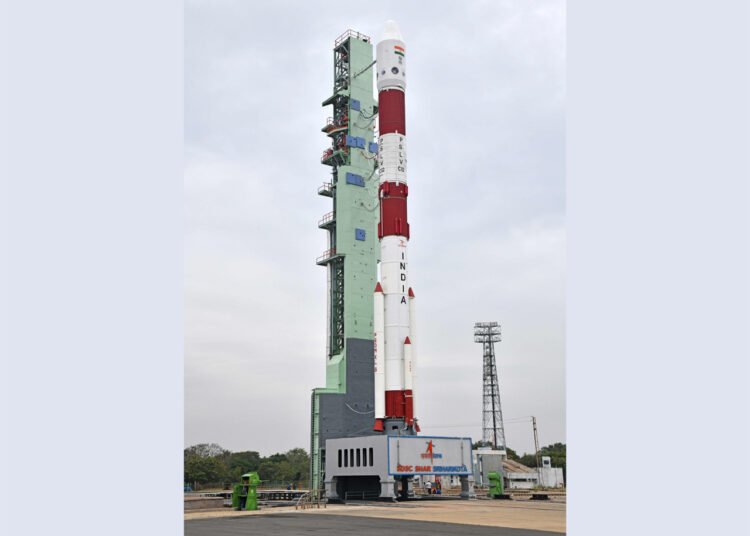
New Delhi, November 26, 2026: India’s first industry-manufactured Polar Satellite Launch Vehicle (PSLV), designated PSLV-N1, has faced another delay, with the Indian Space Research Organisation (ISRO) now targeting its maiden launch during the first quarter of 2027.
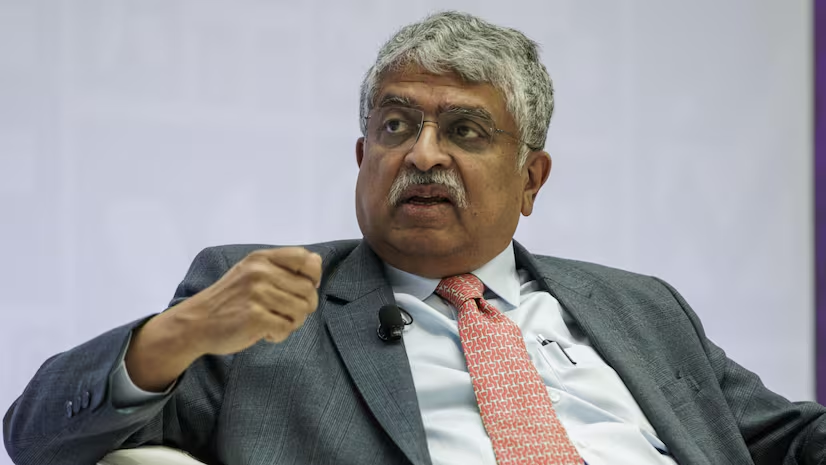
ISRO Chairman Dr V. Narayanan confirmed the revised schedule at the India International Space Conclave in New Delhi on November 24.
The rocket is being manufactured by a consortium comprising Hindustan Aeronautics Limited (HAL) and Larsen & Toubro (L&T), under an approximately ₹860-crore contract awarded by NewSpace India Limited (NSIL).
The programme was originally expected to deliver its first industry-built rocket in 2024. However, the timeline has been revised repeatedly because of technical, operational and launch coordination challenges.
The latest postponement follows two unsuccessful PSLV missions, raising questions about the reliability of the launch vehicle and the precautions required before introducing its industry-built version.
Despite the delay, ISRO officials have maintained that the first rocket is nearing launch readiness.
ISRO Chairman Confirms New Launch Timeline
ISRO Chairman V. Narayanan has confirmed that the PSLV-N1 mission is now expected during the January–March 2027 period.
Speaking at the fifth India International Space Conclave, he discussed the progress of the country’s efforts to increase private-sector participation in space missions.
Narayanan said the HAL-L&T consortium had been entrusted with producing five PSLV rockets and that preparations for the first launch were progressing.
The revised timeline pushes the maiden mission beyond the earlier 2026 target.
However, ISRO has not announced an exact launch date.
The eventual schedule will depend on mission readiness, payload coordination and the availability of a suitable launch window.
What Is India’s Privately Built PSLV-N1 Rocket?
PSLV-N1 is the first Polar Satellite Launch Vehicle being produced through an industry-led, end-to-end manufacturing arrangement.
The PSLV is one of India’s most important satellite launch vehicles.
Developed by ISRO, it has carried Earth observation satellites, scientific spacecraft and commercial payloads into orbit.
Under the new manufacturing arrangement, HAL and L&T are responsible for producing complete PSLV-XL launch vehicles.
Previously, Indian companies supplied components and subsystems while ISRO retained primary responsibility for building and integrating the rocket.
The industry-built PSLV programme represents a transition towards greater manufacturing responsibility for domestic companies.
It is important to distinguish PSLV-N1 from independently designed private rockets. PSLV remains an ISRO-developed vehicle, while its production is being transferred to an industrial consortium.
₹860-Crore Contract Awarded to HAL and L&T
NewSpace India Limited signed a contract with the HAL-L&T consortium in September 2022.
The agreement covers the end-to-end production of five PSLV-XL rockets.
The total contract value is approximately ₹860 crore.
Under the original schedule, the first vehicle was expected to be manufactured within 24 months.
The remaining four rockets were scheduled for delivery at six-month intervals.
This meant that the first vehicle should have been delivered around September 2024, with the complete batch expected by 2026.
However, the programme has experienced repeated delays.
The latest launch target of early 2027 means the first mission will occur significantly later than initially anticipated.
Why Has the PSLV-N1 Launch Been Delayed?
According to L&T Senior Vice-President and Head of Precision Engineering and Systems A.T. Ramchandani, coordination with the payload and the availability of suitable launch opportunities have contributed to the postponement.
Ramchandani indicated that the launch vehicle itself was ready.
However, the mission requires alignment between the rocket, its satellite payload and the overall launch schedule.
Reports also suggest that ISRO is exercising additional caution following recent unsuccessful PSLV missions.
The Indian Express reported, citing sources, that the space agency may prefer to demonstrate a successful launch with its own PSLV before proceeding with the first industry-manufactured vehicle.
This possible sequencing has not been formally announced as a mandatory condition.
Two PSLV Mission Failures Raise Concerns
The revised timeline follows two significant setbacks for ISRO’s PSLV programme.
The PSLV-C61 mission, launched on May 18, 2025, failed to place its intended satellite into the required orbit.
Another PSLV mission, designated PSLV-C62, experienced a failure on January 12, 2026.
Both missions encountered problems associated with the rocket’s third stage.
However, ISRO has maintained that the reasons behind the two failures were different.
These developments prompted additional technical reviews and corrective measures.
The successive failures have increased attention on the testing and reliability of upcoming PSLV missions.
ISRO Introduces Corrective Measures After Failures
Following the unsuccessful launches, technical teams examined the affected rocket systems.
According to sources quoted by The Indian Express, certain component suppliers were changed following recommendations from a failure assessment committee.
The reported modifications have already been incorporated into subsequent PSLV vehicles.
Such reviews are important in space missions because a malfunction in a single critical component can affect the entire launch.
ISRO has not publicly attributed the PSLV-N1 delay exclusively to these earlier failures.
The industry consortium has separately identified payload coordination and launch-window availability as contributing factors.
PSLV-N1 Expected to Carry Earth Observation Satellite
The first industry-manufactured PSLV-N1 mission has been associated with ISRO’s Earth observation satellite EOS-10.
Earth observation satellites collect information that can support applications such as land monitoring, resource management, agriculture and environmental assessment.
The mission will serve both as a satellite deployment operation and as a demonstration of the industry’s ability to produce a complete PSLV.
However, the final payload configuration and exact launch schedule remain subject to official mission confirmation.
A successful flight would represent an important step towards routine industry-led production of established Indian launch vehicles.
Why Is PSLV Important for India’s Space Programme?
The Polar Satellite Launch Vehicle has supported India’s space missions for more than three decades.
The rocket made its first flight in 1993.
Over the years, it has been used to launch domestic and international satellites.
Several prominent Indian missions have relied on the PSLV, including Chandrayaan-1, the Mars Orbiter Mission and Aditya-L1.
The rocket is particularly suitable for placing satellites into polar and Sun-synchronous orbits.
Its versatility has also made it important for India’s commercial launch services.
The transfer of PSLV production to industry is therefore a major development in the country’s space manufacturing strategy.
Private Companies to Take Greater Role in Rocket Manufacturing
India has been expanding participation by private companies in its space sector.
Reforms introduced in 2020 allowed non-government entities to participate more extensively in space activities.
NewSpace India Limited manages commercialisation and industry-facing responsibilities, while IN-SPACe supports the promotion and authorisation of private-sector space activities.
Under this framework, established companies and startups are taking on larger responsibilities in manufacturing, satellite development and launch services.
The HAL-L&T PSLV programme represents one of the most significant efforts to transfer production of an operational ISRO rocket to industry.
ISRO is expected to continue providing technical support and oversight.
ISRO Calls for Stronger Indigenous Space Manufacturing
During the India International Space Conclave, V. Narayanan highlighted the importance of strengthening domestic manufacturing capabilities.
He said India’s growing requirements for communication, navigation, Earth observation, national security and disaster management would require a substantial expansion in space infrastructure.
According to the ISRO chairman, Indian industry must move beyond demonstrating individual technological capabilities and develop the capacity to manufacture space systems at scale.
He also emphasised the need to strengthen domestic production of semiconductors, sensors, advanced materials and other critical components.
Reducing dependence on imported technologies remains a key challenge for India’s space industry.
India Has Around 440 Space Startups
India’s private space ecosystem has expanded considerably in recent years.
According to government figures, the number of registered space startups reached approximately 440 by August 2026.
These companies operate across different areas, including satellite manufacturing, propulsion systems, launch vehicles, data services and space technology.
ISRO and IN-SPACe have been working with industry partners to support this expansion.
Narayanan has emphasised that increased private participation will be necessary to meet the country’s future launch and satellite requirements.
The PSLV production programme is expected to help establish industrial capabilities for larger-scale manufacturing.
However, the latest delay shows that moving from component supply to complete launch-vehicle production requires complex coordination.
How Could the Delay Affect India’s Commercial Space Plans?
The postponement may affect the timeline for developing a more regular industry-led PSLV launch capability.
India aims to expand its presence in the global commercial satellite launch market.
Increasing domestic rocket production could help support additional launch opportunities without relying exclusively on ISRO-managed manufacturing.
However, commercial launch services depend heavily on reliability and predictable schedules.
Delays can create challenges for satellite operators and other customers planning missions.
At the same time, technical reviews and readiness assessments are essential for reducing operational risks.
The overall effect of the PSLV-N1 postponement will depend on how the programme progresses during 2027.
ISRO Also Working on SSLV and Gaganyaan Missions
The PSLV-N1 delay comes as ISRO continues work on other major space programmes.
The agency is expanding the role of the Small Satellite Launch Vehicle (SSLV), designed to carry smaller payloads into orbit.
In September 2025, a technology transfer agreement was signed to enable HAL to undertake industrial production of SSLV systems.
ISRO is also advancing the Gaganyaan human spaceflight programme.
During the recent conclave, Narayanan said the Gaganyaan programme remained a priority and that work on its orbital module was continuing.
These programmes form part of India’s broader plans to develop satellite launch capabilities and strengthen its space infrastructure.
What Happens Next for PSLV-N1?
ISRO and the HAL-L&T consortium will continue preparations for the rocket’s first mission.
The immediate priorities include confirming payload readiness, completing mission-specific preparations and identifying a launch window.
Further technical assessments may also influence the final schedule.
The agency currently expects the launch during the first quarter of 2027.
However, the target remains provisional until ISRO announces an exact date.
The mission’s successful completion would demonstrate the HAL-L&T consortium’s ability to manufacture an operational PSLV under the industry-led production framework.
India’s Private PSLV Launch Delay: Key Highlights
India’s first industry-manufactured PSLV-N1 rocket is now expected to launch in the first quarter of 2027.
ISRO Chairman V. Narayanan confirmed the revised timeline during the India International Space Conclave.
The rocket is being built by Hindustan Aeronautics Limited and Larsen & Toubro.
The companies received an approximately ₹860-crore contract from NewSpace India Limited in September 2022 to produce five PSLV-XL rockets.
The first vehicle was originally expected to be delivered in 2024.
Payload coordination, launch-window availability and heightened scrutiny following two unsuccessful PSLV missions have contributed to uncertainty around the schedule.
ISRO has not confirmed an exact launch date.
The mission represents an important milestone in India’s efforts to transfer established launch-vehicle production to domestic industry.
Source – NDTV, The Indian Express, The Tribune, Moneycontrol, Press Information Bureau, ISRO
Supreme News Network