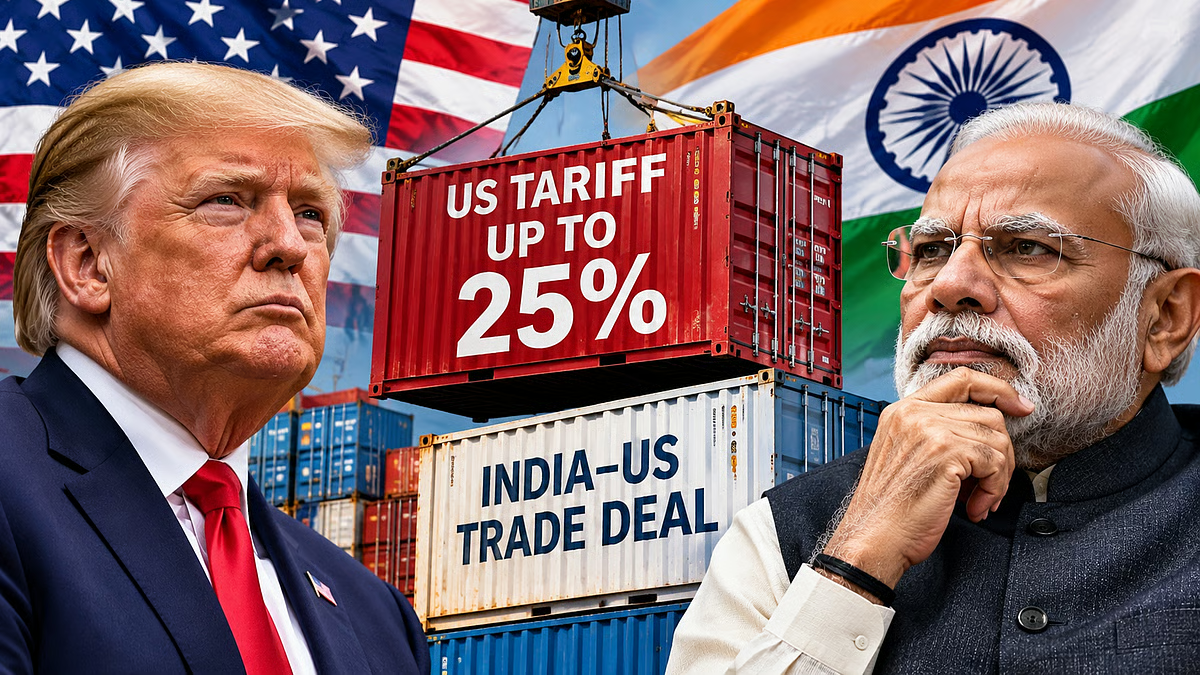
New Delhi, November 26, 2026: The United States has proposed imposing tariffs of up to 25% on Indian goods following an investigation into manufacturing policies and industrial overcapacity. However, the proposed rate could be reduced to 17% if India and the US conclude a reciprocal trade agreement addressing Washington’s concerns.
The announcement was made by the Office of the United States Trade Representative (USTR) on November 25, 2026, as part of a broader investigation covering major global trading partners, including China, Japan, the European Union and Vietnam.
The Trump administration argues that certain industrial policies in these economies contribute to excess manufacturing capacity and place American industries at a competitive disadvantage.
India has rejected the allegations of structural overcapacity and maintained that its industrial development programmes are designed to strengthen domestic manufacturing and economic resilience.
The Indian Commerce and Industry Ministry has called for the outstanding trade issues to be resolved through ongoing bilateral negotiations.
The proposed tariffs have not yet taken effect. The final rates, exemptions and implementation timeline will depend on the completion of the US trade review process.
US Announces Proposed 25% Tariffs on Indian Imports
The US Trade Representative has proposed tariffs of up to 25% on Indian goods following the completion of a Section 301 investigation.
The proposed action relates to concerns about structural excess capacity and production in manufacturing sectors.
According to the USTR, some Indian government policies encourage manufacturing expansion and exports in ways that may adversely affect American businesses.
The proposed tariffs would apply to covered Indian goods, subject to specific exemptions and adjustments for existing duties.
The announcement represents a formal trade proposal rather than an immediately enforceable tariff order.
Public comments and hearings will take place before the administration decides on final measures.
US Offers Possible Reduction to 17% After Trade Deal
A significant feature of the proposal is the possibility of reducing the tariff rate from 25% to 17%.
According to the USTR, India could receive the lower rate if it reaches an Agreement on Reciprocal Trade with the United States.
Such an agreement would need to address concerns raised during the investigation.
US Trade Representative Jamieson Greer indicated that the proposed arrangement could provide greater certainty for bilateral trade.
However, the 17% rate is conditional and has not yet been implemented.
India and the United States must first finalise an acceptable trade agreement.
India Rejects US Claims of Industrial Overcapacity
The Indian government has disputed Washington’s findings.
The Commerce and Industry Ministry said India does not have structural excess manufacturing capacity in any sector.
It maintained that programmes supporting domestic production are intended to improve economic resilience and reduce dependence on imported goods.
The ministry also said it had participated constructively throughout the US investigation.
India’s position is that trade-related concerns should be addressed through negotiations rather than unilateral tariff measures.
The ministry confirmed that it was examining the USTR’s formal notice.
Commerce Ministry Seeks Resolution Through Trade Talks
Following the US announcement, India’s Commerce and Industry Ministry reiterated its commitment to negotiations for a bilateral trade agreement.
The ministry said both governments were engaged in discussions to resolve outstanding issues.
It emphasised that trade concerns should be addressed within the framework of the proposed agreement.
India has been seeking more predictable access to the American market for its exporters.
The latest tariff proposal has added urgency to negotiations, although a final agreement remains pending.
Officials have not confirmed when the two sides will conclude the talks.
What Is the Section 301 Investigation?
Section 301 of the US Trade Act of 1974 allows the American government to investigate certain foreign trade policies that may restrict US commerce.
The USTR launched investigations into manufacturing overcapacity on March 11, 2026.
The review covered 16 economies, including India, China, Japan, South Korea and the European Union.
Following the investigation, the USTR issued determinations involving 14 economies.
The agency concluded that certain manufacturing policies and practices were unreasonable and affected American commercial interests.
Those findings form the basis of the proposed tariffs.
However, the affected governments may dispute the conclusions, and the final policy response remains subject to further procedures.
Which Indian Products Could Face Higher Tariffs?
The proposed duties could affect several categories of Indian exports to the United States.
According to trade reporting, products potentially exposed include:
- Textiles and apparel
- Gems and jewellery
- Shrimp and seafood
- Solar products
- Selected engineering goods
- Certain medical devices
However, the proposal includes exemptions for specified products.
Generic pharmaceuticals and smartphones, among India’s major export categories to the United States, are among the goods identified as exempt in contemporary reporting.
The precise impact will depend on final product classifications and applicable tariff rules.
How Could the Tariffs Affect Indian Exporters?
The United States is one of India’s largest export destinations.
Higher import duties can make Indian products more expensive for American buyers.
This may reduce the competitiveness of businesses operating in price-sensitive sectors.
Exporters may face pressure to reduce prices, renegotiate contracts or absorb additional costs.
Labour-intensive industries, including garments, jewellery and seafood processing, could be particularly sensitive to changes in tariff rates.
However, the consequences will vary between sectors and individual businesses.
Some companies may benefit from exemptions or more favourable treatment under a future trade agreement.
Why the 17% Rate Matters for Indian Businesses
A 17% tariff arrangement could improve India’s competitive position relative to certain Asian manufacturing economies.
The USTR has proposed different rates for countries based on its investigations and existing trade commitments.
For example, Bangladesh and Cambodia face proposed rates of up to 18%.
Vietnam faces a proposed rate of up to 35%, with the possibility of a reduction to 20% following a qualifying trade agreement.
A 17% arrangement could therefore provide Indian exporters with a relative pricing advantage in some markets.
However, actual competitiveness also depends on production costs, existing tariffs, product exemptions, exchange rates and supply-chain efficiency.
The proposed percentage should not be interpreted as the final tariff applicable to every product.
US Tariff Proposals for Other Trading Partners
The United States has proposed additional trade measures affecting multiple economies.
| Economy | Proposed tariff arrangement |
|---|---|
| India | Up to 25%; possible 17% following qualifying trade agreement |
| China | Up to 20% under the new proposal, with adjustments and possible existing duties |
| European Union | 15%, subject to applicable adjustments and exemptions |
| Japan | Up to 15%, subject to existing tariffs and exemptions |
| South Korea | Up to 15%, with adjustments |
| Bangladesh | Up to 18% |
| Vietnam | Up to 35%; possible 20% following qualifying trade agreement |
These rates are not directly comparable in every case because the USTR uses different methods for accounting for existing duties.
Some product categories are also excluded.
The final tariff treatment will depend on the applicable trade rules and any additional agreements.
Are the Proposed 25% Tariffs Already in Effect?
No. The US announcement is part of an ongoing trade procedure.
The USTR has released its proposed actions and invited public comments.
Businesses, trade associations and other interested parties can submit their views before the final decision.
The proposed rates are therefore not equivalent to tariffs that have already been imposed.
The United States must complete the relevant procedural steps before implementing new measures.
For Indian exporters, existing tariff rules remain applicable until official changes take effect.
When Will the US Make a Final Decision?
The USTR has announced the next stages of the review process.
| Event | Scheduled date |
|---|---|
| Proposed tariff announcement | November 25, 2026 |
| Deadline for written comments | January 5, 2027 |
| Deadline to request hearing participation | January 5, 2027 |
| Public hearings begin | January 25, 2027 |
| Final tariff implementation | Not yet announced |
The hearings will allow interested parties to present arguments concerning the proposed measures.
The USTR will consider submissions before taking final action.
No confirmed implementation date has been provided for the new India-specific tariff proposal.
India–US Trade Agreement Remains Unfinished
India and the United States announced a framework for an interim trade agreement in February 2026.
That framework envisaged a tariff arrangement of 18% for certain Indian goods.
However, the governments have not completed a final bilateral agreement.
The latest USTR proposal introduces a potential 17% tariff arrangement if India addresses the concerns identified in the Section 301 investigation.
The two proposals arise from related but distinct stages of the trade negotiations.
The eventual agreement will determine which commitments and tariff provisions apply.
Until then, businesses must distinguish between announced frameworks, proposed duties and legally effective tariff measures.
US Supreme Court Ruling Changed Tariff Strategy
The current proposal also follows a significant change in US trade policy earlier in 2026.
In February, the US Supreme Court invalidated the Trump administration’s use of emergency economic powers to impose certain sweeping tariffs.
The decision required Washington to rely on alternative legal authorities for some of its trade measures.
Section 301 provides one such mechanism for investigating and responding to foreign trade practices.
The latest proposal illustrates how the administration is seeking to pursue its tariff objectives through a different statutory framework.
These legal developments have contributed to uncertainty for businesses trading with the United States.
Could Higher Tariffs Affect American Consumers?
Import tariffs are generally paid by US importers when covered goods enter the country.
Businesses may absorb some of the cost or pass it on through higher prices.
The effect on consumers depends on product demand, competition and the availability of alternatives.
Higher tariffs may support some domestic manufacturers by making imported products more expensive.
However, businesses relying on foreign components could also experience increased costs.
The economic impact will depend on the final scope of the tariffs and how companies respond.
What Happens Next for India and the United States?
The immediate focus will remain on negotiations between New Delhi and Washington.
India is seeking to resolve the trade concerns through the proposed bilateral agreement.
The United States will continue its public consultation process before determining final tariff actions.
Exporters will closely monitor the outcome, particularly in sectors that could face additional duties.
Further talks may also address market access, industrial policies and other trade commitments.
The final tariff rates and exemptions remain uncertain.
US Tariffs on Indian Goods: Key Highlights
The United States has proposed tariffs of up to 25% on Indian imports following a Section 301 investigation.
The rate could be reduced to 17% if India and the US conclude a qualifying reciprocal trade agreement.
The USTR announced the proposal on November 25, 2026.
India has rejected allegations of structural manufacturing overcapacity.
The Commerce and Industry Ministry wants the matter resolved through ongoing bilateral negotiations.
Several export sectors, including textiles, jewellery, seafood and solar products, could face additional costs.
Certain products, including generic pharmaceuticals and smartphones, are identified as exempt under the proposed arrangement.
Public comments are due by January 5, 2027, with hearings beginning on January 25.
The tariff proposal has not yet become a final implemented trade measure.
Source – United States Trade Representative, Reuters, The Indian Express, Hindustan Times, Business Standard, Mint
Supreme News Network