
Jabalpur, November 20, 2026: The Madhya Pradesh High Court has strongly criticised the state government for citing a non-existent Supreme Court judgment in its legal submissions, raising serious concerns about the use of artificial intelligence (AI) in judicial proceedings without proper verification.
Justice Vivek Kumar Singh, in an order delivered on November 17, observed that the government appeared to have relied on AI-generated legal material while defending the dismissal of a police officer.
The case attracted wider attention following legal reports published on November 19 and 20.
High Court Finds Fabricated Supreme Court Judgment
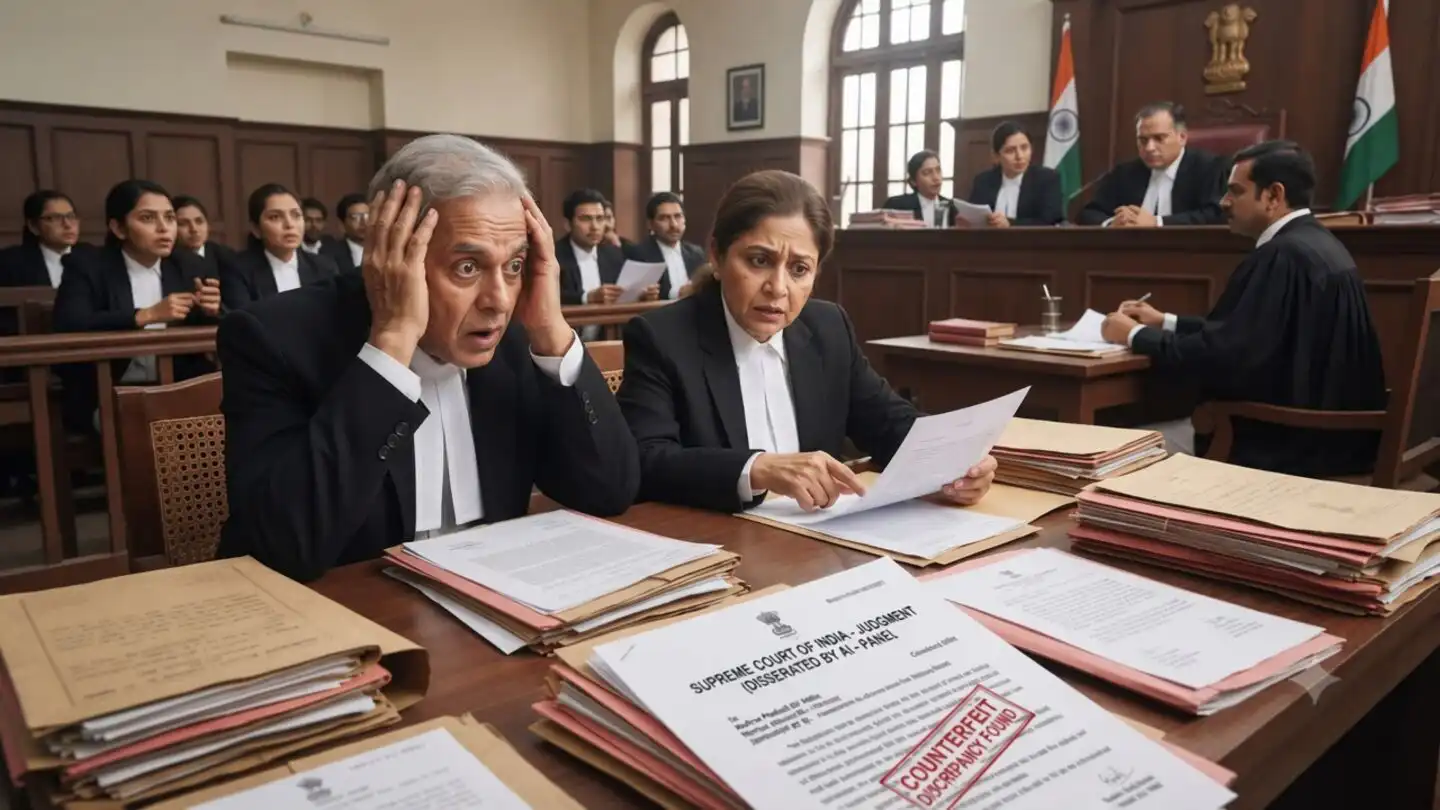
The controversy arose when the Madhya Pradesh government cited a purported Supreme Court judgment titled State of Andhra Pradesh vs S.S. Mohammad Nisar.
The government referred to the citation (2008) 5 SCC 230 to support its arguments.
However, the High Court found that no such Supreme Court judgment existed.
The citation actually belonged to Sidhartha Vashisht alias Manu Sharma vs State (NCT of Delhi), a completely different criminal case concerning the suspension of a sentence during an appeal.
The court concluded that the state’s submission contained a fabricated case name combined with an unrelated legal citation.
Judge Criticises Blind Reliance on Artificial Intelligence
Justice Vivek Kumar Singh expressed serious concern about the preparation of the government’s legal documents.
The court observed that the state appeared to have used AI tools without independently verifying the legal authorities they produced.
The judge warned that presenting fictitious judgments could waste judicial time and mislead the court.
The observations highlighted the responsibility of lawyers and government departments to ensure that every legal citation submitted in court is accurate.
Case Involved Dismissal of Police Officer
The issue emerged during the hearing of a petition filed by Piyush Mani Tiwari, a former acting sub-inspector with the Madhya Pradesh Police.
Tiwari had been working at the State Situation Room of the Special Branch headquarters in Bhopal.
In May 2024, a woman employee accused him of inappropriate behaviour.
Following the complaint, Tiwari was suspended and subsequently dismissed from service without a regular departmental inquiry.
He challenged the dismissal before the High Court, arguing that the necessary procedural safeguards had not been followed.
Government Defends Decision to Skip Departmental Inquiry
The Madhya Pradesh government defended the dismissal by invoking Article 311(2)(b) of the Constitution.
The provision allows authorities to dispense with a departmental inquiry when conducting one is not reasonably practicable.
The government argued that the nature of the complaint and concerns about workplace discipline justified immediate action.
However, the High Court found that the reasons presented did not satisfy the constitutional requirements for bypassing a formal inquiry.
The court noted that there was insufficient material demonstrating that witnesses could not participate safely in the inquiry process.
High Court Orders Reinstatement of Police Officer
After examining the case, the High Court set aside Tiwari’s dismissal and directed the state government to reinstate him.
However, the court also clarified that the government remained free to initiate a regular departmental inquiry in accordance with the law.
The ruling therefore addressed the legality of the dismissal procedure rather than conclusively determining the underlying misconduct allegation.
The decision reinforced the importance of following constitutional safeguards before dismissing a government employee without an inquiry.
Advocate General’s Office Asked to Verify Legal Citations
The High Court directed that a copy of its judgment be forwarded to the state’s Law Secretary and Advocate General.
The court emphasised that government lawyers must carefully verify legal precedents before including them in affidavits and other court documents.
The responsibility for checking citations remains with the legal professionals submitting the documents, regardless of whether artificial intelligence tools were used during drafting.
The court warned against repeating such practices.
What Are AI-Generated Legal Hallucinations?
Artificial intelligence systems can sometimes produce information that appears credible but is factually incorrect.
This problem is commonly described as an AI hallucination.
In legal research, hallucinations can involve fictional court judgments, inaccurate quotations, invented case names or incorrect citations.
Such errors can be particularly serious because courts rely on authentic judicial precedents when interpreting the law.
The Madhya Pradesh case illustrates the risks of treating AI-generated legal information as authoritative without checking official judgments and reliable legal databases.
Growing Concerns Over AI Use in Indian Courts
The incident comes amid broader discussions about the responsible use of artificial intelligence in India’s legal system.
AI tools can assist with research, document preparation and information retrieval.
However, their outputs require human supervision and independent verification.
Legal professionals must ensure that technological assistance does not compromise the accuracy of court submissions.
The latest High Court observations underline the distinction between using AI as a support tool and relying on it as an unverified source of legal authority.
Court Ruling Highlights Importance of Legal Accountability
The Madhya Pradesh High Court’s decision has brought renewed attention to professional responsibility in AI-assisted legal work.
By identifying the fictitious Supreme Court judgment and criticising the state’s reliance on it, the court emphasised the importance of accuracy, transparency and verification.
The November 17 ruling also resulted in the reinstatement of the dismissed police officer, while preserving the government’s right to conduct a lawful departmental inquiry.
The case serves as a reminder that artificial intelligence may support legal research, but responsibility for the accuracy of court filings remains with the people preparing and submitting them.
Source – The Indian Express, Bar & Bench, LiveLaw, Hindustan Times, The Times of India
Supreme News Network